William Phelan – författare
Visar alla böcker från författaren . Handla med fri frakt och snabb leverans.
10 produkter
10 produkter
E-bok
PDF, Engelska, 20141 080 kr
Läs direkt efter köp
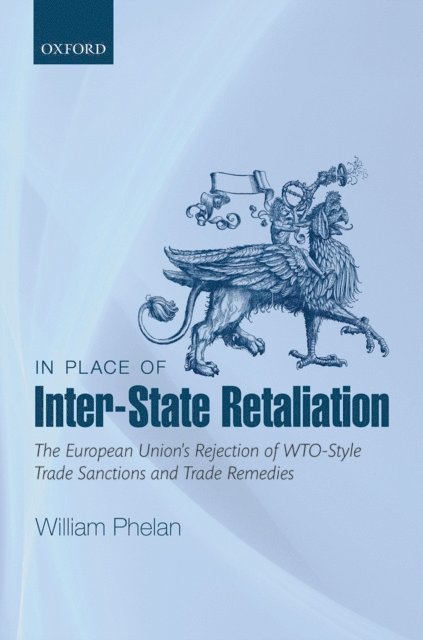
Unlike many other trade regimes, the European Union forbids the use of inter-state retaliation to enforce its obligations, and rules out the use of common ''escape'' mechanisms such as anti-dumping between the EU member states. How does the EU do without these mechanisms that appear so vital to the political viability of other international trade regimes, including the World Trade Organization? How, therefore, is the European legal order, with the European Court of Justice at its centre, able to be so much more binding and intrusive than the legal obligations of many other trade regimes?This book puts forward a new explanation of a key part of the European Union''s legal system, emphasising its break with the inter-state retaliation mechanisms and how Europe''s special form of legal integration is facilitated by intra-industry trade, parliamentary forms of national government, and European welfare states.It argues first that the EU member states have allowed the enforcement of EU obligations by domestic courts in order to avoid the problems associated with enforcing trade obligations by constant threats of trade retaliation. It argues second that the EU member states have been able to accept such a binding form of dispute settlement and treaty obligation because the policy adjustments required by the European legal order were politically acceptable. High levels of intra-industry trade reduced the severity of the economic adjustments required by the expansion of the European market, and inclusive and authoritative democratic institutions in the member states allowed policy-makers to prioritise a general interest in reliable trading relationships even when policy changes affected significant domestic lobbies. Furthermore, generous national social security arrangements protected national constituents against any adverse consequences arising from the expansion of European law and the intensification of the European market.The European legal order should therefore be understood as a legalized dispute resolution institution well suited to an international trade and integration regime made up of highly interdependent parliamentary welfare states.
E-bok
Engelska, 20141 045 kr
Läs direkt efter köp
Unlike many other trade regimes, the European Union forbids the use of inter-state retaliation to enforce its obligations, and rules out the use of common ''escape'' mechanisms such as anti-dumping between the EU member states. How does the EU do without these mechanisms that appear so vital to the political viability of other international trade regimes, including the World Trade Organization? How, therefore, is the European legal order, with the European Court of Justice at its centre, able to be so much more binding and intrusive than the legal obligations of many other trade regimes?This book puts forward a new explanation of a key part of the European Union''s legal system, emphasising its break with the inter-state retaliation mechanisms and how Europe''s special form of legal integration is facilitated by intra-industry trade, parliamentary forms of national government, and European welfare states.It argues first that the EU member states have allowed the enforcement of EU obligations by domestic courts in order to avoid the problems associated with enforcing trade obligations by constant threats of trade retaliation. It argues second that the EU member states have been able to accept such a binding form of dispute settlement and treaty obligation because the policy adjustments required by the European legal order were politically acceptable. High levels of intra-industry trade reduced the severity of the economic adjustments required by the expansion of the European market, and inclusive and authoritative democratic institutions in the member states allowed policy-makers to prioritise a general interest in reliable trading relationships even when policy changes affected significant domestic lobbies. Furthermore, generous national social security arrangements protected national constituents against any adverse consequences arising from the expansion of European law and the intensification of the European market.The European legal order should therefore be understood as a legalized dispute resolution institution well suited to an international trade and integration regime made up of highly interdependent parliamentary welfare states.
Inbunden, Engelska, 2014
1 404 kr
Skickas inom 7-10 vardagar
Unlike many other trade regimes, the European Union forbids the use of inter-state retaliation to enforce its obligations, and rules out the use of common 'escape' mechanisms such as anti-dumping between the EU member states. How does the EU do without these mechanisms that appear so vital to the political viability of other international trade regimes, including the World Trade Organization? How, therefore, is the European legal order, with the European Court of Justice at its centre, able to be so much more binding and intrusive than the legal obligations of many other trade regimes?This book puts forward a new explanation of a key part of the European Union's legal system, emphasising its break with the inter-state retaliation mechanisms and how Europe's special form of legal integration is facilitated by intra-industry trade, parliamentary forms of national government, and European welfare states.It argues first that the EU member states have allowed the enforcement of EU obligations by domestic courts in order to avoid the problems associated with enforcing trade obligations by constant threats of trade retaliation. It argues second that the EU member states have been able to accept such a binding form of dispute settlement and treaty obligation because the policy adjustments required by the European legal order were politically acceptable. High levels of intra-industry trade reduced the severity of the economic adjustments required by the expansion of the European market, and inclusive and authoritative democratic institutions in the member states allowed policy-makers to prioritise a general interest in reliable trading relationships even when policy changes affected significant domestic lobbies. Furthermore, generous national social security arrangements protected national constituents against any adverse consequences arising from the expansion of European law and the intensification of the European market.The European legal order should therefore be understood as a legalized dispute resolution institution well suited to an international trade and integration regime made up of highly interdependent parliamentary welfare states.
Inbunden, Engelska, 2023
462 kr
Skickas inom 5-8 vardagar
Häftad, Engelska, 2023
334 kr
Skickas inom 5-8 vardagar
Inbunden, Engelska, 2019
1 351 kr
Skickas inom 7-10 vardagar
Great Judgments of the European Court of Justice presents a new approach to understanding the landmark decisions of the European Court of Justice in the 1960s and 1970s. By comparing the Court's doctrines to the enforcement and escape mechanisms employed by more common forms of trade treaty, it demonstrates how the individual rights created by the doctrine of direct effect were connected to the practical challenges of trade politics among the European states and, in particular, to the suppression of unilateral safeguard mechanisms and inter-state retaliation. Drawing on the writings and speeches of French Judge and President of the Court, Robert Lecourt, it demonstrates that one of the Court's most influential judges shared this understanding of the logic of direct effect. This book offers a distinctive interpretation of the Court of Justice's early years, as well as of the purpose of the fundamental principles of European law.
E-bok
Engelska, 2019494 kr
Läs direkt efter köp
Great Judgments of the European Court of Justice presents a new approach to understanding the landmark decisions of the European Court of Justice in the 1960s and 1970s. By comparing the Court''s doctrines to the enforcement and escape mechanisms employed by more common forms of trade treaty, it demonstrates how the individual rights created by the doctrine of direct effect were connected to the practical challenges of trade politics among the European states and, in particular, to the suppression of unilateral safeguard mechanisms and inter-state retaliation. Drawing on the writings and speeches of French Judge and President of the Court, Robert Lecourt, it demonstrates that one of the Court''s most influential judges shared this understanding of the logic of direct effect. This book offers a distinctive interpretation of the Court of Justice''s early years, as well as of the purpose of the fundamental principles of European law.
E-bok
PDF, Engelska, 2019494 kr
Läs direkt efter köp
Great Judgments of the European Court of Justice presents a new approach to understanding the landmark decisions of the European Court of Justice in the 1960s and 1970s. By comparing the Court''s doctrines to the enforcement and escape mechanisms employed by more common forms of trade treaty, it demonstrates how the individual rights created by the doctrine of direct effect were connected to the practical challenges of trade politics among the European states and, in particular, to the suppression of unilateral safeguard mechanisms and inter-state retaliation. Drawing on the writings and speeches of French Judge and President of the Court, Robert Lecourt, it demonstrates that one of the Court''s most influential judges shared this understanding of the logic of direct effect. This book offers a distinctive interpretation of the Court of Justice''s early years, as well as of the purpose of the fundamental principles of European law.
Häftad, Engelska, 2021
426 kr
Skickas inom 7-10 vardagar
Great Judgments of the European Court of Justice presents a new approach to understanding the landmark decisions of the European Court of Justice in the 1960s and 1970s. By comparing the Court's doctrines to the enforcement and escape mechanisms employed by more common forms of trade treaty, it demonstrates how the individual rights created by the doctrine of direct effect were connected to the practical challenges of trade politics among the European states and, in particular, to the suppression of unilateral safeguard mechanisms and inter-state retaliation. Drawing on the writings and speeches of French Judge and President of the Court, Robert Lecourt, it demonstrates that one of the Court's most influential judges shared this understanding of the logic of direct effect. This book offers a distinctive interpretation of the Court of Justice's early years, as well as of the purpose of the fundamental principles of European law.
Häftad, Engelska, 2011
470 kr
Skickas inom 5-8 vardagar