William R. Uttal – författare
451 kr
Skickas inom 5-8 vardagar
401 kr
Skickas inom 10-15 vardagar
796 kr
Skickas inom 10-15 vardagar
1 299 kr
Skickas inom 10-15 vardagar
595 kr
Skickas inom 10-15 vardagar
2 115 kr
Skickas inom 10-15 vardagar
578 kr
Skickas inom 10-15 vardagar
1 979 kr
Skickas inom 10-15 vardagar
2 115 kr
Skickas inom 10-15 vardagar
2 241 kr
Skickas inom 10-15 vardagar
1 895 kr
Skickas inom 10-15 vardagar
930 kr
Läs direkt efter köp
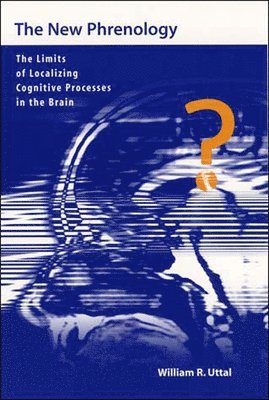
In this fascinating book, William R. Uttal raises the possibility that, however much we learn about the anatomy and physiology of the brain and psychology, we may never be able to cross the final bridge explaining how the mind is produced by the brain. Three main classes of mind-brain theory are considered and rejected: field theories, because they are based on a superficial analogy; single cell theories, because they emerge from a massive uncontrolled experimental program; and neural net theories, because they are constrained by combinatorial complexity.To support his argument, Uttal explores the empirical and conceptual foundations of these theoretical approaches and identifies flaws in their fundamental logic. The author concludes that the problems preventing solution of the mind-brain problem are intractable, yet well within the confines of natural science.
930 kr
Läs direkt efter köp
In this fascinating book, William R. Uttal raises the possibility that, however much we learn about the anatomy and physiology of the brain and psychology, we may never be able to cross the final bridge explaining how the mind is produced by the brain. Three main classes of mind-brain theory are considered and rejected: field theories, because they are based on a superficial analogy; single cell theories, because they emerge from a massive uncontrolled experimental program; and neural net theories, because they are constrained by combinatorial complexity.To support his argument, Uttal explores the empirical and conceptual foundations of these theoretical approaches and identifies flaws in their fundamental logic. The author concludes that the problems preventing solution of the mind-brain problem are intractable, yet well within the confines of natural science.
995 kr
Läs direkt efter köp
Directed to scholars and senior-level graduate students, this book is an iconoclastic survey of the history of dualism and its impact on contemporary cognitive psychology. It argues that much of modern cognitive or mentalist psychology is built upon a cryptodualism--the idea that the mind and brain can be thought of as independent entities. This dualism pervades so much of society that it covertly influences many aspects of modern science, particularly psychology. To support the argument, the history of dualism is extended over 100,000 years--from the Paleolithic times until modern philosophical and psychological thinking. The questions regarding this topic that are answered in the book are: 1) Does dualism influence the scientific theories of psychology? 2) If so, should dualism be put aside in the search for a more objective analysis of human mentation?
986 kr
Läs direkt efter köp
Directed to scholars and senior-level graduate students, this book is an iconoclastic survey of the history of dualism and its impact on contemporary cognitive psychology. It argues that much of modern cognitive or mentalist psychology is built upon a cryptodualism--the idea that the mind and brain can be thought of as independent entities. This dualism pervades so much of society that it covertly influences many aspects of modern science, particularly psychology. To support the argument, the history of dualism is extended over 100,000 years--from the Paleolithic times until modern philosophical and psychological thinking. The questions regarding this topic that are answered in the book are: 1) Does dualism influence the scientific theories of psychology? 2) If so, should dualism be put aside in the search for a more objective analysis of human mentation?
915 kr
Läs direkt efter köp
Psychology deals with the most complex subject matter of any science. As such, it is subject to misunderstandings, artifacts, and just simple errors of data, logic, and interpretation. This book teases out the details of some of the sources of these errors. It considers errors in psychological data and theories that arise from confusing endogenous and exogenous causal forces in perceptual research, misinterpreting the effects of inevitable natural laws as psychological phenomena, improper application of statistics and measurement, and flawed assumptions. Examples of each of these sources of error are presented and discussed. Finally, the book concludes that a return to a revitalized kind of behaviorism is preferred, rather than continuing on the current cognitive path.
915 kr
Läs direkt efter köp
Psychology deals with the most complex subject matter of any science. As such, it is subject to misunderstandings, artifacts, and just simple errors of data, logic, and interpretation. This book teases out the details of some of the sources of these errors. It considers errors in psychological data and theories that arise from confusing endogenous and exogenous causal forces in perceptual research, misinterpreting the effects of inevitable natural laws as psychological phenomena, improper application of statistics and measurement, and flawed assumptions. Examples of each of these sources of error are presented and discussed. Finally, the book concludes that a return to a revitalized kind of behaviorism is preferred, rather than continuing on the current cognitive path.
426 kr
Läs direkt efter köp
For many years behaviorism was criticized because it rejected the study of perception. This rejection was based on the extreme view that percepts were internal subjective experiences and thus not subject to examination. This book argues that this logic is incorrect and shows how visual perception, particularized in the study of form recognition, can be carried out from the behavioral point of view if certain constraints and limitations are understood and accepted. The book discusses the idea of representation of forms, considers the major historical neural, psychological, and computational theories of form recognition, and then concludes by presenting a modern approach to the problem. In this book, William Uttal continues his critical analysis of the foundations of modern psychology. He is particularly concerned with the logical and conceptual foundations of visual perception and uses form recognition as a vehicle to rationalize the discrepancies between classic behaviorism and what we now appreciate are legitimate research areas.
426 kr
Läs direkt efter köp
For many years behaviorism was criticized because it rejected the study of perception. This rejection was based on the extreme view that percepts were internal subjective experiences and thus not subject to examination. This book argues that this logic is incorrect and shows how visual perception, particularized in the study of form recognition, can be carried out from the behavioral point of view if certain constraints and limitations are understood and accepted. The book discusses the idea of representation of forms, considers the major historical neural, psychological, and computational theories of form recognition, and then concludes by presenting a modern approach to the problem. In this book, William Uttal continues his critical analysis of the foundations of modern psychology. He is particularly concerned with the logical and conceptual foundations of visual perception and uses form recognition as a vehicle to rationalize the discrepancies between classic behaviorism and what we now appreciate are legitimate research areas.
930 kr
Läs direkt efter köp
This book considers one of the most fundamental, but only infrequently considered, issues in psychology--Are mental processes accessible by means of verbal reports and/or experimental assays? It is argues that this is the main characteristic distinguishing between behaviorism and mentalistic cognitivism. The answer posed by the author is that, with few exceptions and for the most fundamental reasons, mental processes are not accessible and that any psychology, such as contemporary cognitivism, based on a putative analysis of mind into its mental components must be fallacious. Classic and modern arguments against both mentalism and behaviorism are reviewed. In general, it is concluded that most antibehaviorist arguments are based on second order humanistic considerations rather than those underlying the usual scientific standards. Behaviorism represents the best that can be done in a situation of fundamental immeasurability and uncertainty. A modern version is offered in the final chapter of this book.
930 kr
Läs direkt efter köp
This book considers one of the most fundamental, but only infrequently considered, issues in psychology--Are mental processes accessible by means of verbal reports and/or experimental assays? It is argues that this is the main characteristic distinguishing between behaviorism and mentalistic cognitivism. The answer posed by the author is that, with few exceptions and for the most fundamental reasons, mental processes are not accessible and that any psychology, such as contemporary cognitivism, based on a putative analysis of mind into its mental components must be fallacious. Classic and modern arguments against both mentalism and behaviorism are reviewed. In general, it is concluded that most antibehaviorist arguments are based on second order humanistic considerations rather than those underlying the usual scientific standards. Behaviorism represents the best that can be done in a situation of fundamental immeasurability and uncertainty. A modern version is offered in the final chapter of this book.
809 kr
Skickas inom 10-15 vardagar
809 kr
Skickas inom 10-15 vardagar
2 876 kr
Skickas inom 10-15 vardagar
945 kr
Skickas inom 10-15 vardagar
2 183 kr
Skickas inom 10-15 vardagar
809 kr
Skickas inom 10-15 vardagar
374 kr
Skickas inom 10-15 vardagar
2 386 kr
Skickas inom 10-15 vardagar
768 kr
Skickas inom 10-15 vardagar