William Sanders Scarborough – författare
Visar alla böcker från författaren . Handla med fri frakt och snabb leverans.
3 produkter
3 produkter
E-bok
PDF, Engelska, 20061 085 kr
Läs direkt efter köp
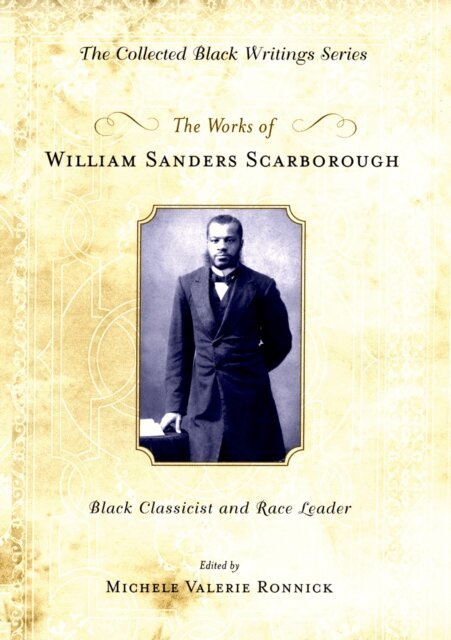
The first professional classicist of African American descent, William Sanders Scarborough rose from slavery to become president of Wilberforce University in Ohio. Excelling at Latin and Greek, he crossed the color line both socially and intellectually with his entry into a field of study commonly seen as elitist and dominated by white men. Although unknown to classicists today, Scarborough had a distinguished career in the field and held membership in many learned societies and had an active publication record. His life as an engaged intellectual, public citizen, and concerned educator was admired and emulated by W. E. B. Du Bois.This collection, which spans a half a century from the end of Reconstruction through the vagaries of World War I and the rise of Jim Crow, gives us window we have not had before into the challenges and ambiguities of this period. As a committed intellectual, concerned educator and loyal citizen, he served as an ambassador to and for his race to several generations of people both in the U.S and abroad. In Scarborough's writings we have a portrait of a man whose struggle for physical and intellectual freedom can inform us all.
Inbunden, Engelska, 2004
421 kr
Skickas inom 10-15 vardagar
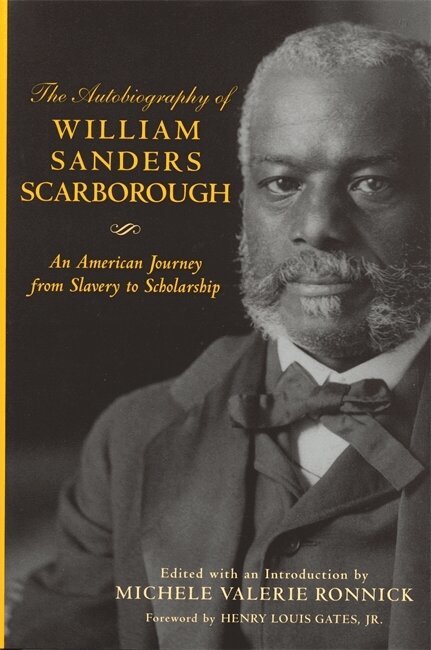
This illuminating autobiography traces Scarborough's path out of slavery in Macon, Georgia, to a prolific scholarly career that culminated with his presidency of Wilberforce University. Despite the racism he met as he struggled to establish a place in higher education for African Americans, Scarborough was an exemplary scholar, particularly in the field of classical studies. He was the first African American member of the Modern Language Association, a forty-four-year member of the American Philological Association, and a true champion of higher education Scarborough advocated the reading, writing, and teaching of liberal arts at a time when illiteracy was rampant due to slavery's legacy, white supremacists were dismissing the intellectual capability of blacks, and Booker T. Washington was urging African Americans to focus on industrial skills and training. The Autobiography of William Sanders Scarborough is a valuable historical record of the life and work of a pioneer who helped formalize the intellectual tradition of the black scholar, Michele Valerie Ronnick contextualizes Scarborough's narrative through extensive notes and by exploring a wide variety of sources such as census records, church registries, period newspapers, and military and university recards. This book is indispensable to anyone interested in the history of intellectual endeavor in America, Africana studies and classical studies, in particular, as well as those familiar with the associations and institutions that welcomed and valued Scarborough.
Häftad, Engelska, 2021
288 kr
Skickas inom 10-15 vardagar
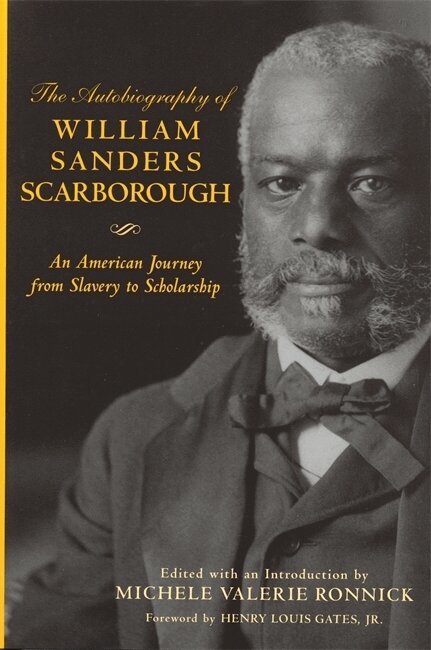
This illuminating autobiography traces Scarborough?s path out of slavery in Macon, Georgia, to a prolific scholarly career that culminated with his presidency of Wilberforce University. Despite the racism he met as he struggled to establish a place in higher education for African Americans, Scarborough was an exemplary scholar, particularly in the field of classical studies. He was the first African American member of the Modern Language Association, a forty-four-year member of the American Philological Association, and a true champion of higher education. Scarborough advocated the reading, writing, and teaching of liberal arts at a time when illiteracy was rampant due to slavery?s legacy, white supremacists were dismissing the intellectual capability of blacks, and Booker T. Washington was urging African Americans to focus on industrial skills and training.The Autobiography of William Sanders Scarborough is a valuable historical record of the life and work of a pioneer who helped formalize the intellectual tradition of the black scholar. Michele Valerie Ronnick contextualizes Scarborough?s narrative through extensive notes and by exploring a wide variety of sources such as census records, church registries, period newspapers, and military and university records. This book is indispensable to anyone interested in the history of intellectual endeavor in America, Africana studies and classical studies, in particular, as well as those familiar with the associations and institutions that welcomed and valued Scarborough.