William Skudlarek – författare
267 kr
Läs direkt efter köp
If Christians and Muslims are to live in peace, encouraging one another to grow in holiness and working together for the good of all God's creation, they must move beyond politicized and often negative images of one another. Monastic/Muslim dialogue-issuing from friendship and focused on revelation, prayer, and witness-is an important component in this effort. Indeed, it is essential.
Monastic Interreligious Dialogue is a commission of the Benedictine Confederation that promotes and coordinates dialogue between Catholic monastic men and women and spiritual practitioners of other religious traditions. The organization invited Iranian Shi'a Muslims and Christian monastics to share their faith in a revealing God, their understanding and practice of prayer, and their desire to be witnesses to the world of divine mercy and justice. This book invites readers to listen in and learn from their conversation.
267 kr
Läs direkt efter köp
If Christians and Muslims are to live in peace, encouraging one another to grow in holiness and working together for the good of all God's creation, they must move beyond politicized and often negative images of one another. Monastic/Muslim dialogue issuing from friendship and focused on revelation, prayer, and witness is an important component in this effort. Indeed, it is essential. A conference jointly sponsored by the International Institute for Islamic Studies and Monastic Interreligious Dialogue brought together Iranian Shi‘a Muslims and Christian monastics to Qum, Iran. Their first gathering was held a year previous in Rome, Italy and focused on spiritual topics like meditation and prayer. The second meeting in Qum was an occasion to deepen the bonds of friendship that had already been established. The conference theme centered on friendship and the dialogue explored the scriptural, theological, spiritual, philosophical, and practical bases for friendship between monks and Muslims. This follow up book invites readers to listen in and learn from their conversation and witness.
341 kr
Läs direkt efter köp
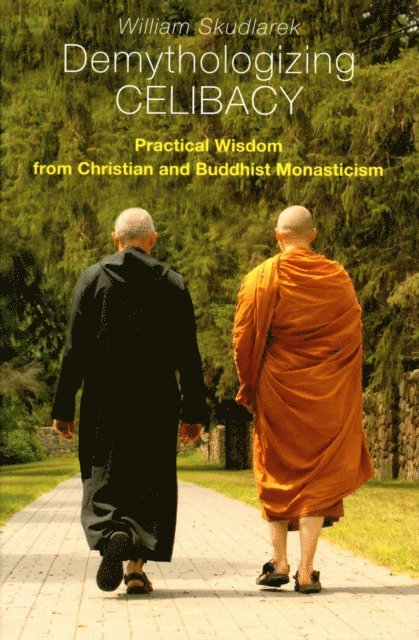
When St. Benedict compiled his Rule for Monasteries in the early decades of the sixth century, the Buddhist monastic code had already been in existence for about nine hundred years. Since monastic life is shaped by spiritual practices that are very similar across different religious traditions, it should not be too much of a stretch to suggest that Christians can learn from the accumulated wisdom of Buddhist monasticism.
For Buddhists, celibacy, accompanied by skillful reflection on their personal reactions to it, is a means of letting go of attachment to sensory pleasure. Buddhist monks do not marry; they strive to relinquish the desire for sexual pleasure because this form of gratification obstructs the one-pointed stillness that leads to insight.
For Christians, celibacy—like marriage—is ultimately about love: responding to God's love for us and expressing selfless love for others. In light of the Christian understanding of marriage as an authentic—indeed, the ordinary—path to holiness, Skudlarek proposes a demythologized view of celibacy, presenting it as an alternate and equally valid spiritual practice for those who choose not to accept the demands of a committed sexual relationship. Drawing on the monastic interreligious dialogue, Skudlarek considers the Buddhist view of celibacy, which is not mythologized as a response to a divine call or as a superhuman way of life. He examines their regard for it as simply—and profoundly—a path to freedom, peace, and happiness. As Christians become aware of the benefits of celibacy for monks who observe it without reference to the Gospel, they may be able to appreciate all the more its importance and value for those who wish to follow Christ as celibates, and in this way come to share in the freedom of the children of God.
205 kr
Skickas inom 5-8 vardagar