William T. Cooper – författare
536 kr
Läs direkt efter köp
536 kr
Läs direkt efter köp
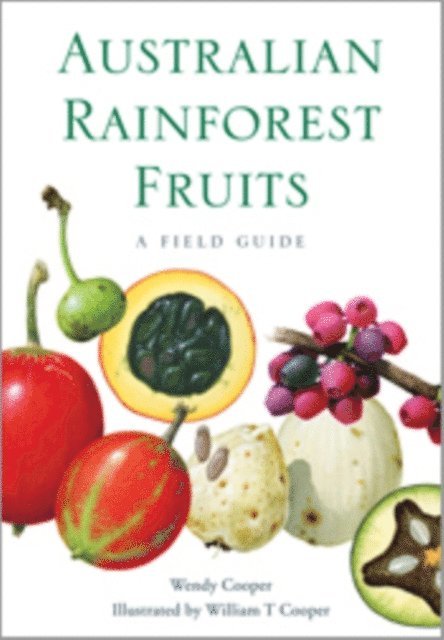
This beautifully illustrated field guide covers 504 of the most common fruiting plants found in Australia''s eastern rainforests, as well as a few species that are rare in the wild but generally well-known. These spectacular plants can be seen from Cape York to Victoria, with some species also found in the Northern Territory, Western Australia and overseas.
Rainforest fruits are often beautifully coloured, and in this guide the species are arranged by colour of ripe fruit, then by size and form. Five broad categories – pink to purple, blue to black, yellow and orange to red, green to brown, and white – allow people with even limited botanical knowledge to identify rainforest fruits.
Each species description is accompanied by a leaf drawing, a distribution map, and diagnostic characters to help the reader distinguish similar species.
Australian Rainforest Fruits includes stunning artwork by Australia’s leading natural history artist, William T Cooper. It will be sought not just by bushwalkers and natural history enthusiasts, but also by those who admire botanical art at its best.
1 642 kr
Läs direkt efter köp
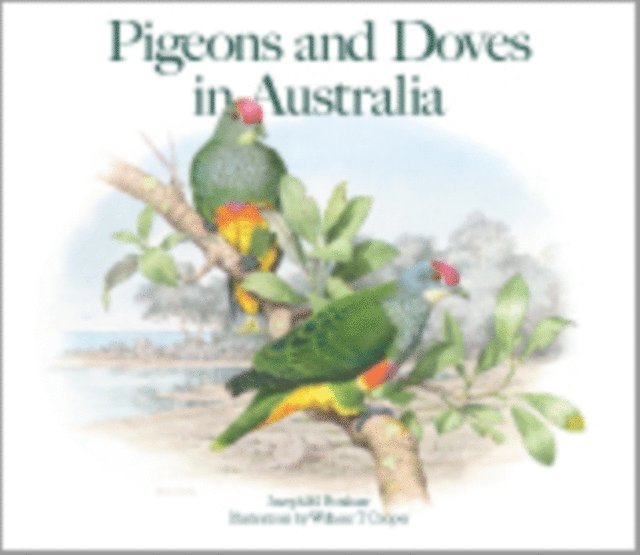
Possibly the most successful urban birds, pigeons and doves in the Order Columbiformes are one of the most easily recognised groups. They are an ancient and very successful group with an almost worldwide distribution and are most strongly represented in tropical and subtropical regions, including Australia. In most species simple plumage patterns feature mainly grey and brown with black, white or dull reddish markings, but the highly colourful fruit-doves include some of the most beautiful of all birds.
From dense rainforests of north Queensland, where brilliantly plumaged Superb Fruit-Doves Ptilinopus superbus are heard more easily than seen, to cold, windswept heathlands of Tasmania, where Brush Bronzewings Phaps elegans are locally common, most regions of Australia are frequented by one or more species. For more than a century after arrival of the First Fleet, interest in these birds focused on the eating qualities of larger species. In addition to contributing to declines of local populations in some parts of Australia, excessive hunting brought about the extinction of two species on Lord Howe Island and another species on Norfolk Island.
In Pigeons and Doves in Australia, Joseph Forshaw and William Cooper have summarised our current knowledge of all species, including those occurring on Christmas, Norfolk and Lord Howe Islands, and with superb artwork have given readers a visual appreciation of the birds in their natural habitats. Historical accounts of extinct species are also included. Detailed information on management practices for all species is presented, ensuring that Pigeons and Doves in Australia will become the standard reference work on these birds for ornithologists and aviculturists.
Winner of a 2015 Whitley Awards Certificate of Commendation for Illustrated Text.