William T. Dickens – författare
Visar alla böcker från författaren William T. Dickens. Handla med fri frakt och snabb leverans.
4 produkter
Labor and an Integrated Europe
Av Lloyd Ulman, William T. Dickens m. fl.
E-bok, 2010
328 kr
Lägg i varukorg
As the European Community moves toward full integration of its members' economies, one of the most far-reaching changes will be in the European labor market. Nontariff barriers to trade between the member countries will be removed, and workers will become free to seek employment anywhere in the …
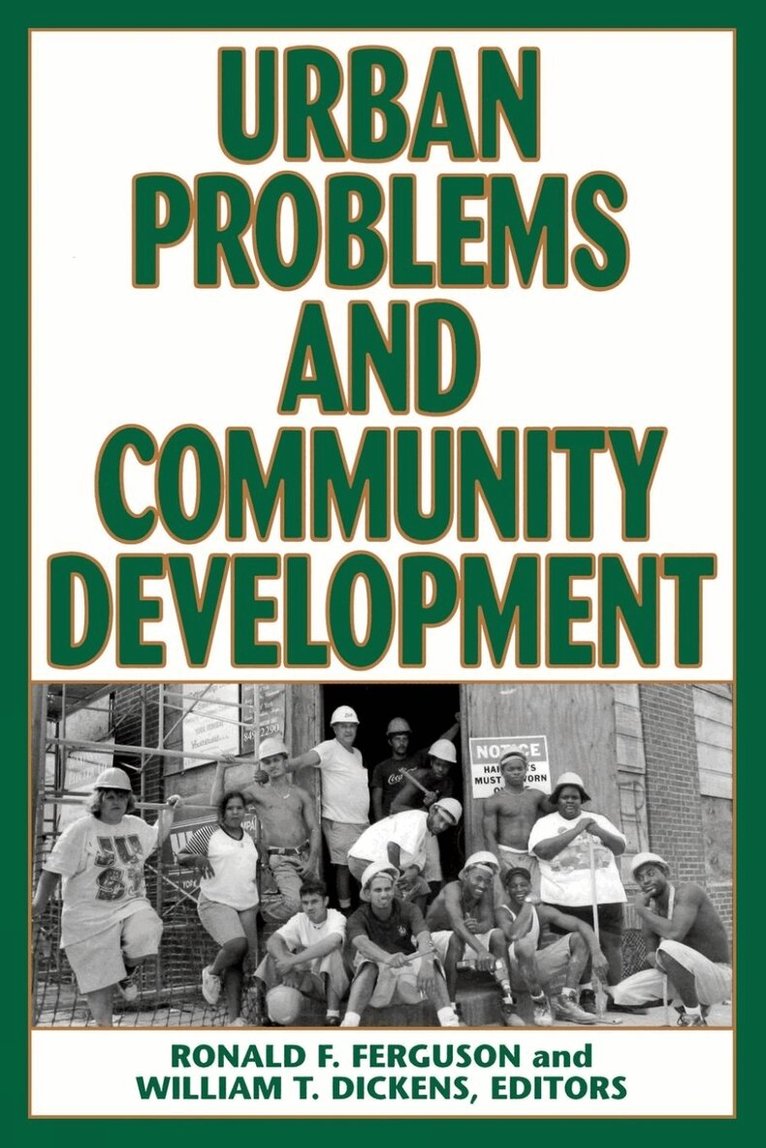
Urban Problems and Community Development
Av Ronald F. Ferguson, William T. Dickens
Häftad, 1999
459 kr
Lägg i varukorg
In recent years, concerned governments, businesses, and civic groups have launched ambitious programs of community development designed to halt, and even reverse, decades of urban decline. But while massive amounts of effort and money are being dedicated to improving the inner-cities, two important …
Urban Problems and Community Development
Av Ronald F. Ferguson, William T. Dickens
E-bok, 2011
499 kr
Lägg i varukorg
In recent years, concerned governments, businesses, and civic groups have launched ambitious programs of community development designed to halt, and even reverse, decades of urban decline. But while massive amounts of effort and money are being dedicated to improving the inner-cities, two important …
Labor and an Integrated Europe
Av Lloyd Ulman, William T. Dickens m. fl.
Häftad, 1993
303 kr
Lägg i varukorg
As the European Community moves toward full integration of its members' economies, one of the most far-reaching changes will be in the European labor market. Nontariff barriers to trade between the member countries will be removed, and workers will become free to seek employment anywhere in the …