Willy Apollon - Böcker
Visar alla böcker från författaren Willy Apollon. Handla med fri frakt och snabb leverans.
2 produkter
2 produkter
402 kr
Tillfälligt slut
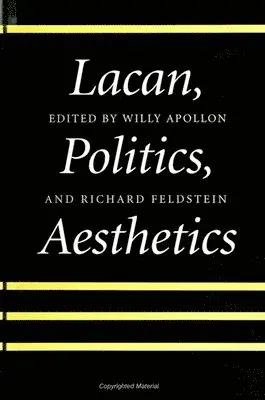
An anthology of psychoanalytic criticism applied to the wider field of cultural studies including class, gender, representation, ideology, and lawIn this volume, psychoanalysts, cultural theorists, and literary critics demonstrate the relevance of the unconscious economy to the field of cultural studies, applying psychoanalytic criticism to political and aesthetic issues related to the legal and ideological superstructure of contemporary society.These writers have adopted a variety of rhetorical positions when engaging cultural issues that deal with representation, ideology, class, and gender. Contributors include Willy Apollon, Richard Feldstein, Slavoj Zizek, Juliet Flower MacCannell, Judith Roof, Ellie Ragland, Elizabeth J. Bellamy, Bruce Fink, Maire Jaanus, Elizabeth Bronfen, Hanjo Berressem, Peter Widmer, Danielle Bergeron, Lucie Cantin, and Catherine Portuges.
651 kr
Skickas inom 3-6 vardagar
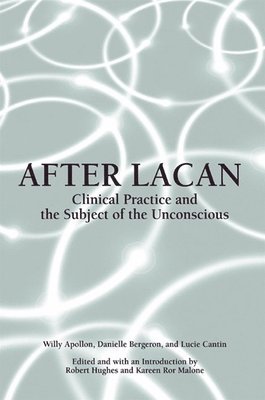
The authors use examples from their own clinical practice to explain the development of Lacanian theory.After Lacan combines abundant case material with graceful yet sophisticated theoretical exposition in order to explore the clinical practice of Lacanian psychoanalysis. Focusing on the groundbreaking clinical treatment of psychosis that Gifric (Groupe Interdisciplinaire Freudien de Recherches et d'Interventions Cliniques et Culturelles) has pioneered in Quebec, the authors discuss how Lacanians theorize psychosis and how Gifric has come to treat it analytically. Chapters are devoted to the general concepts and key terms that constitute the touchstones of the early phase of analytic treatment, elaborating their interrelations and their clinical relevance. The second phase of analytic treatment is also discussed, introducing a new set of terms to understand transference and the ethical act of analysis in the subject's assumption of the Other's lack. The concluding chapters broaden discussion to include the key psychic structures that describe the organization of subjectivity and thereby dictate the terms of analysis: not just psychosis, but also perversion and obsessional and hysterical neurosis.