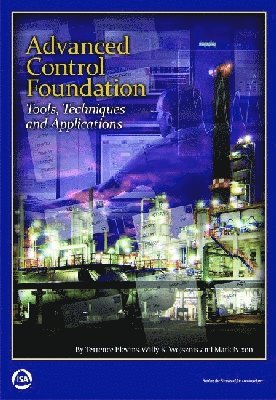
In this book, the authors address the concepts and terminology that are needed to apply advanced control techniques in the process industry. The book is written for the process or control engineer that is familiar with traditional control but has little or no experience in designing, installing, commissioning and maintaining advanced control applications. Each chapter of the book is structured to allow a person to quickly understand the technology and how it is applied. Application examples are used to show what is required to address an application. Also, a section of each chapter is dedicated to a more in-depth discussion of the technology for the reader that is interested in understanding the mathematical basis for the technology. A workshop is provided at the end of each chapter that explores the technology. The reader may view the workshop solution by going to the web site that accompanies the book.The book provides comprehensive coverage of the major advanced control techniques that are most commonly used in the process industry. This includes tools for monitoring control system performance, on-demand and adaptive tuning techniques, model predictive control, LP optimization, data analytics for batch and continuous processes, fuzzy logic control, neural networks and advancements in PID to use with wireless measurements. Since many readers may work with an existing DCS that does not support advanced control, a chapter of the book is dedicated to tools and techniques that the authors have found useful in integrating advanced control tools into an existing control system. Also, one chapter of the book addresses how dynamic process simulations may be easily created in a DCS to support checkout and operator training on the use of advanced control.
Wireless Control Foundation: Continuous and Discrete Control for the Process Industry offers an overview of wireless communication concepts and terminology essential for implementing wireless control in the process industry. The control system interfaces and wireless field devices discussed in this book are based on industrial wireless standards and are suitable for monitoring and control applications. Initially, wireless transmitters were used only for process monitoring, not control. However, over the years, wireless measurements have gained high user confidence, and new control techniques have been developed to address the unique characteristics of wireless operation. Due to the widespread acceptance of wireless transmitters, many manufacturers are now developing and introducing wireless final control elements, such as on/off and throttling valves. This book details technical innovations that utilize wireless measurements and final control elements for control purposes. It explains how control can be structured to manage the slow, non-periodic measurement update rates from wireless transmitters and how to compensate for communication delays to the final control elements. These innovative control techniques enable the use of wireless measurements and valves in closed-loop control systems, allowing for seamless integration. It also discusses how wireless measurements can be integrated with model predictive control (MPC). Multiple application examples illustrate the requirements for implementing wireless control. Workshops included in this book explore key concepts related to wireless control, with solutions available on the accompanying website. Designed for process or control engineers, this book assumes familiarity with traditional control methods but limited experience in designing, installing, testing or commissioning control systems that use wireless transmitters and valves. It offers comprehensive coverage of wireless control for both continuous and discrete applications within the process industry, and it provides information on commercially available analog and discrete wireless transmitters, as well as on/off valves. Some readers may work with existing distributed control systems (DCSs) that lack native support for wireless field devices, guidance is given on integrating wireless networks into control systems using supported serial and Ethernet interfaces. It also explains how to create the necessary proportional-integral-derivative (PID) modifications for wireless control using DCS-supported tools, and one chapter describes how to easily develop a dynamic simulation of the process and wireless field devices within a DCS for checkout and operator training on wireless control.
In Advanced Control Foundation: Tools, Techniques, and Applications, the authors address key concepts and terminology needed to apply advanced control techniques in the process industry. This book targets process or control engineers who are familiar with traditional control but have limited or no experience in designing, installing, commissioning and maintaining advanced control systems. Each chapter aims to help readers quickly understand the technology and its applications. Examples illustrate what's needed for specific use cases, and a dedicated section in each chapter offers a more detailed discussion for those interested in the mathematical basis behind the technology. A workshop is included at the end of each chapter to deepen the reader's understanding of the technology. The workshop solutions are available at the website URL provided in the book. This book provides comprehensive coverage of the key advanced control techniques most commonly used in the process industry. It includes tools for monitoring control system performance, on-demand and adaptive tuning methods, model predictive control, linear programming (LP) optimization, data analytics for batch and continuous processes, fuzzy logic control, neural networks and advancements in proportional integral derivative (PID) control for use with wireless measurements. Because many readers may work with existing distributed control systems (DCSs) that do not support advanced control, a chapter of this book is dedicated to tools and techniques that the authors have found useful in integrating advanced control tools into an existing control system. Additionally, one chapter of the book discusses how dynamic process simulations can be easily created in a DCS to support checkout and operator training in the use of advanced control.
In this book, the authors address the concepts and terminology that are needed to apply advanced control techniques in the process industry. The book is written for the process or control engineer that is familiar with traditional control but has little or no experience in designing, installing, commissioning and maintaining advanced control applications. Each chapter of the book is structured to allow a person to quickly understand the technology and how it is applied. Application examples are used to show what is required to address an application. Also, a section of each chapter is dedicated to a more in-depth discussion of the technology for the reader that is interested in understanding the mathematical basis for the technology. A workshop is provided at the end of each chapter that explores the technology. The reader may view the workshop solution by going to the web site that accompanies the book.The book provides comprehensive coverage of the major advanced control techniques that are most commonly used in the process industry. This includes tools for monitoring control system performance, on-demand and adaptive tuning techniques, model predictive control, LP optimisation, data analytics for batch and continuous processes, fuzzy logic control, neural networks and advancements in PID to use with wireless measurements. Since many readers may work with an existing DCS that does not support advanced control, a chapter of the book is dedicated to tools and techniques that the authors have found useful in integrating advanced control tools into an existing control system. Also, one chapter of the book addresses how dynamic process simulations may be easily created in a DCS to support checkout and operator training on the use of advanced control.
In this book, the authors address the wireless communication concepts and terminology that are needed to apply wireless control in the process industry. The control system interfaces and wireless field devices described in this book are based on wireless standards for industrial settings and can be used in monitoring and control applications.Wireless transmitters were initially used only to monitor the process, not control it. However, over the last six years, wireless measurements have earned high user confidence, and new control techniques have been devised to deal with the characteristics of wireless operation. Based on the broad acceptance of wireless transmitters, many manufacturers are in the process of developing and introducing wireless final control elements such as on/off and throttling valves.The book details the recent technical innovations that address control using wireless measurements and final control elements. It presents how control can be structured to manage the slow and non-periodic measurement update rates provided by a wireless transmitter and to compensate for communication delay to the final control element. These new control techniques make it possible to use wireless measurements and wireless valves in closed loop control. The book also presents how wireless measurements may be utilized with model predictive control (MPC).Multiple application examples are used to show what is required to utilize wireless control. Workshops are included in the book that explore key concepts associated with wireless control. The reader may view the workshop solution by going to the website that accompanies the book.The book is written for the process or control engineer, who is familiar with traditional control but has little or no experience in designing, installing, checking out or commissioning control using wireless transmitters and/or wireless valves. The book provides comprehensive coverage of wireless control for both continuous and discrete applications in the process industry. Information is provided on commercially available analog and discrete wireless transmitters and on-off valves.Since some readers may work with an existing distributed control system (DCS) that does not provide native support for wireless field devices, information is provided on how a wireless network may be integrated into a control system using supported serial and Ethernet interfaces. In addition, information is provided on how the PID modifications needed for wireless control may be created using tools supported by the DCS. One chapter of the book addresses how a dynamic simulation of the process and wireless field devices may be easily created in a DCS to support checkout and operator training on wireless control.