Willy Thayer - Böcker
Visar alla böcker från författaren Willy Thayer. Handla med fri frakt och snabb leverans.
3 produkter
3 produkter
322 kr
Skickas inom 7-10 vardagar
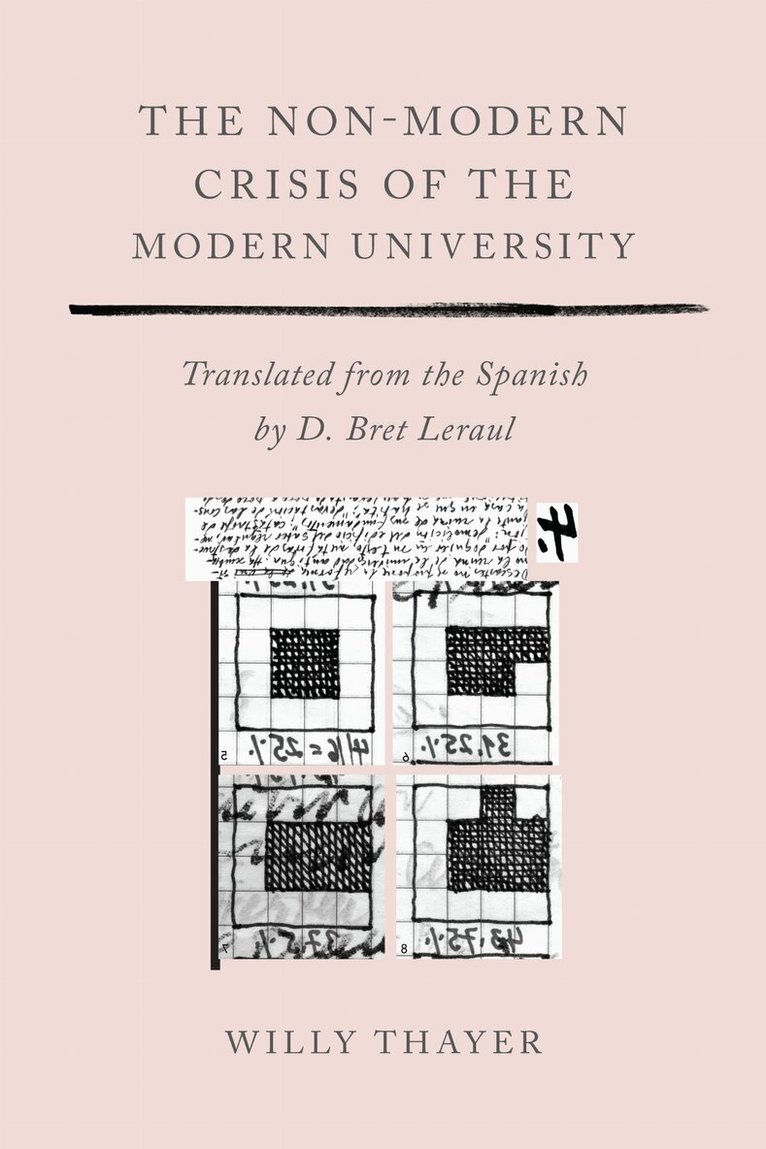
A landmark work of critical theory about the Western university from the Southern Cone Renowned Chilean philosopher Willy Thayer’s La crisis no moderna de la universidad moderna, first published in 1996 and in an updated edition in 2019, is a landmark work of critical theory from the Southern Cone. Presented in English for the first time, The Non-Modern Crisis of the Modern University rewrites the idea of the Western university while also diagnosing the ills of postdictatorship Chile through a philosophically informed dismantling of its neoliberal institutionalization of higher education. Bret Leraul’s translation advances the vital work of globalizing critical university studies by disseminating theory from the Global South. If the university helped to construct Chile’s neoliberal society, Thayer’s polemical deconstruction of both will help readers reconstruct the cultural politics of the era to better understand the global hegemony of neoliberalism today.
385 kr
Skickas inom 7-10 vardagar
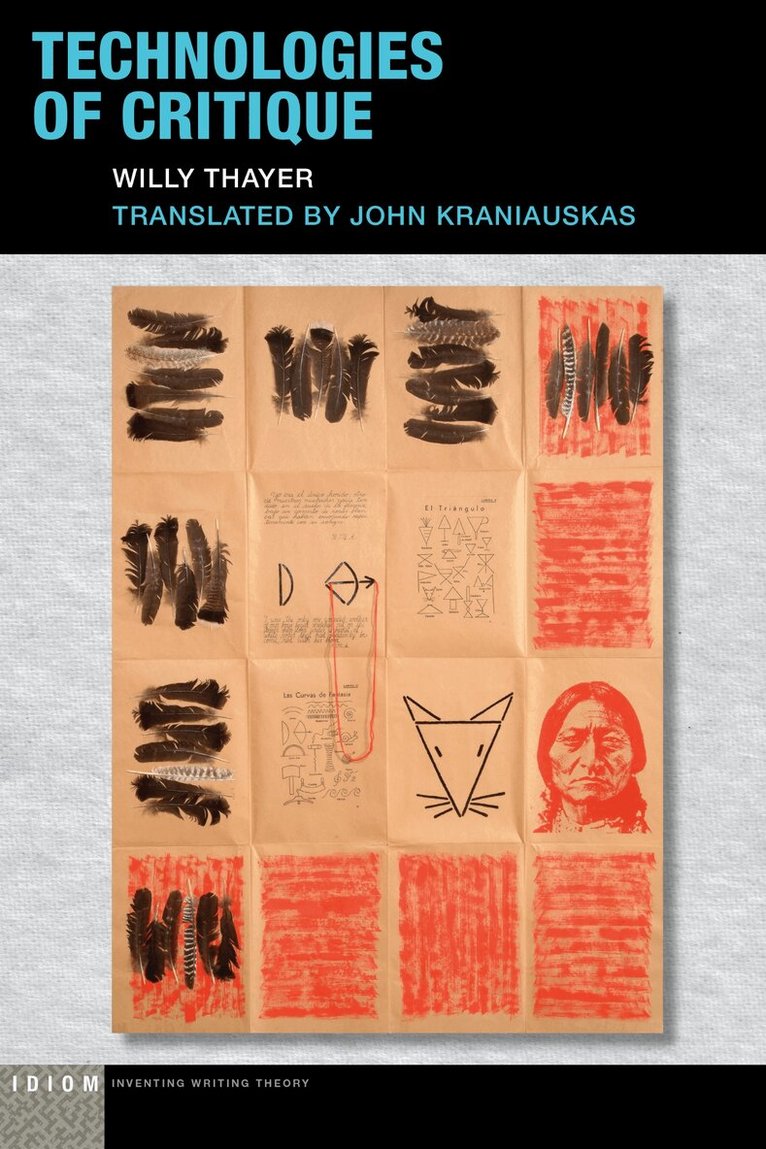
Critique—a program of thought as well as a disposition toward the world—is a crucial resource for politics and thought today, yet it is again and again instrumentalized by institutional frames and captured by market logics. Technologies of Critique elaborates a critical practice that eludes such capture. Building on Chile's history of dissident artists and the central entangling of politics and aesthetics, Thayer engages continental philosophical traditions, from Aristotle, Descartes and Heidegger through Walter Benjamin and Gilles Deleuze, and in implicit conversation with the Judith Butler, Roberto Esposito, and Bruno Latour, to help pinpoint the technologies and media through which art intervenes critically in socio-political life.
1 416 kr
Skickas inom 10-15 vardagar
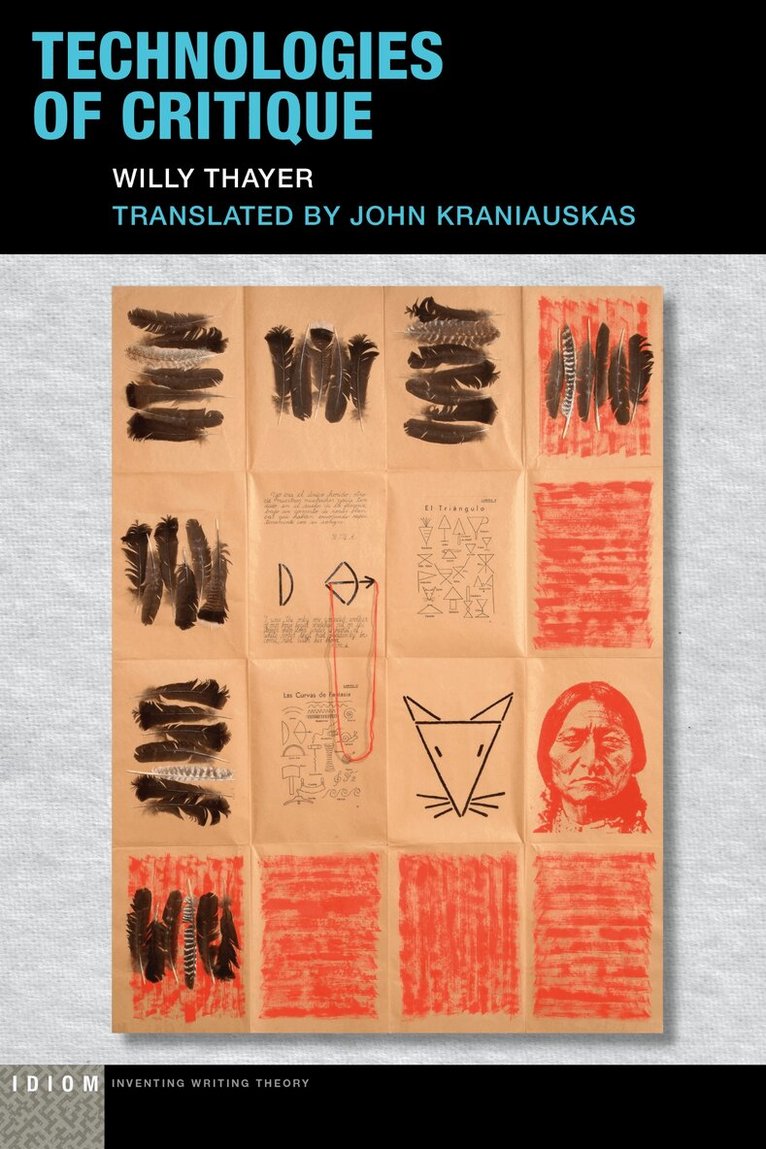
Critique—a program of thought as well as a disposition toward the world—is a crucial resource for politics and thought today, yet it is again and again instrumentalized by institutional frames and captured by market logics. Technologies of Critique elaborates a critical practice that eludes such capture. Building on Chile's history of dissident artists and the central entangling of politics and aesthetics, Thayer engages continental philosophical traditions, from Aristotle, Descartes and Heidegger through Walter Benjamin and Gilles Deleuze, and in implicit conversation with the Judith Butler, Roberto Esposito, and Bruno Latour, to help pinpoint the technologies and media through which art intervenes critically in socio-political life.