Wilma A. Bainbridge - Böcker
Visar alla böcker från författaren Wilma A. Bainbridge. Handla med fri frakt och snabb leverans.
6 produkter
6 produkter
683 kr
Skickas inom 10-15 vardagar
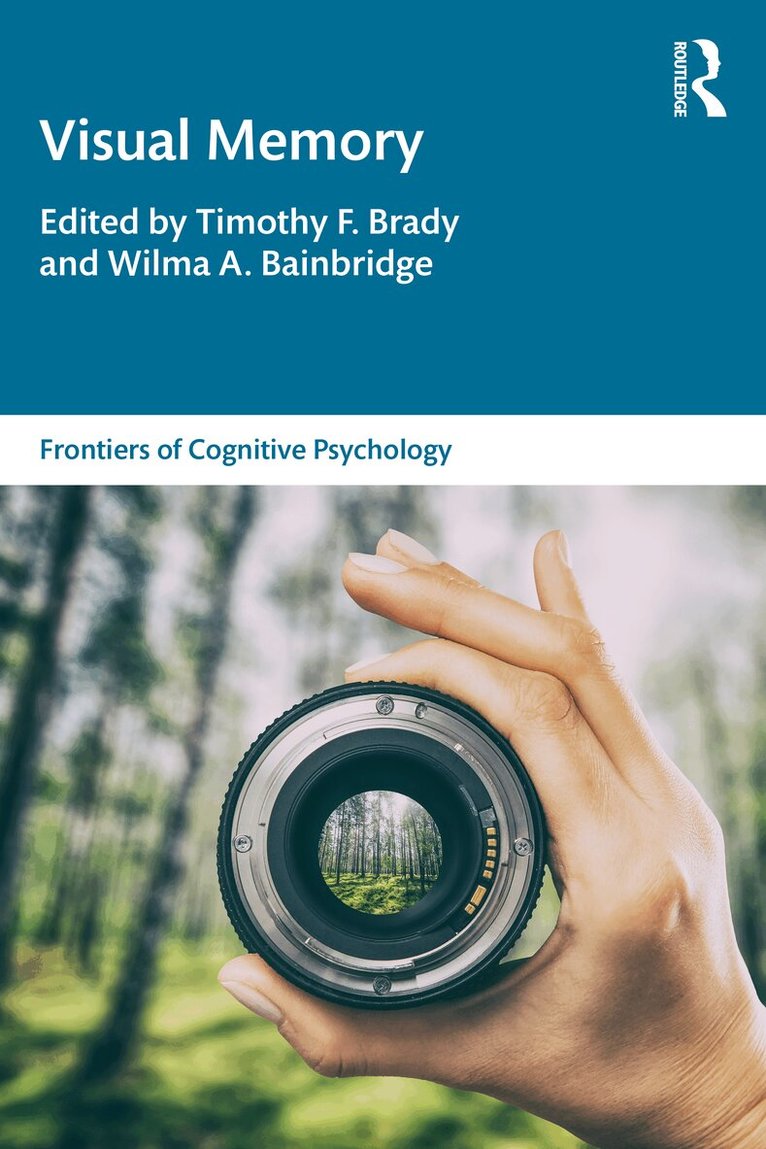
Featuring contributions from world-leading researchers, this book explores the relationship between visual perception and memory. It bridges the traditionally separate fields of vision science and recognition memory and deals with an interdisciplinary set of perspectives combining research in psychology, neuroscience, and artificial intelligence.The book makes new connections between the wealth of research from each respective field, developing the idea that visuospatial memory is our best memory system. This volume traverses topics grounded in both empirical study and real-world applications, including working (short-term) memory, long-term memory, the neuroscience of memory, development of memory over the lifespan, autobiographical memories, false memories, and eyewitness testimony. It argues that an increased knowledge of how visuospatial memory works can lead to an improved understanding of the basic features of memory, as well as providing strategies for memory improvement. The book features cutting edge visual memory research, where converging methods in psychophysics, cognitive neuroscience, and computational modeling have been propelling the field forward. Visual Memory is an essential read for all students and researchers of memory and visual perception. It will also be useful for researchers and students in related fields including human-computer interaction, data visualization, cognitive science, and cognitive enhancement.
3 095 kr
Skickas inom 10-15 vardagar
Featuring contributions from world-leading researchers, this book explores the relationship between visual perception and memory. It bridges the traditionally separate fields of vision science and recognition memory and deals with an interdisciplinary set of perspectives combining research in psychology, neuroscience, and artificial intelligence.The book makes new connections between the wealth of research from each respective field, developing the idea that visuospatial memory is our best memory system. This volume traverses topics grounded in both empirical study and real-world applications, including working (short-term) memory, long-term memory, the neuroscience of memory, development of memory over the lifespan, autobiographical memories, false memories, and eyewitness testimony. It argues that an increased knowledge of how visuospatial memory works can lead to an improved understanding of the basic features of memory, as well as providing strategies for memory improvement. The book features cutting edge visual memory research, where converging methods in psychophysics, cognitive neuroscience, and computational modeling have been propelling the field forward. Visual Memory is an essential read for all students and researchers of memory and visual perception. It will also be useful for researchers and students in related fields including human-computer interaction, data visualization, cognitive science, and cognitive enhancement.
396 kr
Skickas inom 7-10 vardagar
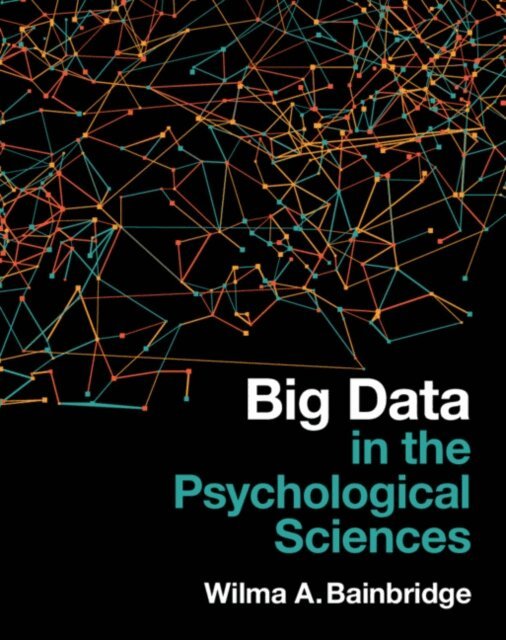
Cutting-edge computational tools like artificial intelligence, data scraping, and online experiments are leading to new discoveries about the human mind. However, these new methods can be intimidating. This textbook demonstrates how Big Data is transforming the field of psychology, in an approachable and engaging way that is geared toward undergraduate students without any computational training. Each chapter covers a hot topic, such as social networks, smart devices, mobile apps, and computational linguistics. Students are introduced to the types of Big Data one can collect, the methods for analyzing such data, and the psychological theories we can address. Each chapter also includes discussion of real-world applications and ethical issues. Supplementary resources include an instructor manual with assignment questions and sample answers, figures and tables, and varied resources for students such as interactive class exercises, experiment demos, articles, and tools.
1 110 kr
Skickas inom 7-10 vardagar
Cutting-edge computational tools like artificial intelligence, data scraping, and online experiments are leading to new discoveries about the human mind. However, these new methods can be intimidating. This textbook demonstrates how Big Data is transforming the field of psychology, in an approachable and engaging way that is geared toward undergraduate students without any computational training. Each chapter covers a hot topic, such as social networks, smart devices, mobile apps, and computational linguistics. Students are introduced to the types of Big Data one can collect, the methods for analyzing such data, and the psychological theories we can address. Each chapter also includes discussion of real-world applications and ethical issues. Supplementary resources include an instructor manual with assignment questions and sample answers, figures and tables, and varied resources for students such as interactive class exercises, experiment demos, articles, and tools.
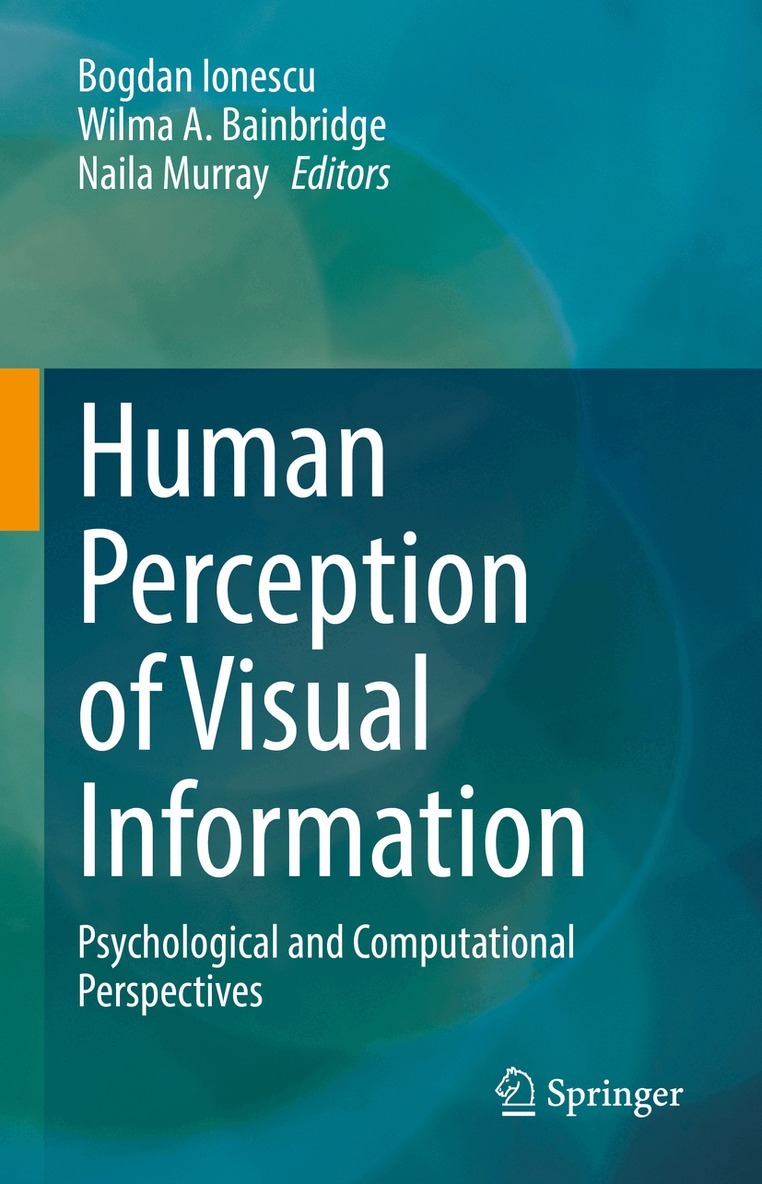
Human Perception of Visual Information
Psychological and Computational Perspectives
Inbunden, Engelska, 2021
1 802 kr
Skickas inom 10-15 vardagar
Recent years have witnessed important advancements in our understanding of the psychological underpinnings of subjective properties of visual information, such as aesthetics, memorability, or induced emotions. Concurrently, computational models of objective visual properties such as semantic labelling and geometric relationships have made significant breakthroughs using the latest achievements in machine learning and large-scale data collection. There has also been limited but important work exploiting these breakthroughs to improve computational modelling of subjective visual properties. The time is ripe to explore how advances in both of these fields of study can be mutually enriching and lead to further progress.This book combines perspectives from psychology and machine learning to showcase a new, unified understanding of how images and videos influence high-level visual perception - particularly interestingness, affective values and emotions, aesthetic values, memorability, novelty, complexity, visual composition and stylistic attributes, and creativity. These human-based metrics are interesting for a very broad range of current applications, ranging from content retrieval and search, storytelling, to targeted advertising, education and learning, and content filtering.Work already exists in the literature that studies the psychological aspects of these notions or investigates potential correlations between two or more of these human concepts. Attempts at building computational models capable of predicting such notions can also be found, using state-of-the-art machine learning techniques. Nevertheless their performance proves that there is still room for improvement, as the tasks are by nature highly challenging and multifaceted, requiring thought on both the psychological implications of the human concepts, as well as their translation to machines.
Human Perception of Visual Information
Psychological and Computational Perspectives
Häftad, Engelska, 2022
1 802 kr
Skickas inom 10-15 vardagar
Recent years have witnessed important advancements in our understanding of the psychological underpinnings of subjective properties of visual information, such as aesthetics, memorability, or induced emotions. Concurrently, computational models of objective visual properties such as semantic labelling and geometric relationships have made significant breakthroughs using the latest achievements in machine learning and large-scale data collection. There has also been limited but important work exploiting these breakthroughs to improve computational modelling of subjective visual properties. The time is ripe to explore how advances in both of these fields of study can be mutually enriching and lead to further progress.This book combines perspectives from psychology and machine learning to showcase a new, unified understanding of how images and videos influence high-level visual perception - particularly interestingness, affective values and emotions, aesthetic values, memorability, novelty, complexity, visual composition and stylistic attributes, and creativity. These human-based metrics are interesting for a very broad range of current applications, ranging from content retrieval and search, storytelling, to targeted advertising, education and learning, and content filtering.Work already exists in the literature that studies the psychological aspects of these notions or investigates potential correlations between two or more of these human concepts. Attempts at building computational models capable of predicting such notions can also be found, using state-of-the-art machine learning techniques. Nevertheless their performance proves that there is still room for improvement, as the tasks are by nature highly challenging and multifaceted, requiring thought on both the psychological implications of the human concepts, as well as their translation to machines.