Winfried Just – författare
Visar alla böcker från författaren Winfried Just. Handla med fri frakt och snabb leverans.
4 produkter
4 produkter
1 167 kr
Skickas inom 10-15 vardagar
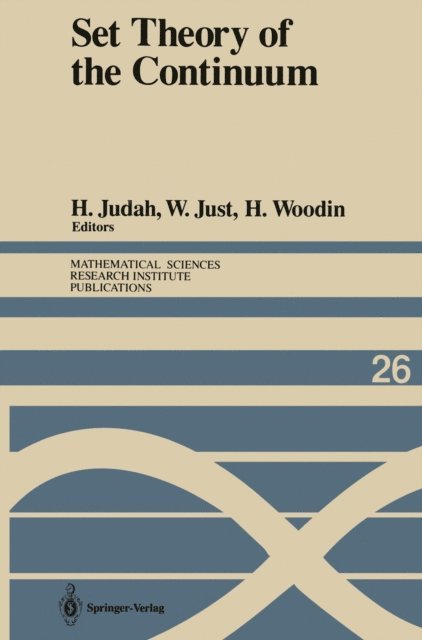
Primarily consisting of talks presented at a workshop at the MSRI during its "Logic Year" 1989-90, this volume is intended to reflect the whole spectrum of activities in set theory. The first section of the book comprises the invited papers surveying the state of the art in a wide range of topics of set-theoretic research. The second section includes research papers on various aspects of set theory and its relation to algebra and topology. Contributors include: J.Bagaria, T. Bartoszynski, H. Becker, P. Dehornoy, Q. Feng, M. Foreman, M. Gitik, L. Harrington, S. Jackson, H. Judah, W. Just, A.S. Kechris, A. Louveau, S. MacLane, M. Magidor, A.R.D. Mathias, G. Melles, W.J. Mitchell, S. Shelah, R.A. Shore, R.I. Soare, L.J. Stanley, B. Velikovic, H. Woodin
1 105 kr
Skickas inom 11-20 vardagar
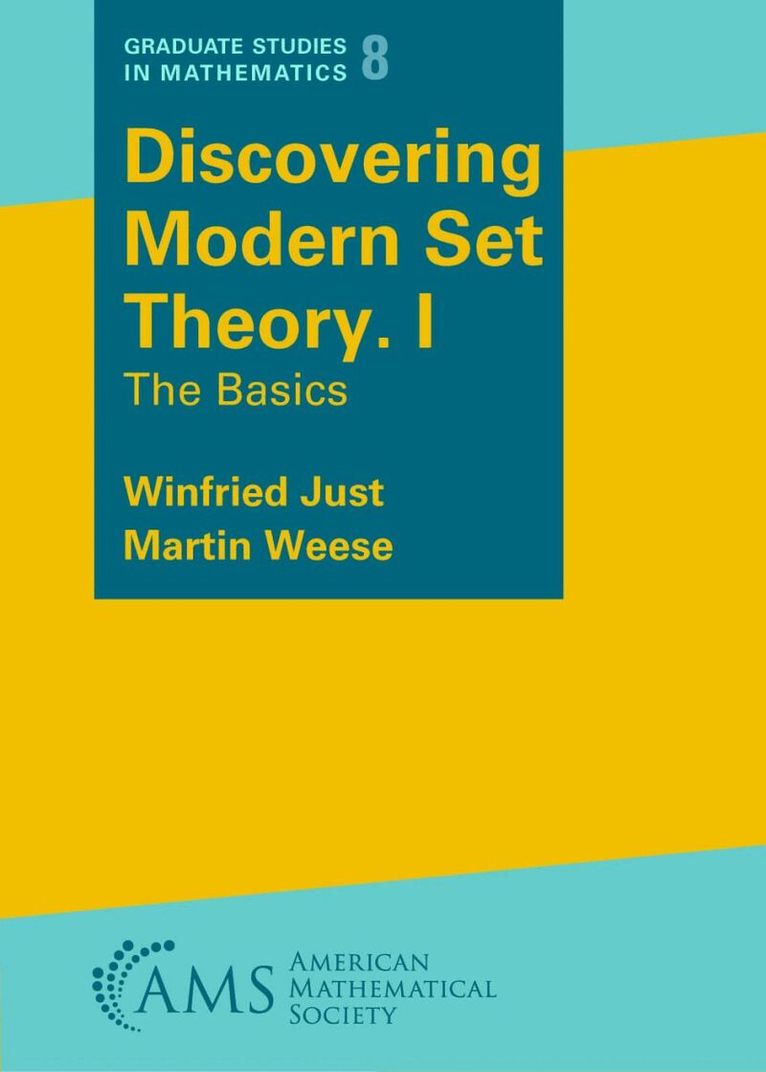
From the reviews: Serious graduate students ... would profit from reading the book for the mathematical maturity they would gain in the process. The conversational, almost Socratic, style of exposition is well suited to giving students some insight into the process of doing mathematics as well as to the importance of asking the right questions ... Just and Weese's text would be ideally suited for...students who are serious about studying set theory. -Journal of Symbolic Logic The careful exposition, written in a lively and very readable style which addresses the reader rather directly, provides (by explanations, comments, and remarks) much information and motivation. Recommended. -Monatshefte fur Mathematik This book is an introduction to set theory for beginning graduate students who want to get a sound grounding in those aspects of set theory used extensively throughout other areas of mathematics. Topics covered include formal languages and models, the power and limitation of the Axiomatic Method, the Axiom of Choice, including the fascinating Banach-Tarski Paradox, applications of Zorn's Lemma, ordinal arithmetic, including transfinite induction, and cardinal arithmetic. The style of writing, more a dialogue with the reader than that of the Master indoctrinating the pupil, makes this also very suitable for self-study.
1 011 kr
Skickas inom 3-6 vardagar
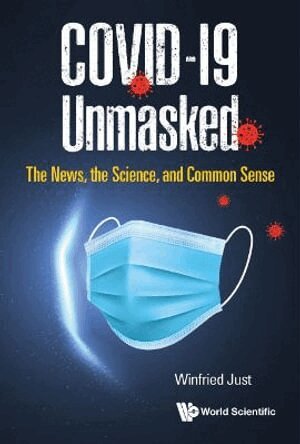
How can we keep up with the deluge of information about COVID-19 and tell which parts are most important and trustworthy?We read: 'Scientists recommend', 'Experts warn', 'A new model predicts'. How do scientific experts come up with their recommendations? What do their predictions really mean for us, for our friends, and our families?How can we make rational decisions? And how can we have sensible conversations about the pandemic when we disagree?These are the questions that this book is trying to address.It is written in the form of dialogues. Alice, a student of epidemiology, explains the science to three of her fellow students who have a lot of questions for her. The students have the same concerns that we all share to varying degrees: What the pandemic is doing to our health, our economy, and our cherished freedoms. In their conversations, they discover how the science relates to these questions.The book focuses on epidemiology, the science of how infections spread and how the spread can be mitigated. The science of how many infections can be prevented by certain kinds of actions. This is what we need to understand if we want to act wisely, as individuals and as a society.The author's goal is to help the reader think about the COVID-19 pandemic like an epidemiologist. About the various preventive measures, what they are trying to accomplish, what the obstacles are. About what is likely to be most effective in the long run at moderate economic and personal cost. About the likely consequences of personal decisions. About how to best protect oneself and others while allowing all of us to lead lives that are as close as possible to normal.While some chapters present slightly more advanced material than others, no scientific background is needed to follow the conversations. The technical concepts are explained in small steps and the occasional calculations in the book require only high-school mathematics.
588 kr
Skickas inom 5-8 vardagar
How can we keep up with the deluge of information about COVID-19 and tell which parts are most important and trustworthy?We read: 'Scientists recommend', 'Experts warn', 'A new model predicts'. How do scientific experts come up with their recommendations? What do their predictions really mean for us, for our friends, and our families?How can we make rational decisions? And how can we have sensible conversations about the pandemic when we disagree?These are the questions that this book is trying to address.It is written in the form of dialogues. Alice, a student of epidemiology, explains the science to three of her fellow students who have a lot of questions for her. The students have the same concerns that we all share to varying degrees: What the pandemic is doing to our health, our economy, and our cherished freedoms. In their conversations, they discover how the science relates to these questions.The book focuses on epidemiology, the science of how infections spread and how the spread can be mitigated. The science of how many infections can be prevented by certain kinds of actions. This is what we need to understand if we want to act wisely, as individuals and as a society.The author's goal is to help the reader think about the COVID-19 pandemic like an epidemiologist. About the various preventive measures, what they are trying to accomplish, what the obstacles are. About what is likely to be most effective in the long run at moderate economic and personal cost. About the likely consequences of personal decisions. About how to best protect oneself and others while allowing all of us to lead lives that are as close as possible to normal.While some chapters present slightly more advanced material than others, no scientific background is needed to follow the conversations. The technical concepts are explained in small steps and the occasional calculations in the book require only high-school mathematics.