
Winifred V. Davies – författare
Visar alla böcker från författaren Winifred V. Davies. Handla med fri frakt och snabb leverans.
3 produkter
3 produkter
E-bok
Tyska, 2017798 kr
Läs direkt efter köp
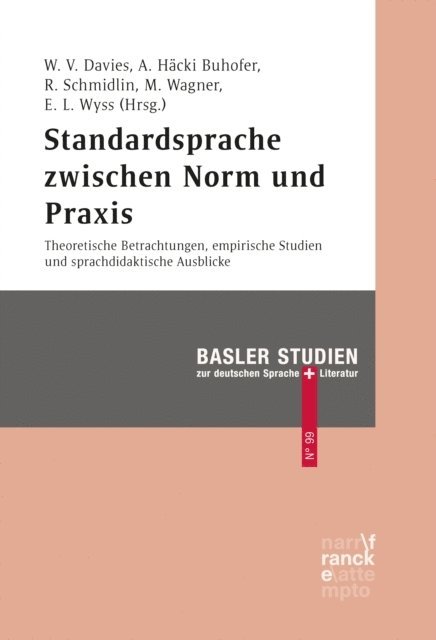
Die Standardsprache, auch als Hochdeutsch bezeichnet, die im deutschen Sprachraum in der öffentlichen Kommunikation, in den Schulen und in der Politik verwendet wird, ist uneinheitlich. Die Variation der Standardsprache wird in der Linguistik gegenwärtig mit plurizentrischen und pluriarealen Konzepten erfasst. In diesem Band werden neue Ergebnisse aus Forschungsprojekten zum Gebrauch und zur Bewertung der Standardsprache in Österreich, Deutschland, Luxemburg, Südtirol und der Deutschschweiz diskutiert. Einen besonderen Fokus bilden dabei die schulischen Praktiken.
E-bok
PDF, Tyska, 2017798 kr
Läs direkt efter köp
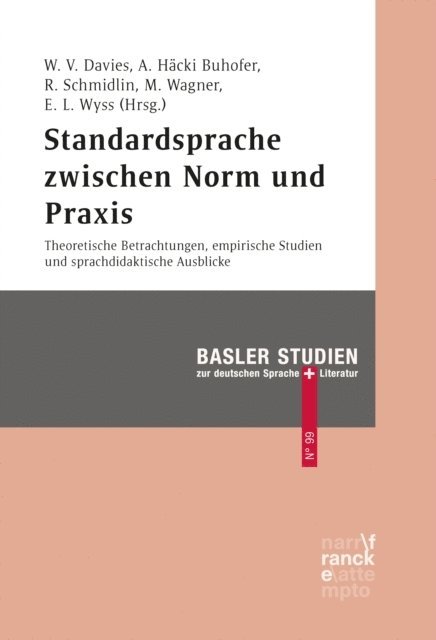
Die Standardsprache, auch als Hochdeutsch bezeichnet, die im deutschen Sprachraum in der öffentlichen Kommunikation, in den Schulen und in der Politik verwendet wird, ist uneinheitlich. Die Variation der Standardsprache wird in der Linguistik gegenwärtig mit plurizentrischen und pluriarealen Konzepten erfasst. In diesem Band werden neue Ergebnisse aus Forschungsprojekten zum Gebrauch und zur Bewertung der Standardsprache in Österreich, Deutschland, Luxemburg, Südtirol und der Deutschschweiz diskutiert. Einen besonderen Fokus bilden dabei die schulischen Praktiken.

Inbunden, Engelska, 1994
690 kr
Tillfälligt slut
This is a collection of articles that examine sociolinguistic issues in many of the countries of Western Europe. Lanugages do not exist in a vacuum but are affected by the social and political changes that affect their speakers. Such changes can lead to modifications both in the structure of a given language and in how much or how little it is used by the community. The volume deals with the linguistic repercussions of social and political change in Western Europe in a series of articles, by specialists in each area, that range from general surveys to detailed studies of one linguistic variety in a particular historical context. Although the main focus is on the present and on the prospects for the future within a more closely-integrated Europe, the volume also contains several contributions that illustrate the far-reaching effects of social and political developments in language use and structure in past centuries.