W.N. Adger – författare
Visar alla böcker från författaren W.N. Adger. Handla med fri frakt och snabb leverans.
3 produkter
3 produkter
Inbunden, Engelska, 2001
1 633 kr
Skickas inom 10-15 vardagar
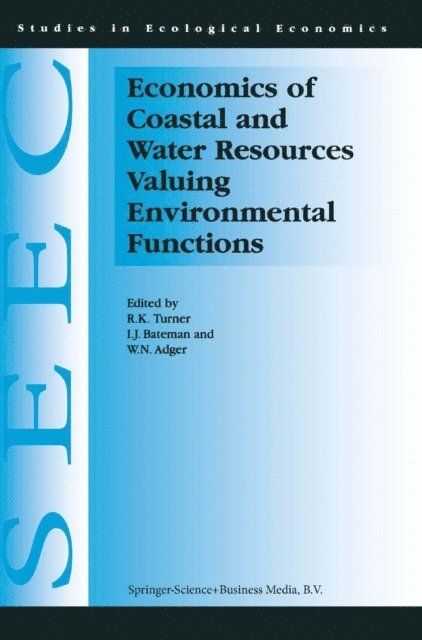
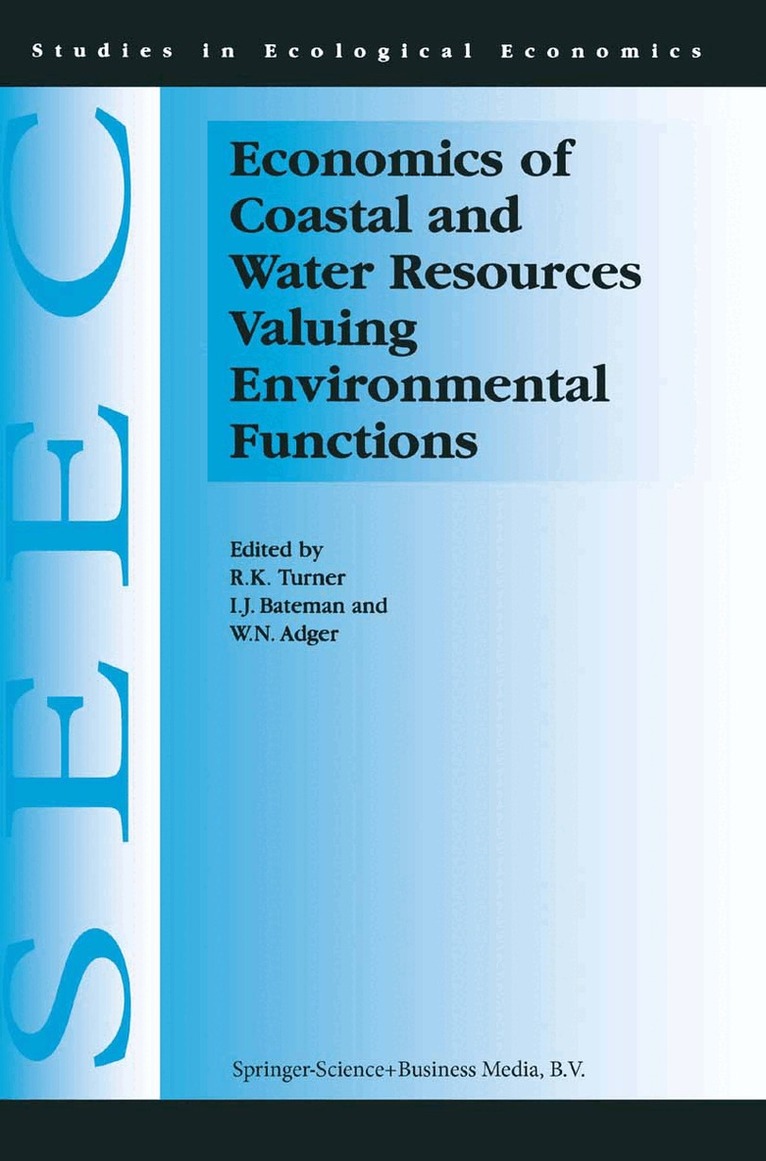
Most of the chapters in this volume are authored by staff or associates of the Centre for Social and Economic Research on the Global Environment (CSERGE). CSERGE is a research centre sponsored by the UK Economic and Social Research Council (ESRC), which specialises in interdisciplinary work focussed on environmental management issues. Weare grateful for the long term support that we have received from the ESRC. We would also like to acknowledge the efforts of Ann Dixon and SHin Pearce in the preparation of this volume. vii INTRODUCTION CHAPTER 1. ECOLOGICAL ECONOMICS AND COASTAL ZONE ECOSYSTEMS' VALUES: AN OVERVIEW. Turner, R. K. , Bateman, I. J. and Adger, W. N. 1. 1 Coastal zone pressure and sustainable management challenges Given the continued intensification of the process of globalisation - involving population growth, population density changes via urbanisation, industrial development, increased trade and capital flows, liberalisation of transnational corporation activity and lifestyle and attitudinal changes - coastal zones and their hydrologically linked catchment areas have come under heavy environmental pressure. The scale and extent of socio-economic activities have profound implications for the now coevolving natural and human systems and their complex interrelationships (Turner, Perrings and Folke, 1997). The consequences of this process of change manifest themselves across a range of spatial and temporal scales. Indeed the juxtaposition of different spatial, functional and temporal scales that is inherent in the catchment-coastal ecosystems-seas/oceans continuum poses particularly difficult challenges for both science and resource management/governance.
Häftad, Engelska, 2010
1 635 kr
Skickas inom 10-15 vardagar
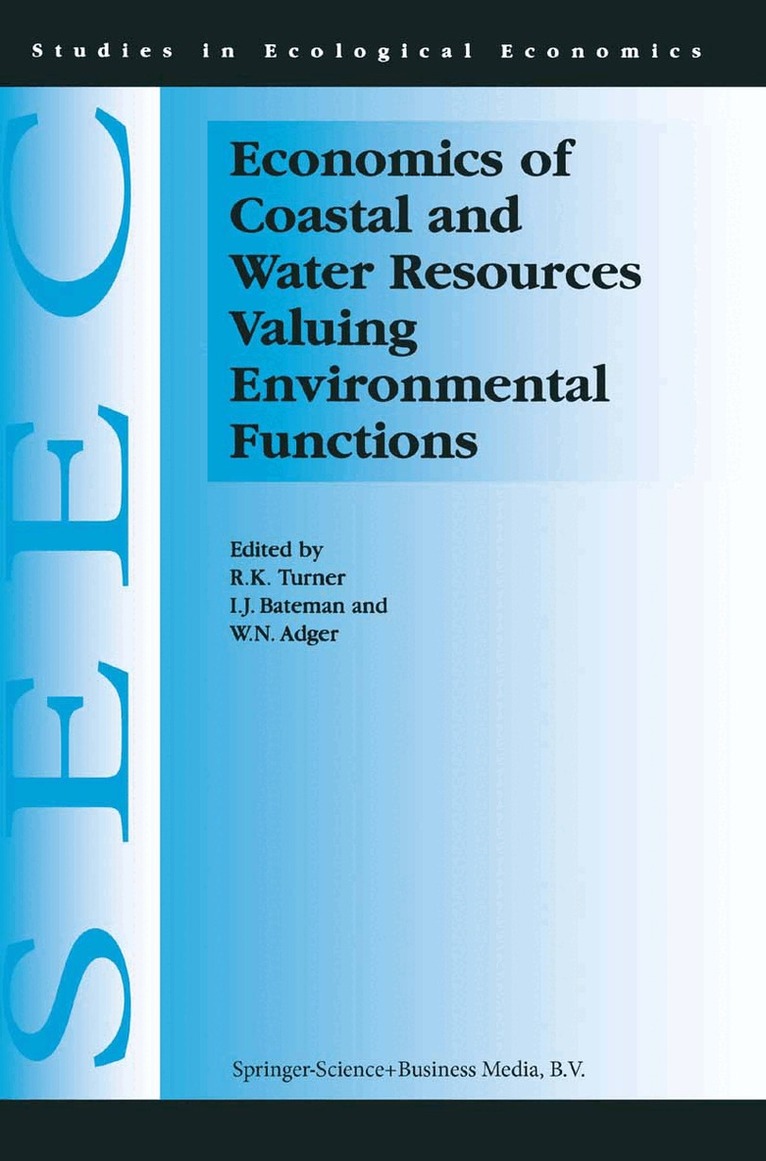
This book examines in detail the resource management problems and challenges posed by the intensification of the environmental change process in coastal areas around the globe. The analysis deployed is by and large buttressed by methods and techniques drawn from social science disciplines: economics, geography, and psychology. However, the overall approach adopted is multidisciplinary with additional contributions from the natural sciences and statistics. The key concept developed is that of ecosystem function value diversity and its management policy analogue, ecosystem integrity maintenance, and the consequent sustainable utilisation of coastal system assets. The functioning of healthy ecosystems generates a range of outputs which society values. The individual chapters analyse and evaluate a range of coastal and water resource functions across different temporal and spatial scales.
E-bok
PDF, Engelska, 20131 977 kr
Läs direkt efter köp
Most of the chapters in this volume are authored by staff or associates of the Centre for Social and Economic Research on the Global Environment (CSERGE). CSERGE is a research centre sponsored by the UK Economic and Social Research Council (ESRC), which specialises in interdisciplinary work focussed on environmental management issues. Weare grateful for the long term support that we have received from the ESRC. We would also like to acknowledge the efforts of Ann Dixon and SHin Pearce in the preparation of this volume. vii INTRODUCTION CHAPTER 1. ECOLOGICAL ECONOMICS AND COASTAL ZONE ECOSYSTEMS'' VALUES: AN OVERVIEW. Turner, R. K. , Bateman, I. J. and Adger, W. N. 1. 1 Coastal zone pressure and sustainable management challenges Given the continued intensification of the process of globalisation - involving population growth, population density changes via urbanisation, industrial development, increased trade and capital flows, liberalisation of transnational corporation activity and lifestyle and attitudinal changes - coastal zones and their hydrologically linked catchment areas have come under heavy environmental pressure. The scale and extent of socio-economic activities have profound implications for the now coevolving natural and human systems and their complex interrelationships (Turner, Perrings and Folke, 1997). The consequences of this process of change manifest themselves across a range of spatial and temporal scales. Indeed the juxtaposition of different spatial, functional and temporal scales that is inherent in the catchment-coastal ecosystems-seas/oceans continuum poses particularly difficult challenges for both science and resource management/governance.