W.O. Henderson – författare
Visar alla böcker från författaren W.O. Henderson. Handla med fri frakt och snabb leverans.
42 produkter
Genesis of the Common Market
Inbunden, 2005
2197 kr
Lägg i varukorg
First published in 1962. A study of the rise of great industries in Western Europe. The factors which promoted industrial growth in Britain also influenced economic developments on the other side of the English Channel and there were signs of progress in the manufactures of France, Germany and the …
Industrial Revolution on the Continent
Germany, France, Russia 1800-1914
Inbunden, 2005
3156 kr
Lägg i varukorg
This book was first published in 1961.
Studies in the Economic Policy of Frederick the Great
Inbunden, 2005
3156 kr
Lägg i varukorg
Biographies of Frederick the Great generally emphasise the military and diplomatic events of his reign and neglect to discuss fully the significance of his economic policy.In this series of essays Dr. Henderson deals with various aspects of the Prussian economy in Frederick the Great’s reign. He …
Industrial Britain Under the Regency
The Diaries of Escher, Bodmer, May and de Gallois 1814-18
Inbunden, 2005
3156 kr
Lägg i varukorg
In this book W. O. Henderson has brought together in English translation the journals of four foreign visitors who travelled in England and Scotland in the years immediately following the Napoleonic wars, in a way which may be regarded as a sequel to his recent book on J. C. Fischer’s diaries of …
J.C. Fischer and his Diary of Industrial England
1814-51
Inbunden, 2005
3156 kr
Lägg i varukorg
This book was first published in 1966. It was surprising that so small and so remote a country as Switzerland should have played such an important part in the industrial revolution on the Continent in the nineteenth century. A lack of natural resources and basic raw materials and population of …
Studies in German Colonial History
Häftad, 2014
396 kr
Lägg i varukorg
This collection of essays is one of the few pieces of work on the overseas possessions of the Second Reich.
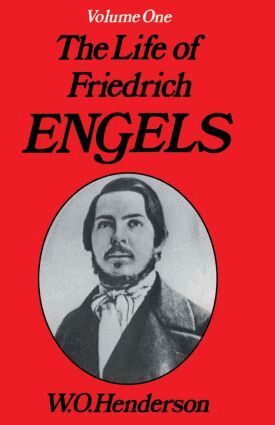
Friedrich Engels
Young Revolutionary
Häftad, 2013
747 kr
Lägg i varukorg
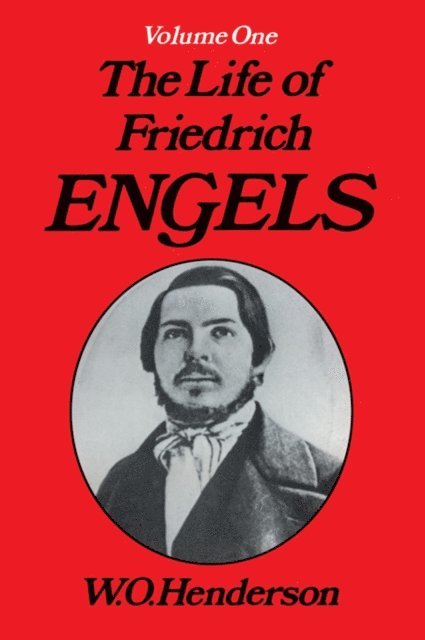
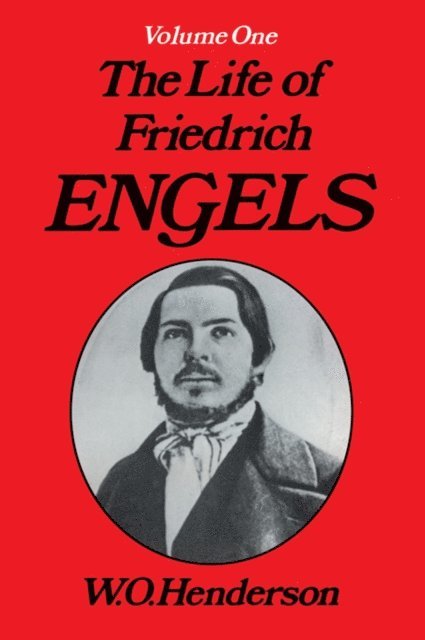
First published in 1976. The year 1970 saw the 150th anniversary of the birth of Friedrich Engels who was Karl Marx's most intimate friend and collaborator. Today the disciples of Marx and Engels are numbered in millions and the way of life of great states is based upon their doctrines. An …
Genesis of the Common Market
Inbunden, 1985
2594 kr
Lägg i varukorg
First Published in 1985. When modern sovereign states were first established in the sixteenth and seventeenth centuries they did not immediately assume full control over their national economies. The arrangements inherited from the middle-ages survived for some time so that ports, inland commercial …
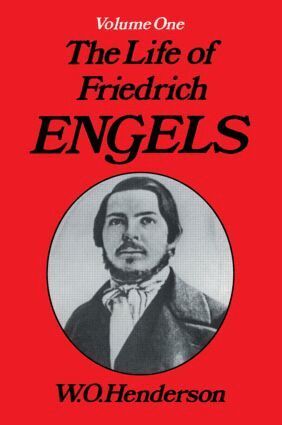
Friedrich Engels
Young Revolutionary
Inbunden, 1976
1824 kr
Lägg i varukorg
First published in 1976. The year 1970 saw the 150th anniversary of the birth of Friedrich Engels who was Karl Marx's most intimate friend and collaborator. Today the disciples of Marx and Engels are numbered in millions and the way of life of great states is based upon their doctrines. An …
Studies in German Colonial History
Inbunden, 1962
789 kr
Lägg i varukorg
This collection of essays is one of the few pieces of work on the overseas possessions of the Second Reich.
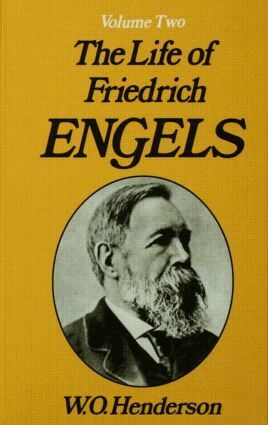
Friedrich Engels
Volume 2
Inbunden, 1976
2116 kr
Lägg i varukorg
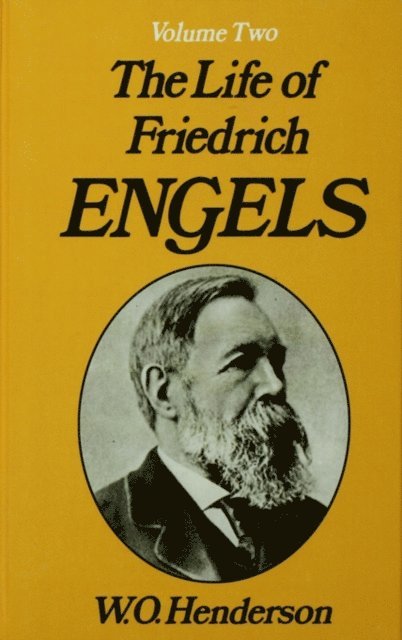
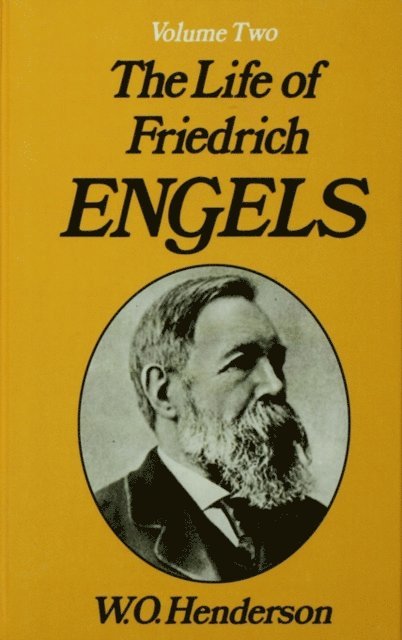
First Published in 1976. The first volume on this two-part biography traces Engels' carer from his youth in the Wupper valley, through his periods in Bremen and Berlin to the Manchester years and the beginning of his long collaboration with Marx. These early years are described against the …
Industry and Innovation
Selected Essays
Av W.H. Chaloner, D.A. Farnie m. fl.
Inbunden, 2018
1571 kr
Lägg i varukorg
This volume, first published in 1990, commemorates one of the most notable economic historians of his age. Professor W.H. Chaloner taught in the History Department of the University of Manchester from 1945 to 1981. He preferred the article to the book as the most appropriate vehicle of publishing …
Industry and Innovation
Selected Essays
Av W.H. Chaloner, D.A. Farnie m. fl.
Häftad, 2019
383 kr
Lägg i varukorg
This volume, first published in 1990, commemorates one of the most notable economic historians of his age. Professor W.H. Chaloner taught in the History Department of the University of Manchester from 1945 to 1981. He preferred the article to the book as the most appropriate vehicle of publishing …
Friedrich Engels
Young Revolutionary
E-bok, 2013
910 kr
Lägg i varukorg
First published in 1976. The year 1970 saw the 150th anniversary of the birth of Friedrich Engels who was Karl Marx''s most intimate friend and collaborator. Today the disciples of Marx and Engels are numbered in millions and the way of life of great states is based upon their doctrines. An …
Friedrich Engels
Young Revolutionary
E-bok, 2013
910 kr
Lägg i varukorg
First published in 1976. The year 1970 saw the 150th anniversary of the birth of Friedrich Engels who was Karl Marx''s most intimate friend and collaborator. Today the disciples of Marx and Engels are numbered in millions and the way of life of great states is based upon their doctrines. An …
Studies in German Colonial History
E-bok, 2012
464 kr
Lägg i varukorg
This collection of essays is one of the few pieces of work on the overseas possessions of the Second Reich.
Studies in German Colonial History
E-bok, 2012
464 kr
Lägg i varukorg
This collection of essays is one of the few pieces of work on the overseas possessions of the Second Reich.
Friedrich Engels
Volume 2
E-bok, 2013
917 kr
Lägg i varukorg
First Published in 1976. The first volume on this two-part biography traces Engels'' carer from his youth in the Wupper valley, through his periods in Bremen and Berlin to the Manchester years and the beginning of his long collaboration with Marx. These early years are described against the …
Friedrich Engels
Volume 2
E-bok, 2013
938 kr
Lägg i varukorg
First Published in 1976. The first volume on this two-part biography traces Engels'' carer from his youth in the Wupper valley, through his periods in Bremen and Berlin to the Manchester years and the beginning of his long collaboration with Marx. These early years are described against the …
Genesis of the Common Market
E-bok, 2013
607 kr
Lägg i varukorg
First published in 1962. A study of the rise of great industries in Western Europe. The factors which promoted industrial growth in Britain also influenced economic developments on the other side of the English Channel and there were signs of progress in the manufactures of France, Germany and the …
Genesis of the Common Market
E-bok, 2013
607 kr
Lägg i varukorg
First published in 1962. A study of the rise of great industries in Western Europe. The factors which promoted industrial growth in Britain also influenced economic developments on the other side of the English Channel and there were signs of progress in the manufactures of France, Germany and the …
Industrial Revolution on the Continent
Germany, France, Russia 1800-1914
E-bok, 2013
977 kr
Lägg i varukorg
This book was first published in 1961.
Industrial Revolution on the Continent
Germany, France, Russia 1800-1914
E-bok, 2013
999 kr
Lägg i varukorg
This book was first published in 1961.
Studies in the Economic Policy of Frederick the Great
E-bok, 2013
910 kr
Lägg i varukorg
Biographies of Frederick the Great generally emphasise the military and diplomatic events of his reign and neglect to discuss fully the significance of his economic policy. In this series of essays Dr. Henderson deals with various aspects of the Prussian economy in Frederick the Great’s reign. He …
Studies in the Economic Policy of Frederick the Great
E-bok, 2013
890 kr
Lägg i varukorg
Biographies of Frederick the Great generally emphasise the military and diplomatic events of his reign and neglect to discuss fully the significance of his economic policy. In this series of essays Dr. Henderson deals with various aspects of the Prussian economy in Frederick the Great’s reign. He …
Industrial Britain Under the Regency
The Diaries of Escher, Bodmer, May and de Gallois 1814-18
E-bok, 2013
881 kr
Lägg i varukorg
In this book W. O. Henderson has brought together in English translation the journals of four foreign visitors who travelled in England and Scotland in the years immediately following the Napoleonic wars, in a way which may be regarded as a sequel to his recent book on J. C. Fischer’s diaries of …
Industrial Britain Under the Regency
The Diaries of Escher, Bodmer, May and de Gallois 1814-18
E-bok, 2013
890 kr
Lägg i varukorg
In this book W. O. Henderson has brought together in English translation the journals of four foreign visitors who travelled in England and Scotland in the years immediately following the Napoleonic wars, in a way which may be regarded as a sequel to his recent book on J. C. Fischer’s diaries of …
J.C. Fischer and his Diary of Industrial England
1814-51
E-bok, 2013
938 kr
Lägg i varukorg
This book was first published in 1966. It was surprising that so small and so remote a country as Switzerland should have played such an important part in the industrial revolution on the Continent in the nineteenth century. A lack of natural resources and basic raw materials and population of …
J.C. Fischer and his Diary of Industrial England
1814-51
E-bok, 2013
938 kr
Lägg i varukorg
This book was first published in 1966. It was surprising that so small and so remote a country as Switzerland should have played such an important part in the industrial revolution on the Continent in the nineteenth century. A lack of natural resources and basic raw materials and population of …
Genesis of the Common Market
E-bok, 2013
910 kr
Lägg i varukorg
First Published in 1985. When modern sovereign states were first established in the sixteenth and seventeenth centuries they did not immediately assume full control over their national economies. The arrangements inherited from the middle-ages survived for some time so that ports, inland commercial …