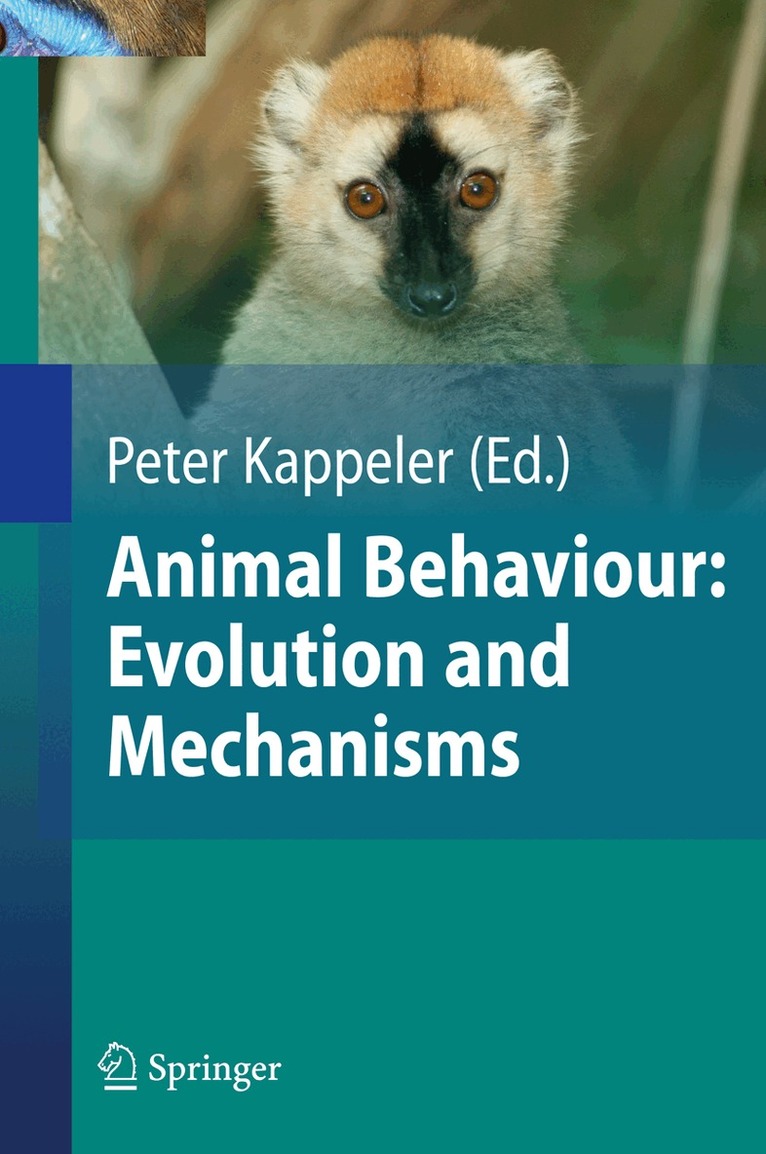
The study of animal behaviour has become one of the fastest growing b- logical disciplines in recent decades. This development can be easily - ferred, for example, from the steady increase in the total number of pub- cations on any aspect of animal behaviour, in particular also in journals with a more general readership (e. g. Nature, Proceedings of the Royal - ciety or Current Biology), the ever-increasing number of participants at - ternational conferences (e. g. IEC or ISBE), and from the growing numbers of students choosing courses in this field. This development has several causes, of which I find three particularly compelling. First, it is incre- ingly being appreciated that behaviour is the crucial level at which an in- vidual's genotype and phenotype interface with the environment. Rec- nising behaviour as the main mechanism animals employ to ascertain their homeostasis, growth, survival and reproduction therefore provides a deep understanding of organismal integration and adaptation.Second, the ast- ishing success of the study of animal behaviour also has importantly to do with the intellectual flexibility and methodological inter-disciplinarity - quired for comprehensive analyses of behaviour. Today, students of beh- iour are jacks-of-all-trades; importing, applying and improving methods from many neighbouring disciplines, such as molecular genetics, physi- ogy or micro-electronics, as well as concepts and theories from less ob- ous sources, such as economics or sociology, for example.
Communication and cognition.- Visual communication: evolution, ecology, and functional mechanisms.- Vocal communication in social groups.- Kin recognition: an overview of conceptual issues, mechanisms and evolutionary theory.- Honeybee cognition.- Individual performance in complex social systems: the greylag goose example.- Conflict and cooperation.- Conflict and conflict resolution in social insects.- Social insects, major evolutionary transitions and multilevel selection.- Cooperation between unrelated individuals - a game theoretic approach.- Group decision-making in animal societies.- Parental care: adjustments to conflict and cooperation.- Sex and reproduction.- The quantitative study of sexual and natural selection in the wild and in the laboratory.- Mate choice and reproductive conflict in simultaneous hermaphrodites.- Extra-pair behaviour.- Extreme polyandry in social Hymenoptera: evolutionary causes and consequences for colony organisation.- Monogynous mating strategies in spiders.- Mating systems, social behaviour and hormones.- Behavioural variation.- The social modulation of behavioural development.- Alternative reproductive tactics and life history phenotypes.- Animal personality and behavioural syndromes.- Social learning and culture in animals.- Levels and mechanisms of behavioural variability.
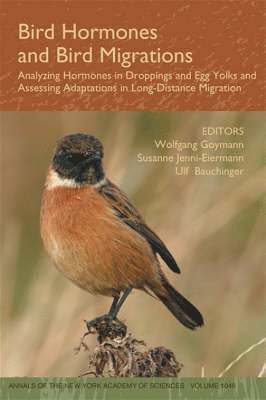
The analysis of hormones in feces or excrement presented in the first part of this volume is a relatively new noninvasive method for gaining insight into an animal's physiology. Endocrinological cycles of free-living animals can be studied without the stress caused by capture. Hence, this noninvasive technique may be helpful in a wide range of research fields relating to physiology, behavioral ecology, ethnology, and wildlife conservation. The reports presented in the second part of the volume expand the general understanding of migration over long distances. Three key issues in the search for adaptive syndromes are addressed: acquisition and use of endogenous resources, circadian rhythms, and adaptations in metabolism. The papers included in this volume will provide access to techniques and methods that will result in more reliable studies and more useful data. The results of these two meetings are timely and important because environments are rapidly changing and we need the means to study the impact of these changes on the physiology of animals who are responding to these changes. NOTE: Annals volumes are available for sale as individual books or as a journal. For information on institutional journal subscriptions, please visit www.blackwellpublishing.com/nyas.ACADEMY MEMBERS: Please contact the New York Academy of Sciences directly to place your order (www.nyas.org). Members of the New York Academy of Science receive full-text access to the Annals online and discounts on print volumes. Please visit http://www.nyas.org/MemberCenter/Join.aspx for more information about becoming a member.