W.T. Jones - Böcker
Visar alla böcker från författaren W.T. Jones. Handla med fri frakt och snabb leverans.
3 produkter
3 produkter
Del 14 - International Scholars Forum
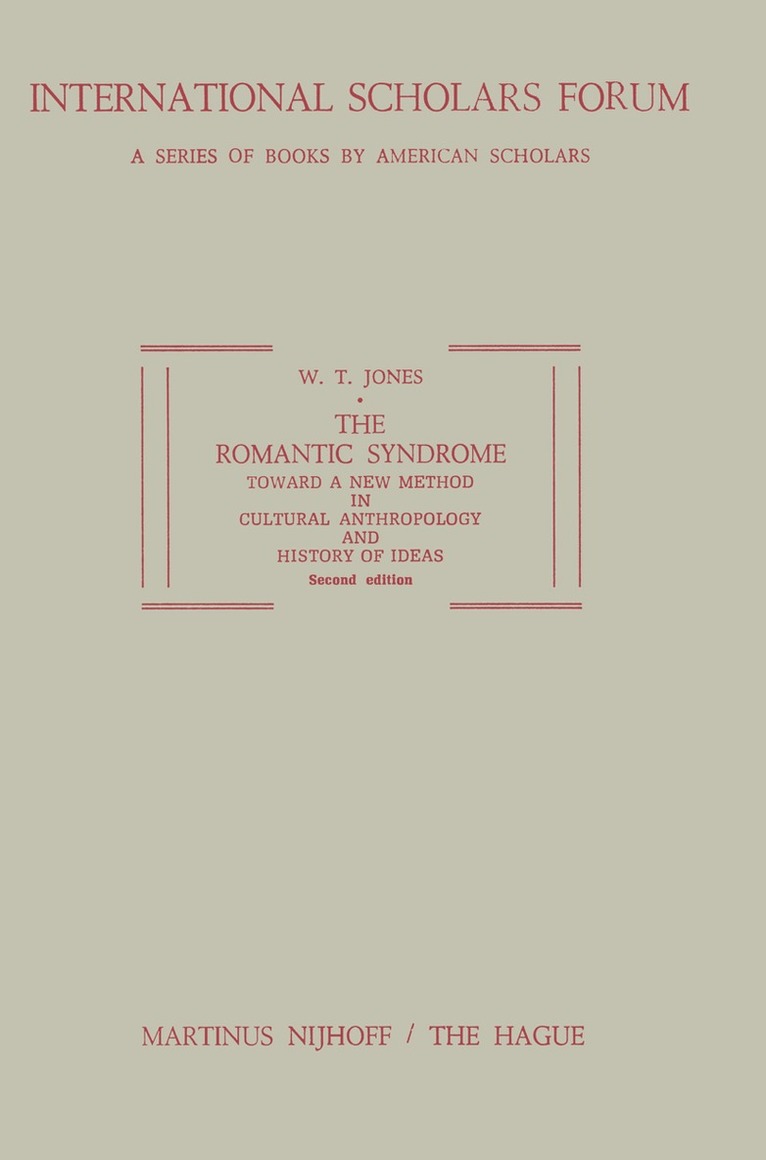
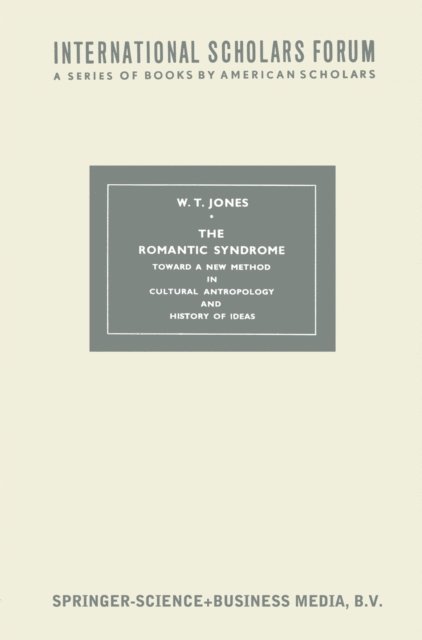
Romantic Syndrome
Toward a New Method in Cultural Anthropology and History of Ideas
Häftad, Engelska, 1974
534 kr
Skickas inom 10-15 vardagar
In this age of specialism philosophers, like other specialists, tend to take in each other's washing. Here, perhaps imprudently, I attempt to break out of this pattern. Though I am by profes sion a philosopher, I am addressing primarily, not other philo sophers, but cultural anthropologists, sociologists, historians of ideas, and literary and art critics. Thus, while there are chapters in this book on metaphysics and political theory, I do not ask, "Is the doctrine in question true?" - which is the kind of ques tion a philosopher might be expected to raise. Instead I ask, "What can we learn from this doctrine about the personality structure of the individual who framed it and about the charac teristic drives of the society in which he lived?" My reasons for asking and for trying to answer this kind of question, instead of the usual philosophical question, are as follows: Though the material products of culture' and the overt behavior patterns of societies have long been objects of scientific study, the most characteristic products of high cultures - artistic productions like poems and paintings and' theoretical structures like metaphysical and scientific theory - have not as readily yielded to exact description and analysis. Not, of course, that there is not a very extensive discussion of these matters. But most of it is carried on in terms that are regrettably vague.
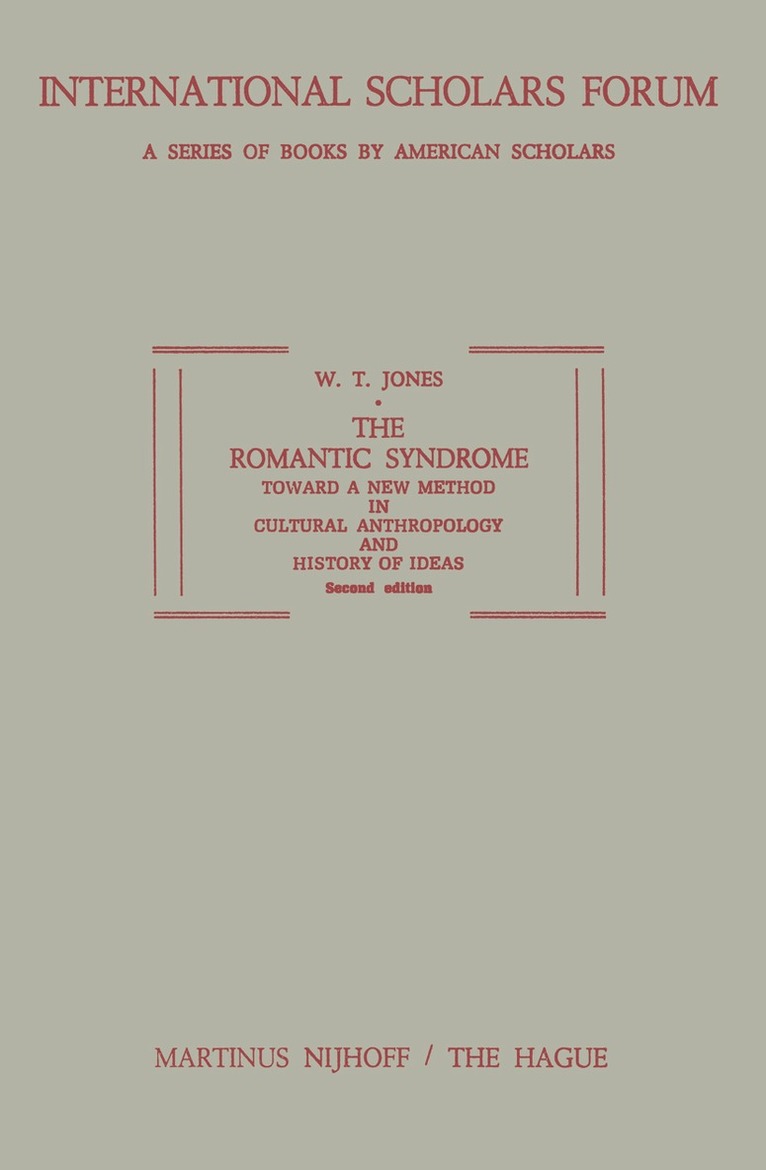
Romantic Syndrome
Toward a New Method in Cultural Anthropology and History of Ideas
Häftad, Engelska, 1961
534 kr
Skickas inom 10-15 vardagar
In this age of specialism philosophers, like other specialists, tend to take in each other's washing. Here, perhaps imprudently, I attempt to break out of this pattern. Though I am by profes sion a philosopher, I am addressing primarily, not other philo sophers, but cultural anthropologists, sociologists, historians of ideas, and literary and art critics. Thus, while there are chapters in this book on metaphysics and political theory, I do not ask, "Is the doctrine in question true?" - which is the kind of ques tion a philosopher might be expected to raise. Instead I ask, "What can we learn from this doctrine about the personality structure of the individual who framed it and about the charac teristic drives of the society in which he lived?" My reasons for asking and for trying to answer this kind of question, instead of the usual philosophical question, are as follows: Though the material products of culture and the overt behavior patterns of societies have long been objects of scientific study, the most characteristic products of high cultures - artistic productions like poems and paintings and theoretical structures like metaphysical and scientific theory - have not as readily yielded to exact description and analysis. Not, of course, that there is not a very extensive discussion of these matters. But most of it is carried on in terms that are regrettably vague.
Del 14 - International Scholars Forum
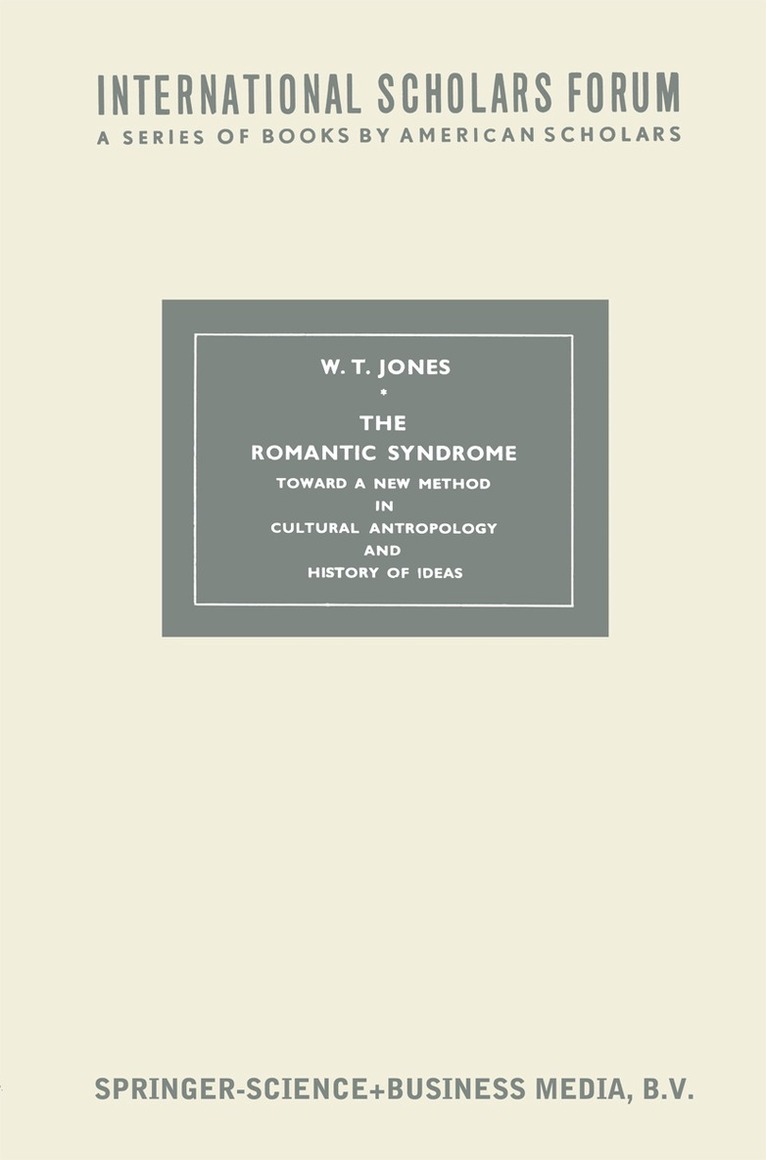
Romantic Syndrome
Toward a New Method in Cultural Anthropology and History of Ideas
Häftad, Engelska, 1973
534 kr
Skickas inom 10-15 vardagar
In this age of specialism philosophers, like other specialists, tend to take in each other's washing. Here, perhaps imprudently, I attempt to break out of this pattern. Though I am by profes sion a philosopher, I am addressing primarily, not other philo sophers, but cultural anthropologists, sociologists, historians of ideas, and literary and art critics. Thus, while there are chapters in this book on metaphysics and political theory, I do not ask, "Is the doctrine in question true?" - which is the kind of ques tion a philosopher might be expected to raise. Instead I ask, "What can we learn from this doctrine about the personality structure of the individual who framed it and about the charac teristic drives of the society in which he lived?" My reasons for asking and for trying to answer this kind of question, instead of the usual philosophical question, are as follows: Though the material products of culture' and the overt behavior patterns of societies have long been objects of scientific study, the most characteristic products of high cultures - artistic productions like poems and paintings and' theoretical structures like metaphysical and scientific theory - have not as readily yielded to exact description and analysis, Not, of course, that there is not a very extensive discussion of these matters. But most of it is carried on in terms that are regrettably vague.