Wurff Wim van der Wurff – författare
Visar alla böcker från författaren Wurff Wim van der Wurff. Handla med fri frakt och snabb leverans.
4 produkter
4 produkter
E-bok
Engelska, 20181 305 kr
Läs direkt efter köp
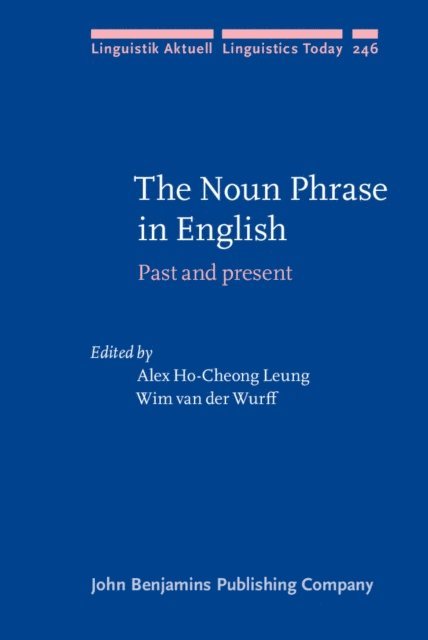
Building on a substantial earlier literature, the chapters in this volume further advance knowledge and understanding of properties of the noun phrase in English. The empirical material for the papers includes both historical and present-day data, with the two often shedding light on each other in a process of mutual illumination. The topics addressed are: the structure of nounless NPs like the poor and the obvious; the article/zero alternation in expressions like go to (the) church; developments in the early history of adjective stacking; the semantics of N + clause units in present-day English; the history of N + BE + clause constructions; and the decline of two anaphoric NPs in Early Modern English. The volume will appeal to scholars working in this area and will also help those interested in the general field of English grammar to keep abreast of recent methods and results in NP-related work.
E-bok
PDF, Engelska, 19961 525 kr
Läs direkt efter köp
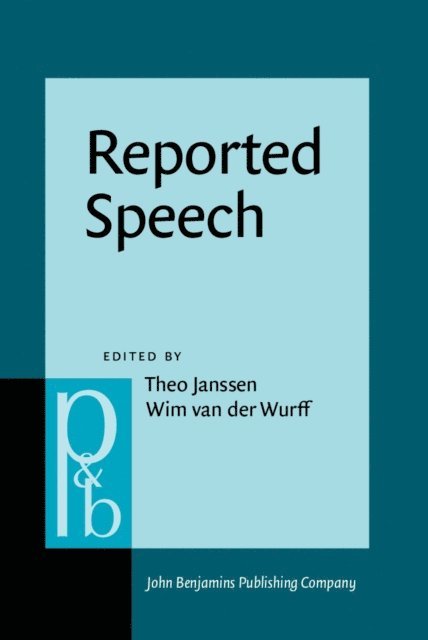
In sentences containing reported speech, thought, or perception, it is possible to distinguish different voices or views, associated with different discourse roles. They originate in two different clauses: one clause signals a reporting situation, and the other a reported situation.This volume examines the methods used for combining these two types of clauses in a range of languages. In each of the contributions, the focus is on the forms and functions of verbs; topics dealt with include the meaning of tense, mood, and aspect (and their interaction) in the various types of reported speech, the speech act status of reported utterances, correlations between reporting verbs and verbs in reported clauses (and the conjunctions introducing them), and possible intra-systemic and cross-linguistic correlations of these properties.The articles concentrate on the Slavic languages Russian, Bulgarian, Macedonian, Serbian, Croatian, and Slovene, the Romance languages Latin, Old and Modern French, and Spanish, the Germanic languages Swedish, German, Dutch, and English, the Indo-Iranian language Bengali, and Mandarin Chinese.
E-bok
PDF, Engelska, 20071 588 kr
Läs direkt efter köp
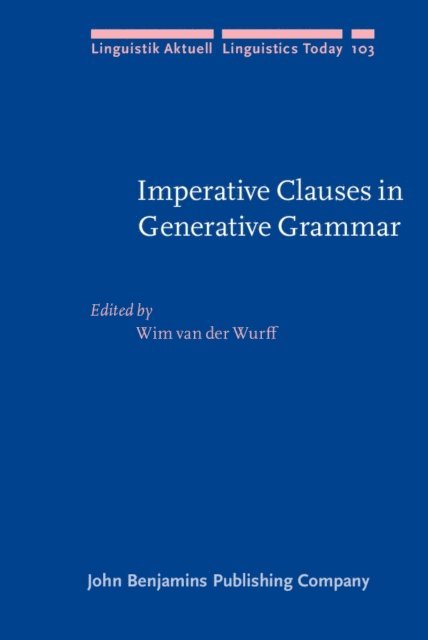
This volume contains ten articles exploring a wide range of issues in the analysis of the imperative clause from a generative perspective. The language data investigated in detail in the articles come from Dutch, English, German, (old) Scandinavian, Spanish, and South Slavic; there is further significant discussion of data from other Germanic and Romance languages. The phenomena addressed (in several cases in more than one article, leading to some lively debate about contentious issues) include the following: the nature and interpretation of imperative subjects; the properties of participial imperatives; clitic behavior; restrictions on topicalization; word order; null arguments; negative imperatives; and imperatives in embedded clauses. The volume has a substantial introduction, sketching the results of earlier generative work on the topic (most of it scattered across disparate outlets), the issues left open by this earlier work, and the contribution to further insight and understanding made by the book's articles.
E-bok
PDF, Engelska, 20021 588 kr
Läs direkt efter köp
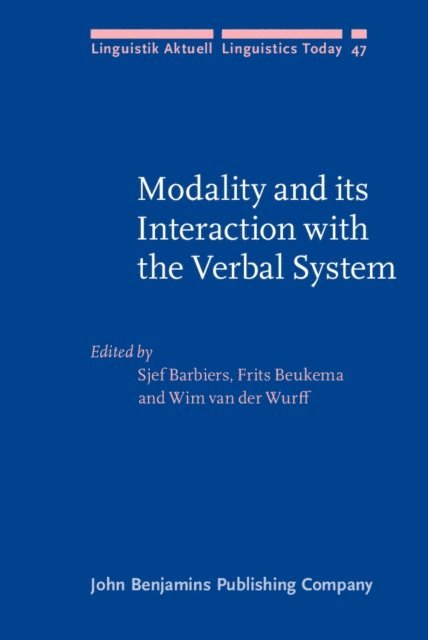
This book provides a broad overview of the issues relevant for the study of syntax of modals and their interaction with the verbal system. A large number of novel observations are offered from a variety of languages, including Dutch, (Modern and Middle) English, German, Lele, Macedonian, Middle Dutch and Slovene. The wealth of data, the critical evaluation of existing syntactic analyses of modality and the alternative analyses proposed make the book interesting for both for descriptively and for theoretically oriented syntacticians. Major concerns addressed are: the distinction between epistemic and root modality (where the arguments pro and contra the assumption of a corresponding difference in syntactic structure are evaluated, refined, and supplemented by arguments for syntactic distinction between necessity and possibility modals and by consideration of the influence of the modal’s complement on the interpretation), the interaction between modality and clausal phenomena (in particular negation, but also imperatives, aspect and Aktionsart), and the acquisition of modality (addressing cross-linguistic differences in the possibility for root infinitives to express modal interpretations and the late acquisition of epistemic interpretations as compared with non-epistemic interpretations).