Wyndy Corbin Reuschling – författare
Visar alla böcker från författaren Wyndy Corbin Reuschling. Handla med fri frakt och snabb leverans.
7 produkter
7 produkter
Häftad, Engelska, 2011
273 kr
Skickas inom 5-8 vardagar
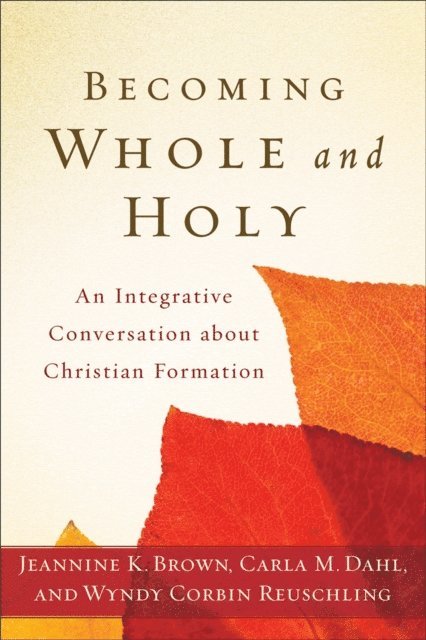
How does Christian formation happen and what are its moral implications? This book brings into conversation three disciplines that are crucial for Christian formation--social science, biblical studies/hermeneutics, and ethics--to present a cohesive, dynamic vision of human wholeness and spiritual holiness. The authors weave together insights from their respective fields to address the relationship between personal and communal formation, moral development, and the interpretation of Scripture. Revealing the process as well as the fruits of interdisciplinary dialogue, this book offers a fresh approach to understanding human formation. The final chapter, a case study on immigration, demonstrates the authors' integrative method.
E-bok
Engelska, 2011304 kr
Läs direkt efter köp
How does Christian formation happen and what are its moral implications? This book brings into conversation three disciplines that are crucial for Christian formation--social science, biblical studies/hermeneutics, and ethics--to present a cohesive, dynamic vision of human wholeness and spiritual holiness. The authors weave together insights from their respective fields to address the relationship between personal and communal formation, moral development, and the interpretation of Scripture. Revealing the process as well as the fruits of interdisciplinary dialogue, this book offers a fresh approach to understanding human formation. The final chapter, a case study on immigration, demonstrates the authors'' integrative method.
E-bok
Engelska, 2008247 kr
Läs direkt efter köp
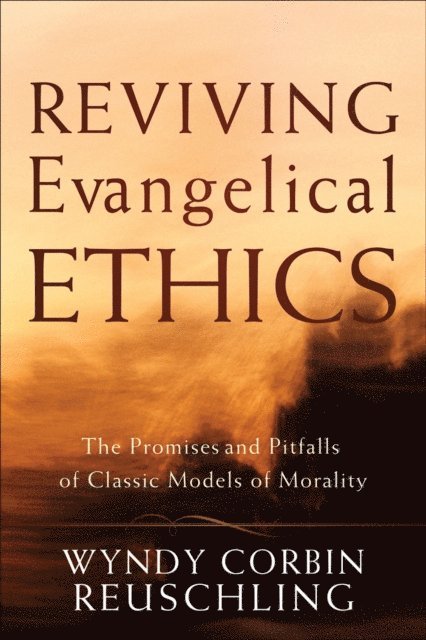
Classic theories of Aristotle, Kant, and Mill have influenced Christian thought in morality and ethics for centuries. But they can go only so far, Wyndy Corbin Reuschling writes in Reviving Evangelical Ethics. While the philosophers'' approach to three key elements--virtue, duty, and utility--have been used widely in forming ethical and moral practices, Corbin Reuschling sees spiritual danger in their limitations. She probes deeply to deconstruct each philosophy, then reconstructs a broader, biblically based framework for personal and group ethics. This introductory text provides helpful biblical and theological reflection for students of Christian ethics.
Inbunden, Engelska, 2012
363 kr
Skickas inom 5-8 vardagar
Häftad, Engelska, 2008
392 kr
Skickas inom 3-6 vardagar
Classic theories of Aristotle, Kant, and Mill have influenced Christian thought in morality and ethics for centuries. But they can go only so far, Wyndy Corbin Reuschling writes in Reviving Evangelical Ethics. While the philosophers' approach to three key elements--virtue, duty, and utility--have been used widely in forming ethical and moral practices, Corbin Reuschling sees spiritual danger in their limitations. She probes deeply to deconstruct each philosophy, then reconstructs a broader, biblically based framework for personal and group ethics. This introductory text provides helpful biblical and theological reflection for students of Christian ethics.
Häftad, Engelska, 2012
211 kr
Skickas inom 5-8 vardagar
E-bok
Engelska, 2012337 kr
Läs direkt efter köp
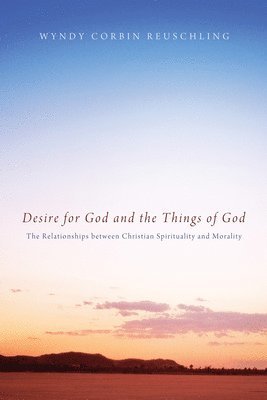
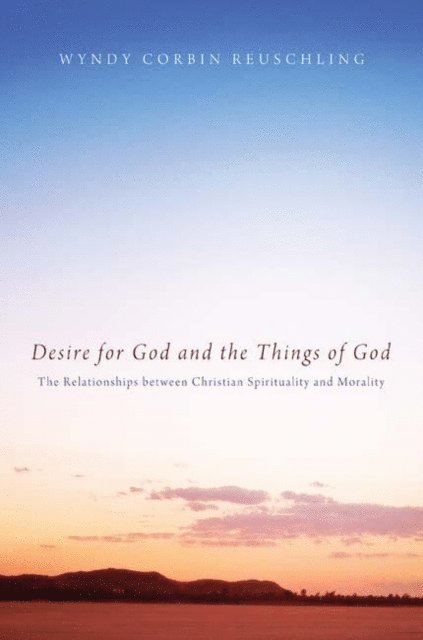
For many Christians, spirituality and ethics are in separate mental and experiential compartments. Spirituality may be understood as an inner experience, while ethics is focused on decisions or positions on issues. Both of these views reduce spirituality and morality in Christian faith and practice, and ignore the centrality of desire for God and the things of God as key focal points for spiritual and moral formation. These aspects of Christian formation must be located in their scriptural and theological contexts in order to understand more fully what God desires for human life. This focus on desire provides content and context to Christian spirituality and morality. We are drawn outward to focus on God and the good of others while we learn to embody virtues, such as compassion, courage, self-control, gratitude, humility, and hope. Practices are crucial ways by which we learn to incarnate our ultimate desire of love for God and for what God desires in the pursuit of justice and goodness for all creation. In so doing, practices enable us to more fully integrate spiritual and moral growth in the processes of our desire for God and the things of God.