Xiaorong Han – författare
Visar alla böcker från författaren Xiaorong Han. Handla med fri frakt och snabb leverans.
5 produkter
5 produkter
1 057 kr
Tillfälligt slut
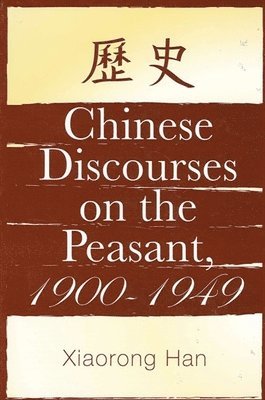
Shows how Chinese intellectuals with varying politics envisioned the peasantry and its role in changing society during the first half of the twentieth century.Xiaorong Han explores how Chinese intellectuals envisioned the peasantry and its role in changing society during the first half of the twentieth century. Politically motivated intellectuals, both Communist and non-Communist, believed that rural peasants and their villages would be at the heart of change during this long period of national crisis. Nevertheless, intellectuals saw themselves as the true shapers of change who would transform and use the peasantry. Han uses intellectuals' writings to provide a comprehensive look at their views of the peasantry. He shows how intellectuals with varying politics created images of the peasant-a supposed contemporary image and an ideal image of the peasant transformed for political ends, how intellectuals theorized on the nature of Chinese rural life, and how intellectuals conceived their own relationships with peasants.
454 kr
Skickas inom 5-8 vardagar
Shows how Chinese intellectuals with varying politics envisioned the peasantry and its role in changing society during the first half of the twentieth century.Xiaorong Han explores how Chinese intellectuals envisioned the peasantry and its role in changing society during the first half of the twentieth century. Politically motivated intellectuals, both Communist and non-Communist, believed that rural peasants and their villages would be at the heart of change during this long period of national crisis. Nevertheless, intellectuals saw themselves as the true shapers of change who would transform and use the peasantry. Han uses intellectuals' writings to provide a comprehensive look at their views of the peasantry. He shows how intellectuals with varying politics created images of the peasant-a supposed contemporary image and an ideal image of the peasant transformed for political ends, how intellectuals theorized on the nature of Chinese rural life, and how intellectuals conceived their own relationships with peasants.
1 399 kr
Tillfälligt slut
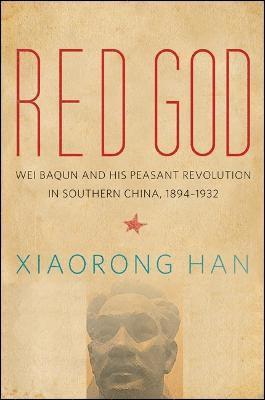
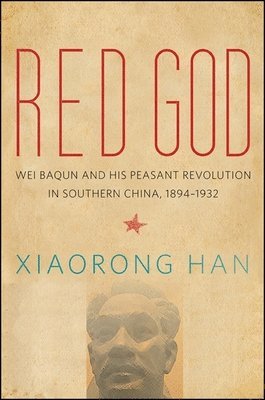
The career of communist revolutionary Wei Baqun, one of China's "three great peasant leaders" and man of the southern frontier.Robin Hood–style revolutionary Wei Baqun is often described as one of China's "three great peasant leaders," alongside Mao Zedong and Peng Pai. In his home county of Donglan, where he started organizing peasants in the early 1920s, Wei Baqun came to be considered a demigod after his death-a communist revolutionary with supernatural powers. So much legend has grown up around this fascinating figure that it is difficult to know the truth from the tale. Presenting Wei Baqun's life in light of interactions between his local community and the Chinese nation, Red God is organized around the journeys he made from his multiethnic frontier county to major cities where he picked up ideas, methods, and contacts, and around the three revolts he launched back home. Xiaorong Han explores the congruencies and conflicts of local, regional, and national forces at play during Wei Baqun's lifetime while examining his role as a link between his Zhuang people and the Han majority, between the village and the city, and between the periphery and the center.
414 kr
Tillfälligt slut
The career of communist revolutionary Wei Baqun, one of China's "three great peasant leaders" and man of the southern frontier.Robin Hood–style revolutionary Wei Baqun is often described as one of China's "three great peasant leaders," alongside Mao Zedong and Peng Pai. In his home county of Donglan, where he started organizing peasants in the early 1920s, Wei Baqun came to be considered a demigod after his death-a communist revolutionary with supernatural powers. So much legend has grown up around this fascinating figure that it is difficult to know the truth from the tale. Presenting Wei Baqun's life in light of interactions between his local community and the Chinese nation, Red God is organized around the journeys he made from his multiethnic frontier county to major cities where he picked up ideas, methods, and contacts, and around the three revolts he launched back home. Xiaorong Han explores the congruencies and conflicts of local, regional, and national forces at play during Wei Baqun's lifetime while examining his role as a link between his Zhuang people and the Han majority, between the village and the city, and between the periphery and the center.
Del 6 - Rethinking Socialism and Reform in China
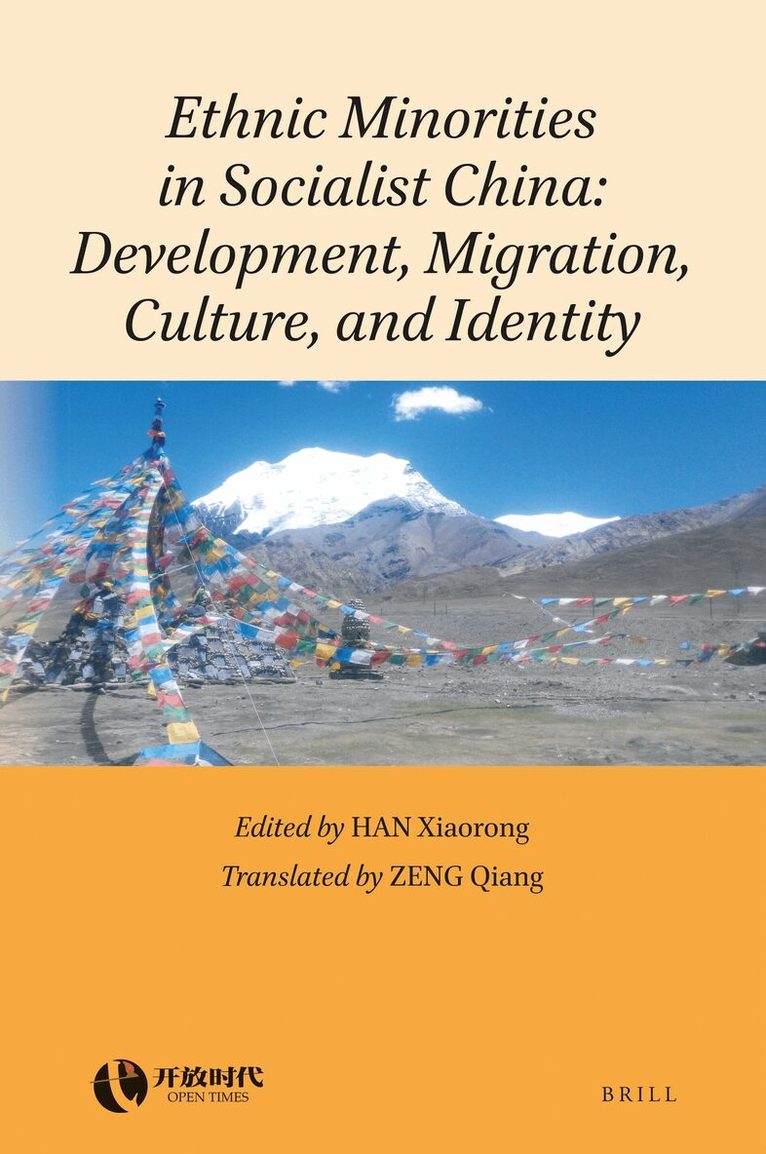
Ethnic Minorities in Socialist China: Development, Migration, Culture, and Identity
Inbunden, Engelska, 2022
2 731 kr
Skickas inom 5-8 vardagar
Ethnic Minorities in Socialist China: Development, Migration, Culture, and Identity, edited by Dr. Han Xiaorong and translated into English by Zeng Qiang, presents nine articles written by Chinese scholars about the transformation of China’s ethnic minority groups in the socialist era. Focusing on seven of the 55 ethnic minorities in China, the nine articles cover four major themes: development, migration, culture and identity. These case studies are based on both fieldwork and written sources, and most authors make connections between their case studies and relevant social scientific theories. Peoples and places studied include the autonomous regions of Tibet and Inner Mongolia; the Hanni, Dai, and Bai peoples of Yunnan Province; Miao farmers of Yangjiang in Guangdong; and the Yi people of the Pearl River Delta region. These studies, which originally appeared in Open Times (开放时代), broadly reflect the concerns, interests and perspectives of the Chinese scholars involved in the study of China’s ethnic minorities.