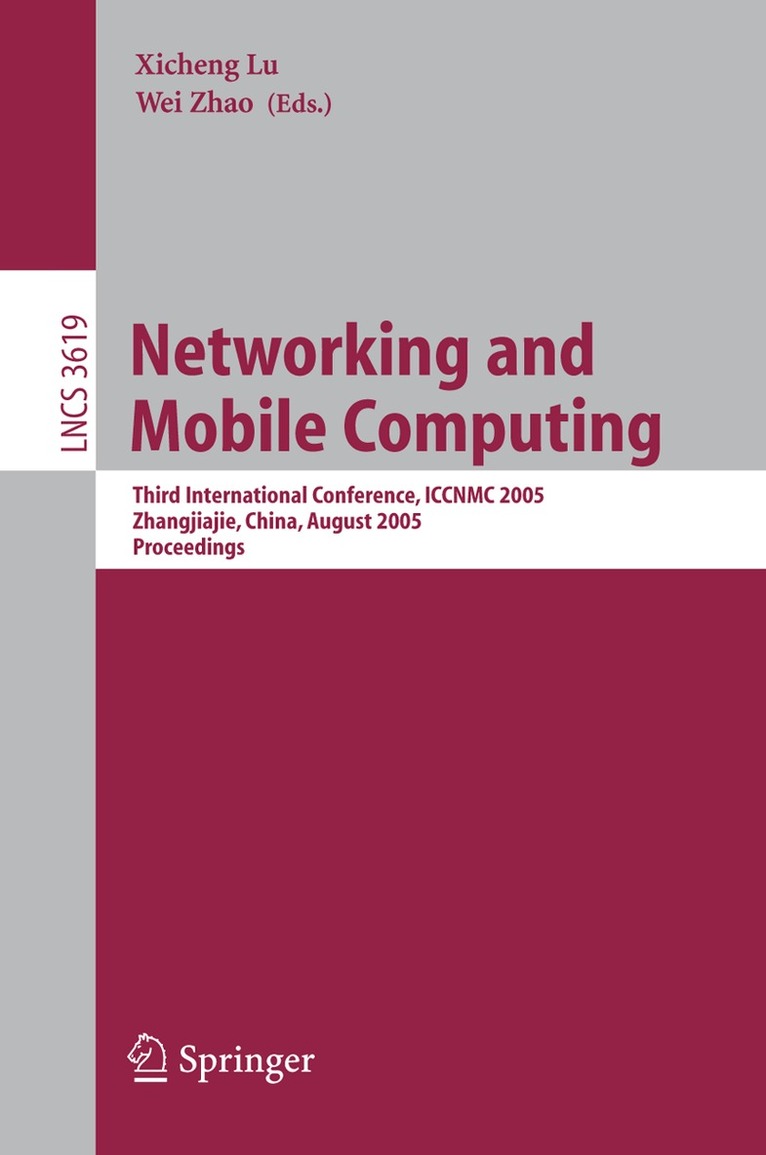
Welcome to Zhangjiajie for the 3rd International Conference on Computer Network and Mobile Computing (ICCNMC 2005). We are currently witnessing a proliferation in mobile/wireless technologies and applications. However, these new technologies have ushered in unprecedented challenges for the research community across the range of networking, mobile computing, network security and wireless web applications, and optical network topics. ICCNMC 2005 was sponsored by the China Computer Federation, in cooperation with the Institute for Electrical and Electronics Engineers (IEEE) Computer Society. The objective of this conference was to address and capture highly innovative and stateof-the-art research and work in the networks and mobile computing industries. ICCNMC 2005 allowed sharing of the underlying theories and applications, and the establishment of new and long-term collaborative channels aimed at developing innovative concepts and solutions geared to future markets. The highly positive response to ICCNMC 2001 and ICCNMC 2003, held in Beijing and Shanghai, respectively, encouraged us to continue this international event. In its third year, ICCNMC 2005 continued to provide a forum for researchers, professionals, and industrial practitioners from around the world to report on new advances in computer network and mobile computing, as well as to identify issues and directions for research and development in the new era of evolving technologies.
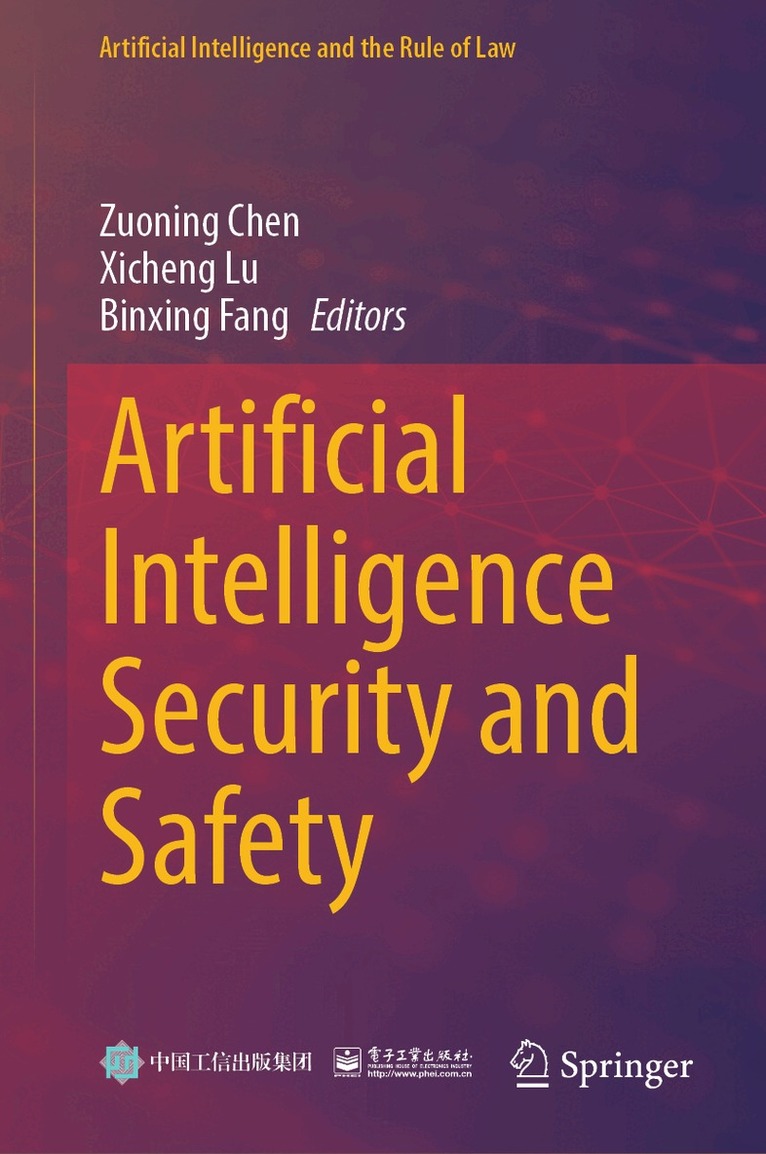
This book introduces the concept and scope of AI safety and analyzes the security issues involved in AI as well as their governance strategies and solutions from different perspectives such as theoretical technology, technical standards, the industrial ecology, and laws. In addition to the overview, this book describes the methods of using trusted computing technology to solve AI safety problems, as well as the safety of unmanned systems, strong AI based on brain - like computing and its safety, the application safety of AI in intelligent manufacturing and smart cities, network security, the construction of an industrial ecosystem for AI safety and controllability, AI safety standards and risk assessment and early warning. Overall, this book not only outlines the general attributes of AI safety issues, but also analyzes the special security problems in AI systems, as well as their risk assessment, prediction, governance approaches and solutions from different perspectives and in different typical application fields.
Welcome to Zhangjiajie for the 3rd International Conference on Computer Network and Mobile Computing (ICCNMC 2005). We are currently witnessing a proliferation in mobile/wireless technologies and applications. However, these new technologies have ushered in unprecedented challenges for the research community across the range of networking, mobile computing, network security and wireless web applications, and optical network topics. ICCNMC 2005 was sponsored by the China Computer Federation, in cooperation with the Institute for Electrical and Electronics Engineers (IEEE) Computer Society. The objective of this conference was to address and capture highly innovative and stateof-the-art research and work in the networks and mobile computing industries. ICCNMC 2005 allowed sharing of the underlying theories and applications, and the establishment of new and long-term collaborative channels aimed at developing innovative concepts and solutions geared to future markets. The highly positive response to ICCNMC 2001 and ICCNMC 2003, held in Beijing and Shanghai, respectively, encouraged us to continue this international event. In its third year, ICCNMC 2005 continued to provide a forum for researchers, professionals, and industrial practitioners from around the world to report on new advances in computer network and mobile computing, as well as to identify issues and directions for research and development in the new era of evolving technologies.
This book introduces the concept and scope of AI safety and analyzes the security issues involved in AI as well as their governance strategies and solutions from different perspectives such as theoretical technology, technical standards, the industrial ecology, and laws. In addition to the overview, this book describes the methods of using trusted computing technology to solve AI safety problems, as well as the safety of unmanned systems, strong AI based on brain - like computing and its safety, the application safety of AI in intelligent manufacturing and smart cities, network security, the construction of an industrial ecosystem for AI safety and controllability, AI safety standards and risk assessment and early warning. Overall, this book not only outlines the general attributes of AI safety issues, but also analyzes the special security problems in AI systems, as well as their risk assessment, prediction, governance approaches and solutions from different perspectives and in different typical application fields.