Xochitl Bada – författare
1 905 kr
Läs direkt efter köp
1 905 kr
Läs direkt efter köp
3 407 kr
Skickas inom 10-15 vardagar
730 kr
Skickas inom 10-15 vardagar
273 kr
Skickas inom 5-8 vardagar
406 kr
Skickas inom 5-8 vardagar
1 412 kr
Skickas inom 5-8 vardagar
866 kr
Läs direkt efter köp
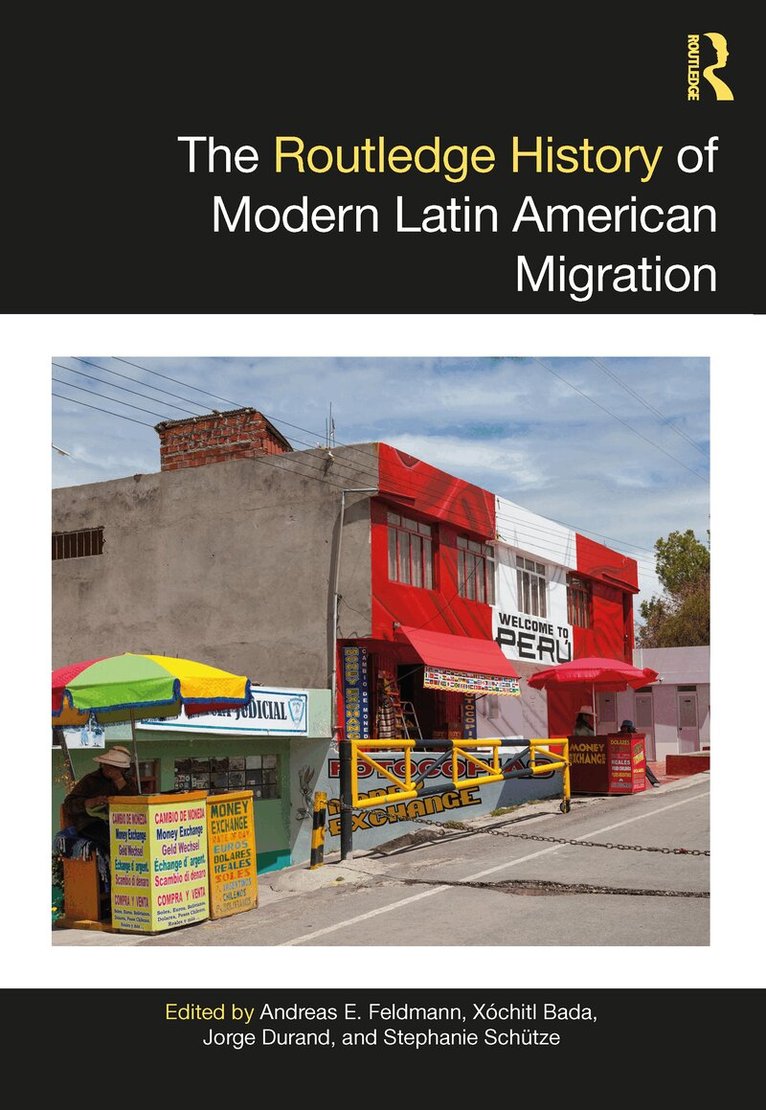
The Routledge History of Modern Latin American Migration offers a systematic account of population movements to and from the region over the last 150 years, spanning from the massive transoceanic migration of the 1870s to contemporary intraregional and transnational movements.
The volume introduces the migratory trajectories of Latin American populations as a complex web of transnational movements linking origin, transit, and receiving countries. It showcases the historical mobility dynamics of different national groups including Arab, Asian, African, European, and indigenous migration and their divergent international trajectories within existing migration systems in the Western Hemisphere, including South America, the Caribbean, and Mesoamerica. The contributors explore some of the main causes for migration, including wars, economic dislocation, social immobility, environmental degradation, repression, and violence. Multiple case studies address critical contemporary topics such as the Venezuelan exodus, Central American migrant caravans, environmental migration, indigenous and gender migration, migrant religiosity, transit and return migration, urban labor markets, internal displacement, the nexus between organized crime and forced migration, the role of social media and new communication technologies, and the effects of the COVID-19 pandemic on movement. These essays provide a comprehensive map of the historical evolution of migration in Latin America and contribute to define future challenges in migration studies in the region.
This book will be of interest to scholars of Latin American and Migration Studies in the disciplines of history, sociology, political science, anthropology, and geography.
866 kr
Läs direkt efter köp
The Routledge History of Modern Latin American Migration offers a systematic account of population movements to and from the region over the last 150 years, spanning from the massive transoceanic migration of the 1870s to contemporary intraregional and transnational movements.
The volume introduces the migratory trajectories of Latin American populations as a complex web of transnational movements linking origin, transit, and receiving countries. It showcases the historical mobility dynamics of different national groups including Arab, Asian, African, European, and indigenous migration and their divergent international trajectories within existing migration systems in the Western Hemisphere, including South America, the Caribbean, and Mesoamerica. The contributors explore some of the main causes for migration, including wars, economic dislocation, social immobility, environmental degradation, repression, and violence. Multiple case studies address critical contemporary topics such as the Venezuelan exodus, Central American migrant caravans, environmental migration, indigenous and gender migration, migrant religiosity, transit and return migration, urban labor markets, internal displacement, the nexus between organized crime and forced migration, the role of social media and new communication technologies, and the effects of the COVID-19 pandemic on movement. These essays provide a comprehensive map of the historical evolution of migration in Latin America and contribute to define future challenges in migration studies in the region.
This book will be of interest to scholars of Latin American and Migration Studies in the disciplines of history, sociology, political science, anthropology, and geography.
858 kr
Läs direkt efter köp
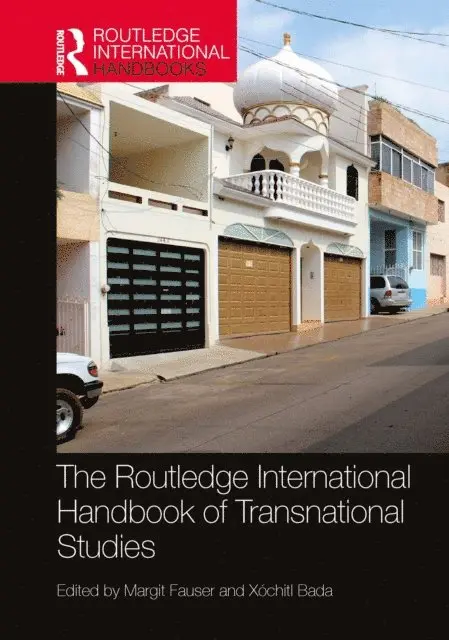
The Routledge International Handbook of Transnational Studies offers a comprehensive overview of the dynamic evolution and the most recent debates in this interdisciplinary field. The collection assembles scholarship from the social sciences and the humanities that share a critical perspective extending beyond the nation-state. The contributions investigate sustained connections, events, and activities across state borders and acknowledge prevailing global power asymmetries.
The handbook examines the dynamics of transnational processes across seven main themes: epistemological and methodological principles; transnational migrant practices and family remittances; mobilities and (self-)identities; social protection; organizations and social movements; culture, religion, and the arts; and architecture and urban planning. The contributors engage with theoretical developments and analyze empirical cases involving a wide array of critical contemporary topics such as expatriate voting, first- and second-generation return migration, state-sponsored cross-border marriages, access to health care, transnational social work, global religious aesthetics, transnational art corridors, literary translation, remittance-financed architecture, and transnational processes of real estate development and gentrification, among others. They display a series of cross-cutting approaches including postcolonial theory, racism, and gender, and a focus on agency, state policies and macro-structures, and transnational inequalities. This book features multidisciplinary scholars in transnational studies from Australia, Belgium, Canada, Finland, Germany, Italy, Malaysia, Mexico, the Philippines, Poland, Spain, Sweden, the United Kingdom, and the United States.
This handbook will be of interest to scholars interested in global and transnational perspectives across a wide range of disciplines. It will serve as a key resource for academics, students, and other interested audiences seeking to familiarize themselves with the study of contemporary issues that cross state borders.
3 784 kr
Skickas inom 10-15 vardagar
792 kr
Skickas inom 10-15 vardagar
728 kr
Skickas
230 kr
Skickas
1 401 kr
Skickas inom 10-15 vardagar
1 401 kr
Skickas inom 10-15 vardagar
1 733 kr
Läs direkt efter köp
This volume investigates new migration patterns in the Americas addressing continuities and changes in existing population movements in the region. The book explores migration conditions and intersections across time and space relying on a multidisciplinary, collaborative approach that brings together the expertise of transnational scholars with diverse theoretical orientations, strengths, and methodological approaches. Some of the themes this edited volume explores include main features of contemporary migration in the Americas; causes, composition, and patterns of new migration flows; and state policies enacted to meet the challenges posed by new developments in migration flows.