Xuekai Huang – författare
Visar alla böcker från författaren Xuekai Huang. Handla med fri frakt och snabb leverans.
2 produkter
2 produkter
Inbunden, Engelska, 2026
1 958 kr
Skickas inom 10-15 vardagar
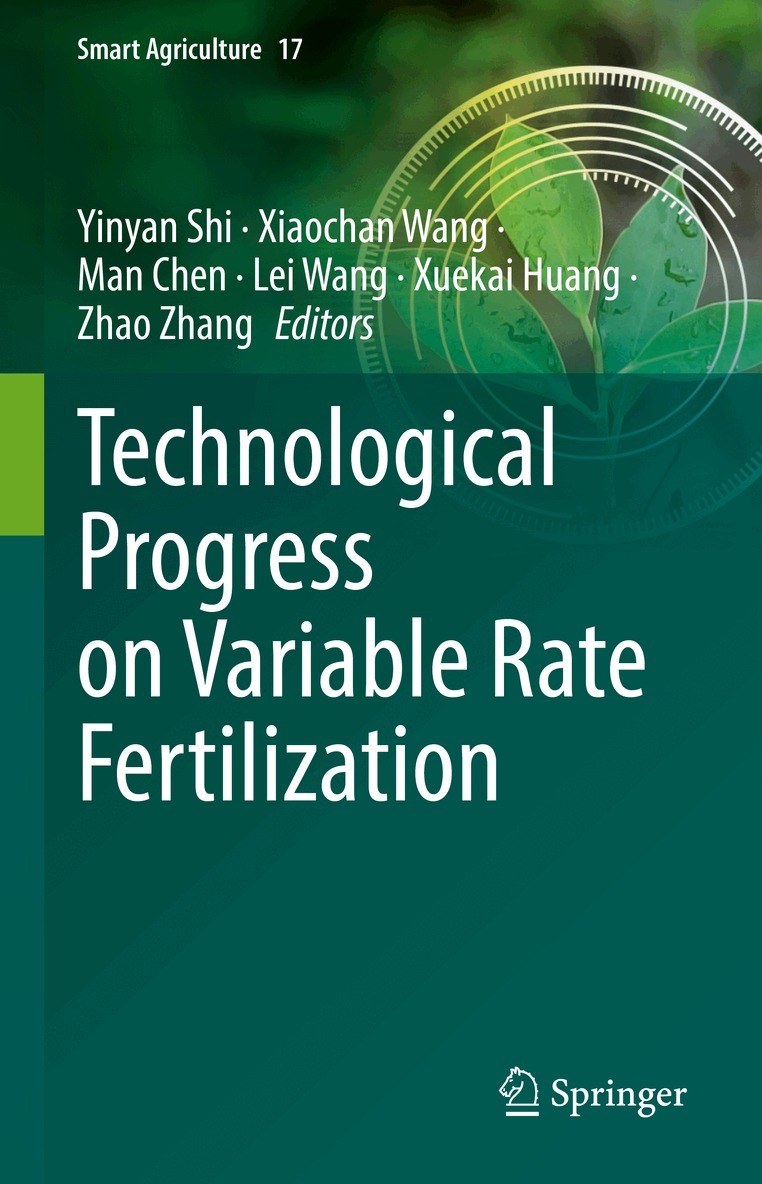
This book features interdisciplinary of agricultural engineering and precision agriculture, focusing on real-time variable-rate fertilization (VRF) based on crop phenotypic biological information. It systematically presents cutting-edge research on intelligent sensing, inversion modeling, actuator optimization, and practical system validation. Key scientific methods include hybrid neural network models (such as LFA-PSO-MLP), discrete element modeling (DEM), and deep learning-based flow detection (YOLOv5s-seg). These approaches are illustrated with clear diagrams, data tables, and experimental results, linking theoretical insights with practical engineering applications. The book introduces innovative designs like centrifugal VRF spreaders and phenotypic sensing systems, validated through field trials to improve fertilization accuracy, reduce input waste, and enhance sustainability. It offers a comprehensive technology framework integrating “crop–sensor–decision–actuator” into a closed-loop control system. For researchers and practitioners in smart farming, crop sensing, and equipment development, this book serves as a valuable reference bridging theory and field applications. Target readers include graduate and undergraduate students in agricultural engineering, precision agriculture researchers, intelligent equipment developers, and agricultural extension professionals.
E-bok
Engelska, 20262 435 kr
Läs direkt efter köp
This book features interdisciplinary of agricultural engineering and precision agriculture, focusing on real-time variable-rate fertilization (VRF) based on crop phenotypic biological information. It systematically presents cutting-edge research on intelligent sensing, inversion modeling, actuator optimization, and practical system validation. Key scientific methods include hybrid neural network models (such as LFA-PSO-MLP), discrete element modeling (DEM), and deep learning-based flow detection (YOLOv5s-seg). These approaches are illustrated with clear diagrams, data tables, and experimental results, linking theoretical insights with practical engineering applications. The book introduces innovative designs like centrifugal VRF spreaders and phenotypic sensing systems, validated through field trials to improve fertilization accuracy, reduce input waste, and enhance sustainability. It offers a comprehensive technology framework integrating "e;crop-sensor-decision-actuator"e; into a closed-loop control system. For researchers and practitioners in smart farming, crop sensing, and equipment development, this book serves as a valuable reference bridging theory and field applications. Target readers include graduate and undergraduate students in agricultural engineering, precision agriculture researchers, intelligent equipment developers, and agricultural extension professionals.