Y. C. Fung – författare
Visar alla böcker från författaren Y. C. Fung. Handla med fri frakt och snabb leverans.
15 produkter
Biomechanics
Mechanical Properties of Living Tissues
Av Y. C. Fung
Inbunden, 1993
1688 kr
Lägg i varukorg
The objective of this book remains the same as that stated in the first edition: to present a comprehensive perspective of biomechanics from the stand point of bioengineering, physiology, and medical science, and to develop mechanics through a sequence of problems and examples. My three-volume set …
An Introduction to the Theory of Aeroelasticity
Av Lawrence J. Henderson, Y C Fung
Häftad, 2008
347 kr
Lägg i varukorg
Biomechanics
Mechanical Properties of Living Tissues
Av Y. C. Fung
Häftad, 2010
1688 kr
Lägg i varukorg
The objective of this book remains the same as that stated in the first edition: to present a comprehensive perspective of biomechanics from the stand point of bioengineering, physiology, and medical science, and to develop mechanics through a sequence of problems and examples. My three-volume set …
Biomechanics
Mechanical Properties of Living Tissues
Av Y. C. Fung
E-bok, 2013
1183 kr
Lägg i varukorg
The motivation for writing aseries ofbooks on biomechanics is to bring this rapidly developing subject to students of bioengineering, physiology, and mechanics. In the last decade biomechanics has become a recognized disci pline offered in virtually all universities. Yet there is no adequate …
Biomechanics
Mechanical Properties of Living Tissues
Av Y. C. Fung
E-bok, 2013
2174 kr
Lägg i varukorg
The objective of this book remains the same as that stated in the first edition: to present a comprehensive perspective of biomechanics from the stand point of bioengineering, physiology, and medical science, and to develop mechanics through a sequence of problems and examples. My three-volume set …
Biodynamics
Circulation
Av Y. C. Fung
E-bok, 2013
1209 kr
Lägg i varukorg
This book is a continuation ofmy Biomechanics.The first volume deals with the mechanical properties of living tissues. The present volume deals with the mechanics ofcirculation. A third volume willdeal with respiration, fluid balance, locomotion, growth, and strength. This volume is called Bio …
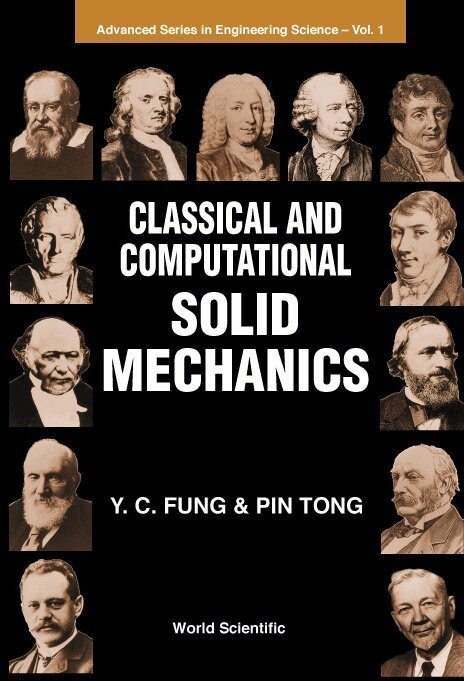
CLASSICAL AND COMPUTATIONAL SOLID MECHANICS
Inbunden, 2001
1976 kr
Lägg i varukorg
This invaluable book has been written for engineers and engineering scientists in a style that is readable, precise, concise, and practical. It gives first priority to the formulation of problems, presenting the classical results as the gold standard, and the numerical approach as a tool for …
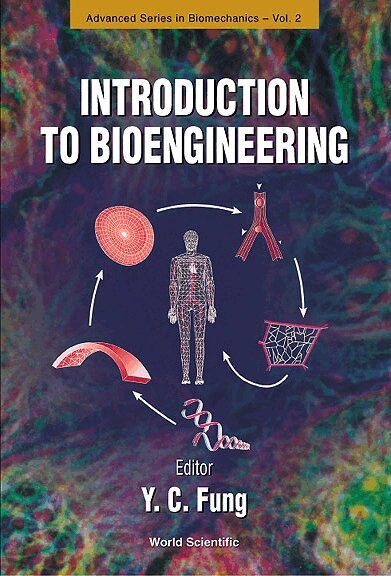
INTRODUCTION TO BIOENGINEERING
Inbunden, 2001
839 kr
Lägg i varukorg
Bioengineering is attracting many high quality students. This invaluable book has been written for beginning students of bioengineering, and is aimed at instilling a sense of engineering in them.Engineering is invention and designing things that do not exist in nature for the benefit of humanity. …
CLASSICAL AND COMPUTATIONAL SOLID MECHANICS
Häftad, 2001
987 kr
Lägg i varukorg
This invaluable book has been written for engineers and engineering scientists in a style that is readable, precise, concise, and practical. It gives first priority to the formulation of problems, presenting the classical results as the gold standard, and the numerical approach as a tool for …
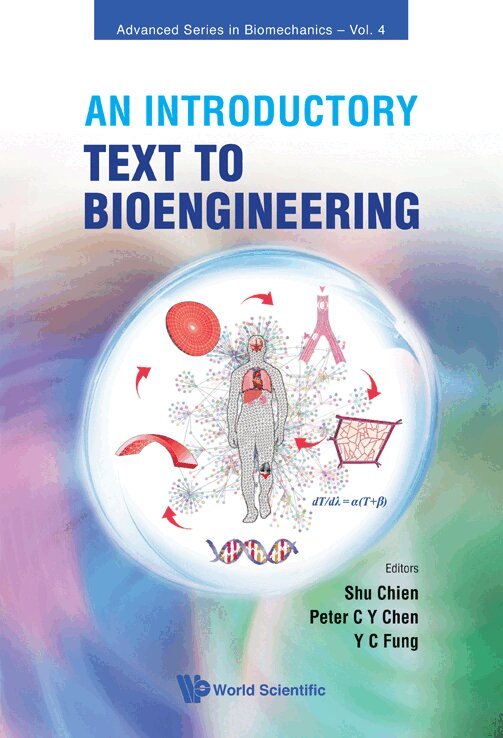
INTRODUCTORY TEXT TO BIOENGINEERING, AN
Av Shu Chien, Peter C Y Chen m. fl.
Inbunden, 2008
1498 kr
Lägg i varukorg
This bestselling textbook will introduce undergraduate bioengineering students to the fundamental concepts and techniques, with the basic theme of integrative bioengineering. It covers bioengineering of several body systems, organs, tissues, and cells, integrating physiology at these levels with …
INTRODUCTORY TEXT TO BIOENGINEERING, AN
Av Shu Chien, Peter C Y Chen m. fl.
Häftad, 2008
846 kr
Lägg i varukorg
This bestselling textbook will introduce undergraduate bioengineering students to the fundamental concepts and techniques, with the basic theme of integrative bioengineering. It covers bioengineering of several body systems, organs, tissues, and cells, integrating physiology at these levels with …
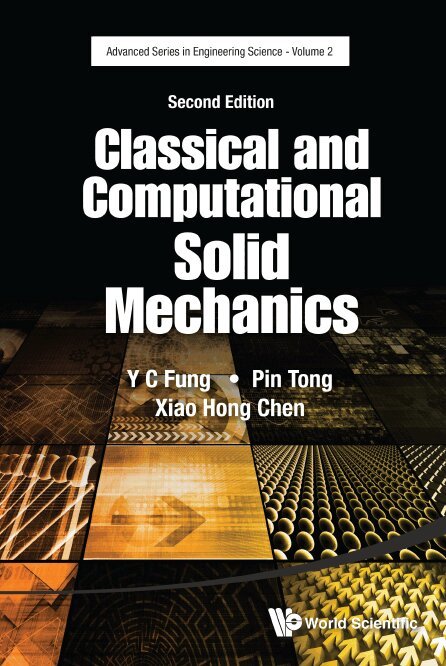
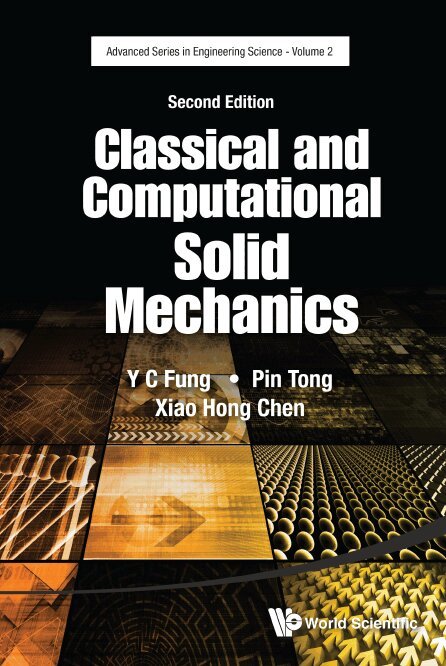
CLASSICAL AND COMPUTATIONAL SOLID MECHANICS (SECOND EDITION)
Inbunden, 2017
2499 kr
Lägg i varukorg
The second edition provides an update of the recent developments in classical and computational solid mechanics. The structure of the book is also updated to include five new areas: Fundamental Principles of Thermodynamics and Coupled Thermoelastic Constitutive Equations at Large Deformations, …
CLASSICAL AND COMPUTATIONAL SOLID MECHANICS (SECOND EDITION)
Häftad, 2017
1413 kr
Lägg i varukorg
The second edition provides an update of the recent developments in classical and computational solid mechanics. The structure of the book is also updated to include five new areas: Fundamental Principles of Thermodynamics and Coupled Thermoelastic Constitutive Equations at Large Deformations, …
INTRODUCTION TO BIOENGINEERING
Häftad, 2001
498 kr
Tillfälligt slut
Bioengineering is attracting many high quality students. This invaluable book has been written for beginning students of bioengineering, and is aimed at instilling a sense of engineering in them.Engineering is invention and designing things that do not exist in nature for the benefit of humanity. …