Yaacob Dweck – författare
Visar alla böcker från författaren Yaacob Dweck. Handla med fri frakt och snabb leverans.
3 produkter
3 produkter
505 kr
Skickas inom 7-10 vardagar
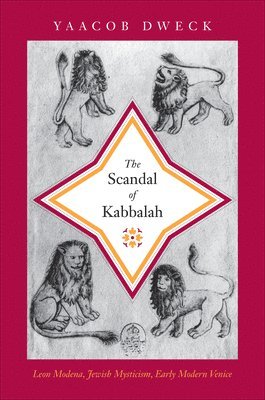
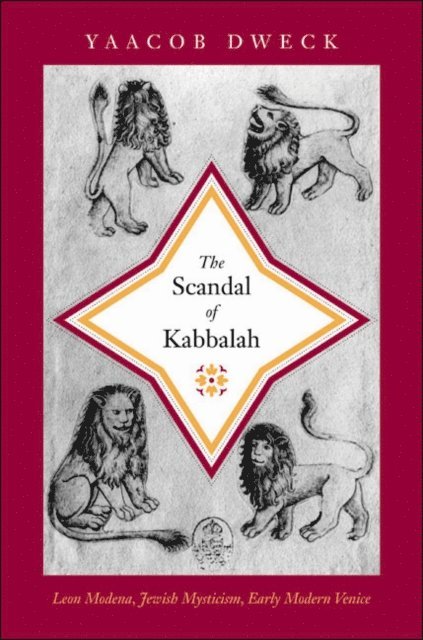
The Scandal of Kabbalah is the first book about the origins of a culture war that began in early modern Europe and continues to this day: the debate between kabbalists and their critics on the nature of Judaism and the meaning of religious tradition. From its medieval beginnings as an esoteric form of Jewish mysticism, Kabbalah spread throughout the early modern world and became a central feature of Jewish life. Scholars have long studied the revolutionary impact of Kabbalah, but, as Yaacob Dweck argues, they have misunderstood the character and timing of opposition to it. Drawing on a range of previously unexamined sources, this book tells the story of the first criticism of Kabbalah, Ari Nohem, written by Leon Modena in Venice in 1639. In this scathing indictment of Venetian Jews who had embraced Kabbalah as an authentic form of ancient esotericism, Modena proved the recent origins of Kabbalah and sought to convince his readers to return to the spiritualized rationalism of Maimonides.The Scandal of Kabbalah examines the hallmarks of Jewish modernity displayed by Modena's attack--a critical analysis of sacred texts, skepticism about religious truths, and self-consciousness about the past--and shows how these qualities and the later history of his polemic challenge conventional understandings of the relationship between Kabbalah and modernity. Dweck argues that Kabbalah was the subject of critical inquiry in the very period it came to dominate Jewish life rather than centuries later as most scholars have thought.
276 kr
Skickas inom 7-10 vardagar
The Scandal of Kabbalah is the first book about the origins of a culture war that began in early modern Europe and continues to this day: the debate between kabbalists and their critics on the nature of Judaism and the meaning of religious tradition. From its medieval beginnings as an esoteric form of Jewish mysticism, Kabbalah spread throughout the early modern world and became a central feature of Jewish life. Scholars have long studied the revolutionary impact of Kabbalah, but, as Yaacob Dweck argues, they have misunderstood the character and timing of opposition to it. Drawing on a range of previously unexamined sources, this book tells the story of the first criticism of Kabbalah, Ari Nohem, written by Leon Modena in Venice in 1639. In this scathing indictment of Venetian Jews who had embraced Kabbalah as an authentic form of ancient esotericism, Modena proved the recent origins of Kabbalah and sought to convince his readers to return to the spiritualized rationalism of Maimonides.The Scandal of Kabbalah examines the hallmarks of Jewish modernity displayed by Modena's attack--a critical analysis of sacred texts, skepticism about religious truths, and self-consciousness about the past--and shows how these qualities and the later history of his polemic challenge conventional understandings of the relationship between Kabbalah and modernity. Dweck argues that Kabbalah was the subject of critical inquiry in the very period it came to dominate Jewish life rather than centuries later as most scholars have thought.
452 kr
Skickas inom 7-10 vardagar
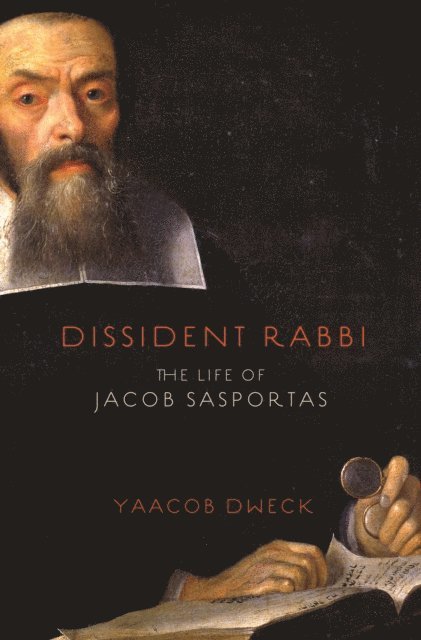
A revelatory account of a spiritual leader who dared to assert the value of rabbinic doubt in the face of messianic certaintyIn 1665, Sabbetai Zevi, a self-proclaimed Messiah with a mass following throughout the Ottoman Empire and Europe, announced that the redemption of the world was at hand. As Jews everywhere rejected the traditional laws of Judaism in favor of new norms established by Sabbetai Zevi, and abandoned reason for the ecstasy of messianic enthusiasm, one man watched in horror. Dissident Rabbi tells the story of Jacob Sasportas, the Sephardic rabbi who alone challenged Sabbetai Zevi's improbable claims and warned his fellow Jews that their Messiah was not the answer to their prayers.Yaacob Dweck's absorbing and richly detailed biography brings to life the tumultuous century in which Sasportas lived, an age torn apart by war, migration, and famine. He describes the messianic frenzy that gripped the Jewish Diaspora, and Sasportas's attempts to make sense of a world that Sabbetai Zevi claimed was ending. As Jews danced in the streets, Sasportas compiled The Fading Flower of the Zevi, a meticulous and eloquent record of Sabbatianism as it happened. In 1666, barely a year after Sabbetai Zevi heralded the redemption, the Messiah converted to Islam at the behest of the Ottoman sultan, and Sasportas's book slipped into obscurity.Dissident Rabbi is the revelatory account of a spiritual leader who dared to articulate the value of rabbinic doubt in the face of messianic certainty, and a revealing examination of how his life and legacy were rediscovered and appropriated by later generations of Jewish thinkers.