3 621 kr
Skickas inom 10-15 vardagar
3 621 kr
Skickas inom 10-15 vardagar
1 133 kr
Skickas inom 10-15 vardagar
1 334 kr
Läs direkt efter köp
1 320 kr
Läs direkt efter köp
540 kr
Skickas inom 10-15 vardagar
698 kr
Läs direkt efter köp
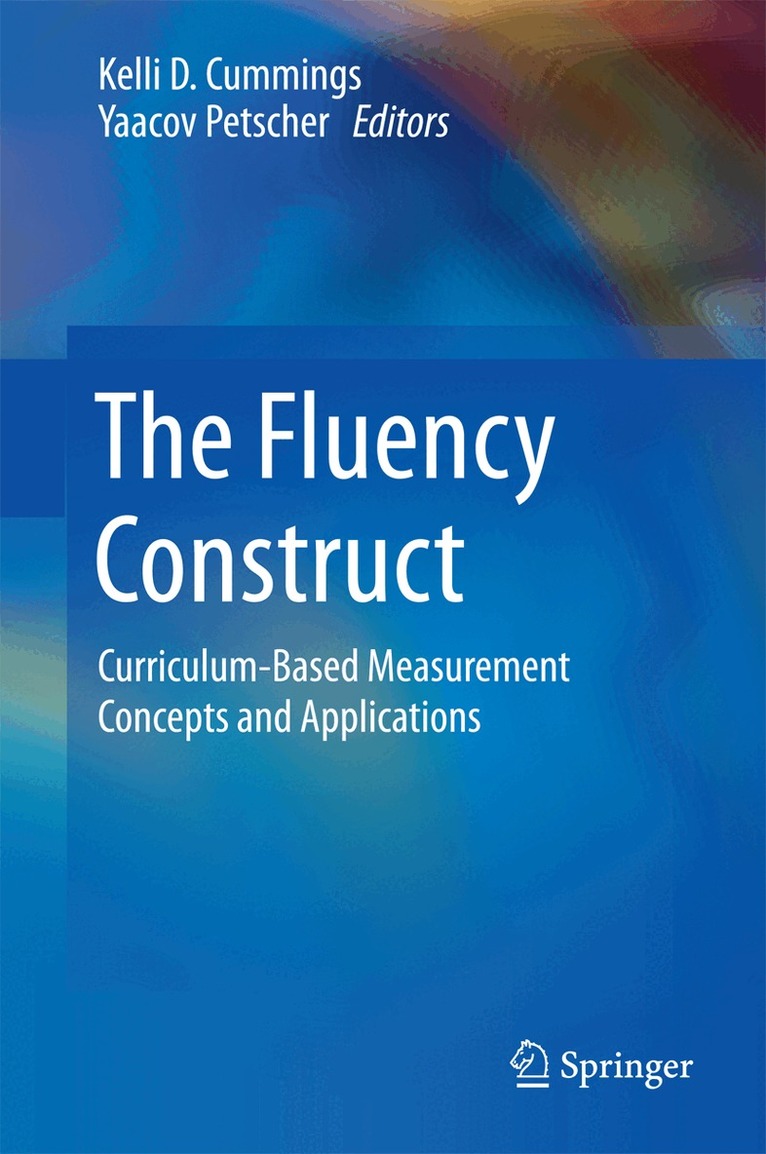
This book provides a comprehensive overview of fluency as a construct and its assessment in the context of curriculum-based measurement (CBM). Comparing perspectives from language acquisition, reading, and mathematics, the book parses the vagueness and complexities surrounding fluency concepts and their resulting impact on testing, intervention, and students'' educational development. Applications of this knowledge in screening and testing, ideas for creating more targeted measures, and advanced methods for studying fluency data demonstrate the overall salience of fluency within CBM. Throughout, contributors argue for greater specificity and nuance in isolating skills to be measured and improved, and for terminology that reflects those educational benchmarks.
Included in the coverage:
Indicators of fluent writing in beginning writers.Fluency in language acquisition, reading, and mathematics. Foundations of fluency-based assessmentsin behavioral and psychometric paradigms.Using response time and accuracy data to inform the measurement of fluency.Using individual growth curves to model reading fluency.Latent class analysis for reading fluency research.The Fluency Construct: Curriculum-Based Measurement Concepts and Applications is an essential resource for researchers, graduate students, and professionals in clinical child and school psychology, language and literature, applied linguistics, special education, neuropsychology, and social work.
540 kr
Skickas inom 10-15 vardagar
3 427 kr
Skickas inom 5-8 vardagar
WHY MATRS?
Assesses morphological awareness, a unique and significant predictor of literacy skills Helps educators determine what students know about morphemes and where they need more morphological awareness instruction Helps states meet literacy goals and mandates focused on students’ morphological awareness Developed by leading experts on morphological awareness through more than a decade of research Norm-referenced and standardized—4,060 students were included in the normative sample Easy and intuitive to use, with videos that demonstrate how to administer each taskHOW IT WORKS
MATRS consists of easy-to-implement subtests called tasks, administered by a reading specialist, speech-language pathologist, or other intervention specialist. There are a total of eight tasks in MATRS, and students complete four in each grade:
Task 1: Segmenting (Grades 1 and 2) Task 2: Affix Identification (Grades 3, 4, 5, and 6) Task 3: Affix Meaning (Grades 1, 2, 3, and 4) Task 4: Suffix Choice (Grades 5 and 6) Task 5: Spelling Multi-Morphemic Words (Grades 4, 5, and 6) Task 6: Suffix Spelling (Grades 1, 2, and 3) Task 7: Spoken Relatives (Grades 1 and 2) Task 8: Written Relatives (Grades 3, 4, 5, and 6)Following the clear directions in the Examiner Administration Booklet and demonstration videos, the examiner provides students with oral prompts and plays audio recordings to elicit and record responses. The test takes 35−45 minutes, and scoring is easy with the time-saving Excel scoring solution, which provides automated access to standard scores and percentile ranks. The MATRS kit also includes access to a full set of assessment materials for administering a follow-up test, so you can easily determine the effectiveness of interventions.
WHAT TO ORDER
The MATRS Kit contains everything you need: a detailed manual, Examiner Administration Booklet, and a pack of 10 Student Response Forms for each grade. You’ll also receive digital access to materials for follow-up testing, demonstration videos for each task, audio files, a Technical Report, and the MATRS Excel automated scoring solution.

3 621 kr
Skickas inom 10-15 vardagar
1 133 kr
Skickas inom 10-15 vardagar
1 334 kr
Läs direkt efter köp
1 320 kr
Läs direkt efter köp
540 kr
Skickas inom 10-15 vardagar
698 kr
Läs direkt efter köp
This book provides a comprehensive overview of fluency as a construct and its assessment in the context of curriculum-based measurement (CBM). Comparing perspectives from language acquisition, reading, and mathematics, the book parses the vagueness and complexities surrounding fluency concepts and their resulting impact on testing, intervention, and students'' educational development. Applications of this knowledge in screening and testing, ideas for creating more targeted measures, and advanced methods for studying fluency data demonstrate the overall salience of fluency within CBM. Throughout, contributors argue for greater specificity and nuance in isolating skills to be measured and improved, and for terminology that reflects those educational benchmarks.
Included in the coverage:
Indicators of fluent writing in beginning writers.Fluency in language acquisition, reading, and mathematics. Foundations of fluency-based assessmentsin behavioral and psychometric paradigms.Using response time and accuracy data to inform the measurement of fluency.Using individual growth curves to model reading fluency.Latent class analysis for reading fluency research.The Fluency Construct: Curriculum-Based Measurement Concepts and Applications is an essential resource for researchers, graduate students, and professionals in clinical child and school psychology, language and literature, applied linguistics, special education, neuropsychology, and social work.
540 kr
Skickas inom 10-15 vardagar
3 427 kr
Skickas inom 5-8 vardagar
WHY MATRS?
Assesses morphological awareness, a unique and significant predictor of literacy skills Helps educators determine what students know about morphemes and where they need more morphological awareness instruction Helps states meet literacy goals and mandates focused on students’ morphological awareness Developed by leading experts on morphological awareness through more than a decade of research Norm-referenced and standardized—4,060 students were included in the normative sample Easy and intuitive to use, with videos that demonstrate how to administer each taskHOW IT WORKS
MATRS consists of easy-to-implement subtests called tasks, administered by a reading specialist, speech-language pathologist, or other intervention specialist. There are a total of eight tasks in MATRS, and students complete four in each grade:
Task 1: Segmenting (Grades 1 and 2) Task 2: Affix Identification (Grades 3, 4, 5, and 6) Task 3: Affix Meaning (Grades 1, 2, 3, and 4) Task 4: Suffix Choice (Grades 5 and 6) Task 5: Spelling Multi-Morphemic Words (Grades 4, 5, and 6) Task 6: Suffix Spelling (Grades 1, 2, and 3) Task 7: Spoken Relatives (Grades 1 and 2) Task 8: Written Relatives (Grades 3, 4, 5, and 6)Following the clear directions in the Examiner Administration Booklet and demonstration videos, the examiner provides students with oral prompts and plays audio recordings to elicit and record responses. The test takes 35−45 minutes, and scoring is easy with the time-saving Excel scoring solution, which provides automated access to standard scores and percentile ranks. The MATRS kit also includes access to a full set of assessment materials for administering a follow-up test, so you can easily determine the effectiveness of interventions.
WHAT TO ORDER
The MATRS Kit contains everything you need: a detailed manual, Examiner Administration Booklet, and a pack of 10 Student Response Forms for each grade. You’ll also receive digital access to materials for follow-up testing, demonstration videos for each task, audio files, a Technical Report, and the MATRS Excel automated scoring solution.