Yael Allweil - Böcker
Visar alla böcker från författaren Yael Allweil. Handla med fri frakt och snabb leverans.
3 produkter
3 produkter
716 kr
Skickas inom 10-15 vardagar
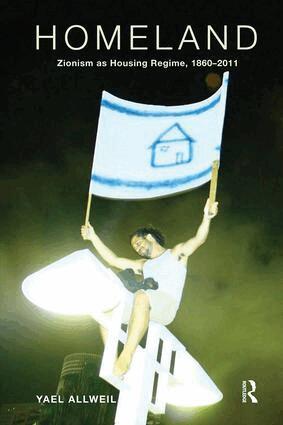
On 29 March 2016 the New York based online journal, Realty Today reported ‘Israel is facing a housing crisis with …[the] home inventory lacking 100,000 apartments… House prices, which have more than doubled in less than a decade, resulted in a mass protest back in 2011’.As Yael Allweil reveals in her fascinating book, housing has played a pivotal role in the history of nationalism and nation building in Israel-Palestine. She adopts the concept of ‘homeland’ to highlight how land and housing are central to both Zionism and Palestinian nationalism, and how the history of Zionist and Palestinian national housing have been inseparably intertwined from the introduction of the Ottoman Land Code in 1858 to the present day.Following the Introduction, Part I, ‘Historiographies of Land Reform and Nationalism’, discusses the formation of nationalism as the direct result of the Ottoman land code of 1858. Part II, ‘Housing as Proto-Nationalism’ focuses on housing as the means to claim rights over the homeland. Part III, ‘Housing and Nation-Building in the Age of State Sovereignty’, explores the effects of statehood on national housing across several strata of Israeli society. The Afterword discusses housing as the quintessential object of agonistic conflict in Israel-Palestine, around which the Israeli polity is formed and reformed.
2 162 kr
Skickas inom 10-15 vardagar
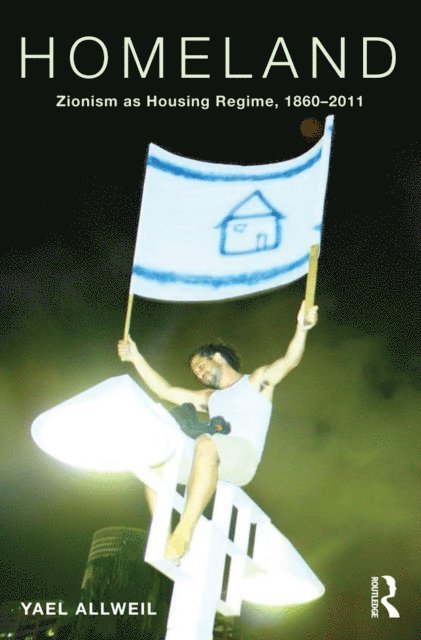
On 29 March 2016 the New York based online journal, Realty Today reported ‘Israel is facing a housing crisis with …[the] home inventory lacking 100,000 apartments… House prices, which have more than doubled in less than a decade, resulted in a mass protest back in 2011’.As Yael Allweil reveals in her fascinating book, housing has played a pivotal role in the history of nationalism and nation building in Israel-Palestine. She adopts the concept of ‘homeland’ to highlight how land and housing are central to both Zionism and Palestinian nationalism, and how the history of Zionist and Palestinian national housing have been inseparably intertwined from the introduction of the Ottoman Land Code in 1858 to the present day.Following the Introduction, Part I, ‘Historiographies of Land Reform and Nationalism’, discusses the formation of nationalism as the direct result of the Ottoman land code of 1858. Part II, ‘Housing as Proto-Nationalism’ focuses on housing as the means to claim rights over the homeland. Part III, ‘Housing and Nation-Building in the Age of State Sovereignty’, explores the effects of statehood on national housing across several strata of Israeli society. The Afterword discusses housing as the quintessential object of agonistic conflict in Israel-Palestine, around which the Israeli polity is formed and reformed.
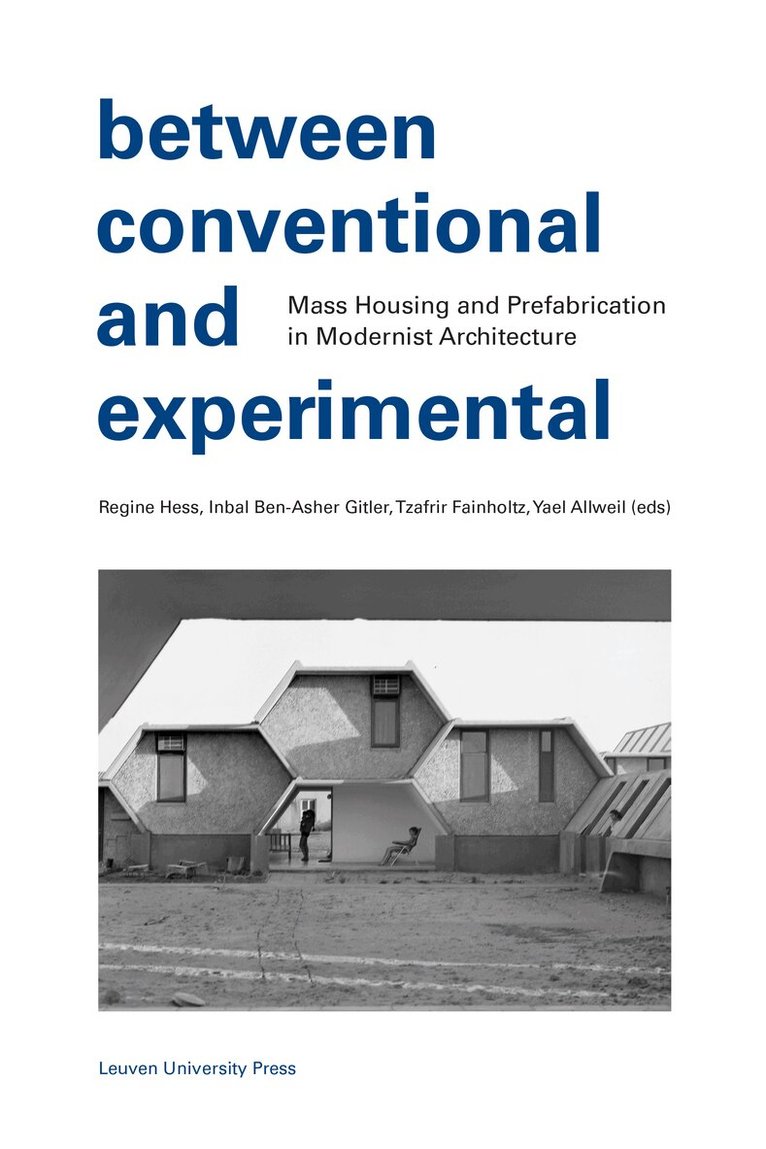
Between Conventional and Experimental
Mass Housing and Prefabrication in Modernist Architecture
Häftad, Engelska, 2024
813 kr
Skickas inom 5-8 vardagar
How conventional and experimental prototypes and series created an architecture for all.Mass housing and prefabrication shaped global modernist architecture like no other aspect of industrialised construction. This book offers a comprehensive exploration of how both conventional and experimental prototypes and series gave rise to an architecture for all and responded to crises, nation-building, and housing shortages within the context of transnational and regional research.The book’s contributions explore partially unearthed empirical ground, such as cases from Finland and Sweden, while others offer a fresh interpretation of prefabrication’s role in the history of global architecture, notably in the USSR and Italy. The chapters' topics encompass colonial expansion, class, international collaboration, and the achievements and setbacks of industrialised design. The authors scrutinise the cultural impact of mass housing and prefabrication, tracing this influence through exhibitions, memory culture, and typologies, ultimately concluding with an outlook on the preservation and repair of structures and their adaptation for the future.Contributors: Mia Åkerfelt (Åbo Akademi University), Yael Allweil (Technion Israel Institute of Technology), Inbal Ben Asher-Gitler (Sapir Academic College / Ben Gurion University of the Negev), Angelo Bertolazzi (University of Padua), Tamara Bjažić Klarin (Institute of Art History, Zagreb), Tzafrir Fainholtz (Technion Israel Institute of Technology / Åbo Akademi University), Alberto Franchini (Technical University of Munich), Ilaria Giannetti (University of Rome Tor Vergata), Regine Hess (TU Munich), Silke Langenberg (ETH Zurich), Daphna Levine (Technion Israel Institute of Technology), Stefania Mornati (University of Rome Tor Vergata), Uta Pottgiesser (TU Delft), Maryia Rusak (Oslo School of Architecture and Design), Liat Savin Ben Shoshan (Technion Israel Institute of Technology), Maria Tassopoulou (Technical University of Athens), Anna Wilczyńska (Estonian University of Life Sciences/ Warsaw University of Life Sciences).Ebook available in Open Access. This publication is GPRC-labeled (Guaranteed Peer-Reviewed Content).