Yali Shao – författare
Visar alla böcker från författaren Yali Shao. Handla med fri frakt och snabb leverans.
5 produkter
5 produkter
Inbunden, Engelska, 2024
1 201 kr
Skickas inom 10-15 vardagar
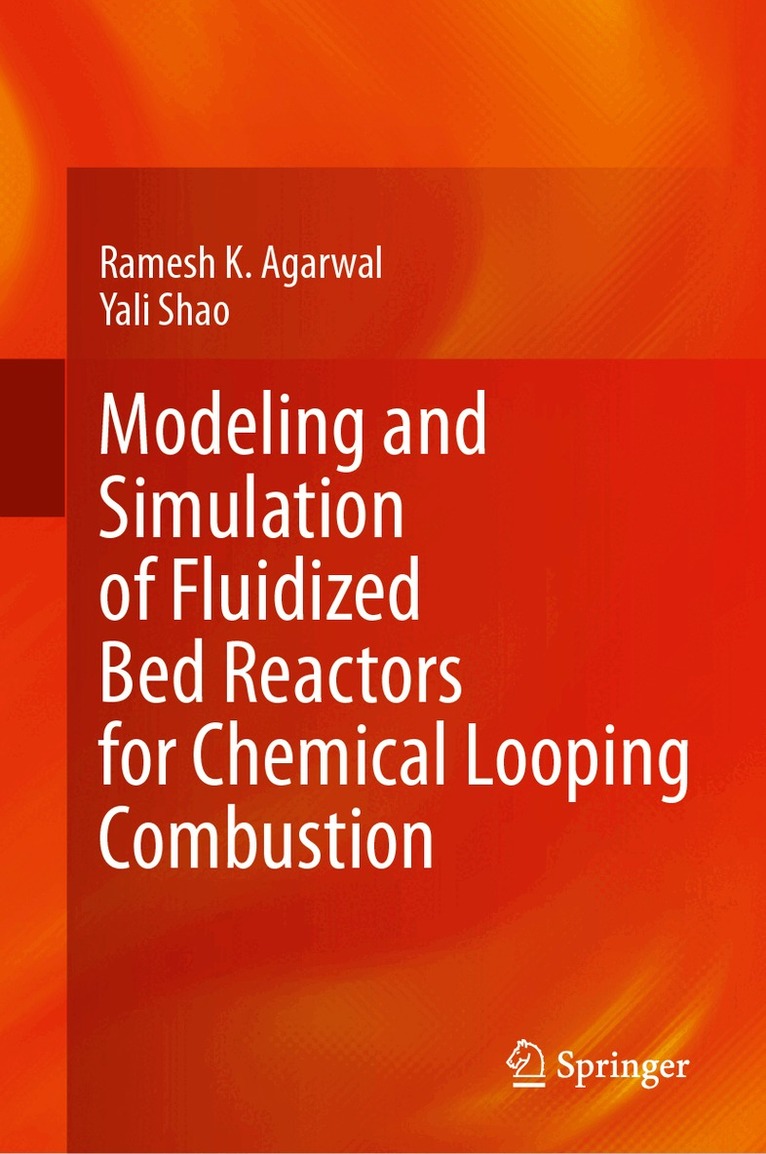
The book describes the clean coal technology of chemical looping combustion (CLC) for power generation with pure CO2 capture. The focus of the book is on the modeling and simulation of CLC. It includes fundamental concepts behind CLC and considers all categories of fluidized beds and reactors, including a variety of oxygen carriers. The book includes process simulations with Aspen Plus® software using coal, natural gas, and biomass and computational fluid dynamics (CFD) simulations using both the Eulerian and Lagrangian methods. It describes various drag models, turbulence models, and kinetics models required for CFD simulations of CLC and covers single reactor, partial, and full-simulations, single/multi-stage as well as single-particle simulations, and CLC with reverse flow. A large number of examples for both process simulations using Aspen Plus and CFD simulations using a variety of fluidized beds/reactors employing both the two-fluid and Computational Fluid Dynamics / Discrete Element Method (CFD-DEM) model are provided. Modeling and Simulation of Fluidized Bed Reactors for Chemical Looping Combustion will be an invaluable reference for industry practitioners and researchers in academic and industrial R&D currently working on clean energy technologies and power generation with carbon capture.
E-bok
Engelska, 20241 069 kr
Läs direkt efter köp
The book describes the clean coal technology of chemical looping combustion (CLC) for power generation with pure CO2 capture. The focus of the book is on the modeling and simulation of CLC. It includes fundamental concepts behind CLC and considers all categories of fluidized beds and reactors, including a variety of oxygen carriers. The book includes process simulations with Aspen Plus® software using coal, natural gas, and biomass and computational fluid dynamics (CFD) simulations using both the Eulerian and Lagrangian methods. It describes various drag models, turbulence models, and kinetics models required for CFD simulations of CLC and covers single reactor, partial, and full-simulations, single/multi-stage as well as single-particle simulations, and CLC with reverse flow. A large number of examples for both process simulations using Aspen Plus and CFD simulations using a variety of fluidized beds/reactors employing both the two-fluid and Computational Fluid Dynamics / Discrete Element Method (CFD-DEM) model are provided. Modeling and Simulation of Fluidized Bed Reactors for Chemical Looping Combustion will be an invaluable reference for industry practitioners and researchers in academic and industrial R&D currently working on clean energy technologies and power generation with carbon capture.
Häftad, Engelska, 2025
874 kr
Skickas inom 10-15 vardagar
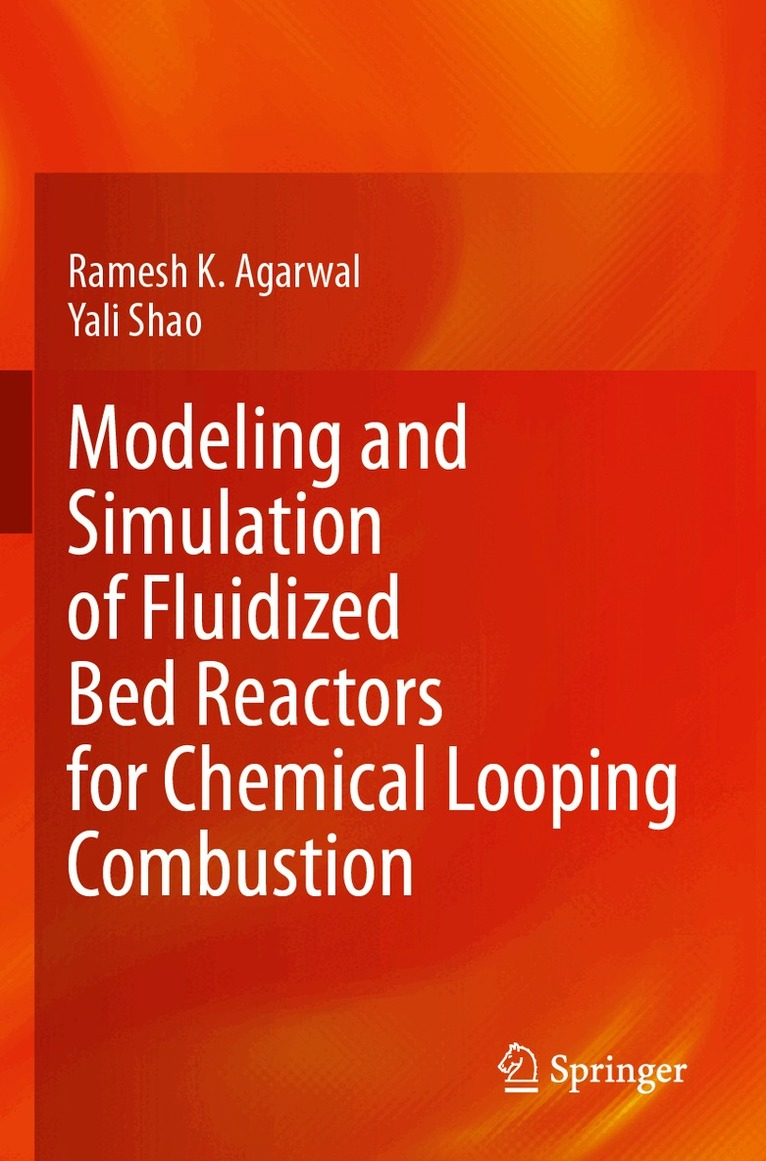
The book describes the clean coal technology of chemical looping combustion (CLC) for power generation with pure CO2 capture. The focus of the book is on the modeling and simulation of CLC. It includes fundamental concepts behind CLC and considers all categories of fluidized beds and reactors, including a variety of oxygen carriers. The book includes process simulations with Aspen Plus® software using coal, natural gas, and biomass and computational fluid dynamics (CFD) simulations using both the Eulerian and Lagrangian methods. It describes various drag models, turbulence models, and kinetics models required for CFD simulations of CLC and covers single reactor, partial, and full-simulations, single/multi-stage as well as single-particle simulations, and CLC with reverse flow. A large number of examples for both process simulations using Aspen Plus and CFD simulations using a variety of fluidized beds/reactors employing both the two-fluid and Computational Fluid Dynamics / Discrete Element Method (CFD-DEM) model are provided. Modeling and Simulation of Fluidized Bed Reactors for Chemical Looping Combustion will be an invaluable reference for industry practitioners and researchers in academic and industrial R&D currently working on clean energy technologies and power generation with carbon capture.
Inbunden, Engelska, 2026
1 852 kr
Skickas inom 10-15 vardagar
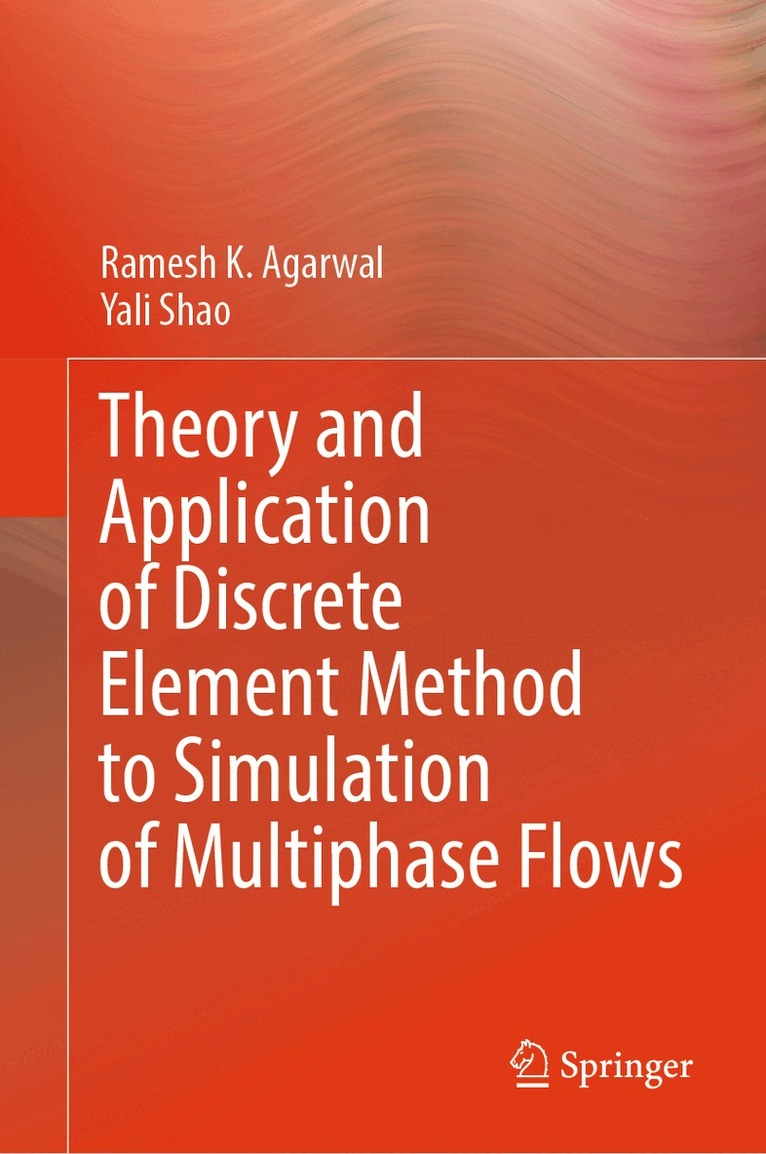
The book provides an in-depth exploration of the theory, implementation, and vast applications of the Discrete Element Method (DEM) and its coupling with Computational Fluid Dynamics (CFD) for simulating complex multiphase flows. Beginning with the core theoretical framework of DEM—covering particle kinematics, contact detection algorithms, and contact force models—the book systematically progresses to advanced topics. It provides detailed coverage of critical particle-fluid interaction mechanisms, robust CFD-DEM coupling schemes, and the integration of heat and mass transfer phenomena. The strategies for enabling large-scale simulations, including parallel computing, GPU acceleration, and coarse-graining techniques, are also included. The book stands apart through its unparalleled breadth of application-centric chapters. Readers will find dedicated sections on:Conventional and Advanced Reactors: Bubbling, spouted, and circulating fluidized beds, as well as magnetized and electrostatic systems.Dense Granular Systems: Particle packing, shear flow, silo/hopper discharge, and moving bed applications in chemical looping, pyrolysis, heat exchanger, and blast furnaces.Industrial Process Engineering: Pneumatic and screw conveyors, pump wear and flow dynamics, and mining operations in crushers, mills, screens, and chutes.Advanced Manufacturing: Pharmaceutical processes like milling, blending, granulation, tableting, and coating, as well as battery electrode calendering and recycling.Emerging Trends: The integration of machine learning and optimization strategies for complex multiphase flow systems.Theory and Application of Discrete Element Method to Simulation of Multiphase Flows bridges fundamental theory with cutting-edge practical advancements, serving as an essential guide for students, engineers, and researchers seeking to model systems where particle dynamics are paramount.Provides a complete roadmap from core theory to high-performance applications for complex multiphase flow simulations;Delivers insights on a range of sectors, featuring dedicated applications in energy, manufacturing and heavy industry;Future-proofs computational modeling skills by offering practical guidance on bridging simulation with AI.
E-bok
Engelska, 20262 283 kr
Läs direkt efter köp
The book provides an in-depth exploration of the theory, implementation, and vast applications of the Discrete Element Method (DEM) and its coupling with Computational Fluid Dynamics (CFD) for simulating complex multiphase flows. Beginning with the core theoretical framework of DEM—covering particle kinematics, contact detection algorithms, and contact force models—the book systematically progresses to advanced topics. It provides detailed coverage of critical particle-fluid interaction mechanisms, robust CFD-DEM coupling schemes, and the integration of heat and mass transfer phenomena. The strategies for enabling large-scale simulations, including parallel computing, GPU acceleration, and coarse-graining techniques, are also included. The book stands apart through its unparalleled breadth of application-centric chapters. Readers will find dedicated sections on:Conventional and Advanced Reactors: Bubbling, spouted, and circulating fluidized beds, as well as magnetized and electrostatic systems.Dense Granular Systems: Particle packing, shear flow, silo/hopper discharge, and moving bed applications in chemical looping, pyrolysis, heat exchanger, and blast furnaces.Industrial Process Engineering: Pneumatic and screw conveyors, pump wear and flow dynamics, and mining operations in crushers, mills, screens, and chutes.Advanced Manufacturing: Pharmaceutical processes like milling, blending, granulation, tableting, and coating, as well as battery electrode calendering and recycling.Emerging Trends: The integration of machine learning and optimization strategies for complex multiphase flow systems.Theory and Application of Discrete Element Method to Simulation of Multiphase Flows bridges fundamental theory with cutting-edge practical advancements, serving as an essential guide for students, engineers, and researchers seeking to model systems where particle dynamics are paramount.Provides a complete roadmap from core theory to high-performance applications for complex multiphase flow simulations;Delivers insights on a range of sectors, featuring dedicated applications in energy, manufacturing and heavy industry;Future-proofs computational modeling skills by offering practical guidance on bridging simulation with AI.