Yangyang Shen – författare
Visar alla böcker från författaren Yangyang Shen. Handla med fri frakt och snabb leverans.
4 produkter
4 produkter
Inbunden, Engelska, 2024
1 952 kr
Kommande
The authors analyze the present status of personal income gap from its root. In the book, the authors give a clear classification of different personal income groups and how to adjust each group income, under the basis of society equity theory.
Inbunden, Engelska, 2022
1 191 kr
Skickas inom 10-15 vardagar
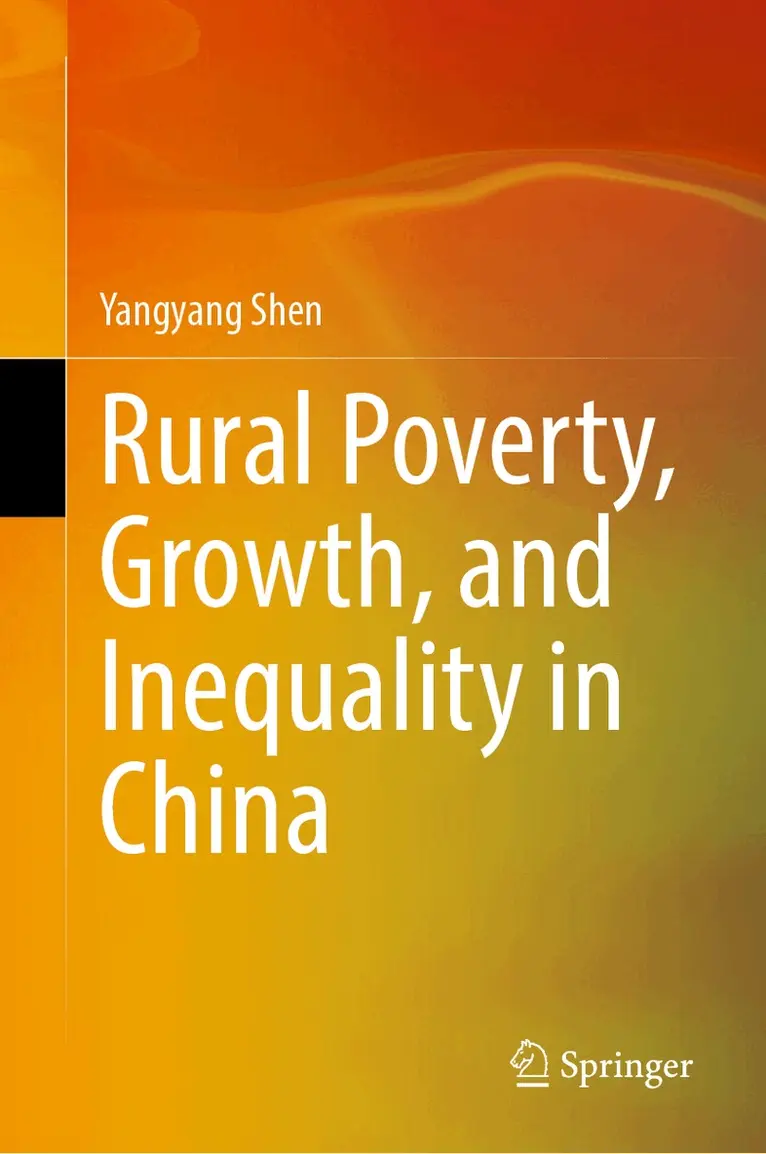
This book aims to empirically and theoretically study how the economic growth and inequality affected China’s rural poverty since China’s reform and opening-up. Apart from the trickle-down effect, some empirical researches show that rising inequality usually links with unfairly shared of the economic growth, which is not good for the poor, and this book particularly concerns with the impact of inequality on poverty reduction. In 11 chapters, it leads readers to review the dynamic changes of rural poverty in China, and estimates rural poverty by various methods, for instance, with analysis by monetary poverty (including income and expenditure poverty), multidimensional poverty, absolute poverty, and relative poverty. Especially attention is paid to apply the “growth-inequality-poverty triangle” model for long-term poverty dynamic changes evaluation. The book revisits poverty reduction strategies in different development periods for rural China and evaluates the poverty eradicationachievements stage-by-stage under different analytical methods, in order to provide an objective assessment. Among the chapters, pro-poor growth, Shapley decomposition, poverty elasticity, density estimation, multidimensional poverty analysis, and policy simulation methods are applied for both national wide discussion and rural sub-group heterogeneity analysis. In addition to students, teachers, and researchers in the areas of development, economic growth, equity, and welfare, the book is also of great interest to policy makers, planners, and non‐government agencies who are concerned with understanding and addressing poverty-related issues in the developing countries.
E-bok
Engelska, 20221 622 kr
Läs direkt efter köp
This book aims to empirically and theoretically study how the economic growth and inequality affected China’s rural poverty since China’s reform and opening-up. Apart from the trickle-down effect, some empirical researches show that rising inequality usually links with unfairly shared of the economic growth, which is not good for the poor, and this book particularly concerns with the impact of inequality on poverty reduction. In 11 chapters, it leads readers to review the dynamic changes of rural poverty in China, and estimates rural poverty by various methods, for instance, with analysis by monetary poverty (including income and expenditure poverty), multidimensional poverty, absolute poverty, and relative poverty. Especially attention is paid to apply the “growth-inequality-poverty triangle” model for long-term poverty dynamic changes evaluation. The book revisits poverty reduction strategies in different development periods for rural China and evaluates the poverty eradicationachievements stage-by-stage under different analytical methods, in order to provide an objective assessment. Among the chapters, pro-poor growth, Shapley decomposition, poverty elasticity, density estimation, multidimensional poverty analysis, and policy simulation methods are applied for both national wide discussion and rural sub-group heterogeneity analysis. In addition to students, teachers, and researchers in the areas of development, economic growth, equity, and welfare, the book is also of great interest to policy makers, planners, and non‐government agencies who are concerned with understanding and addressing poverty-related issues in the developing countries.
Häftad, Engelska, 2023
1 191 kr
Skickas inom 5-8 vardagar
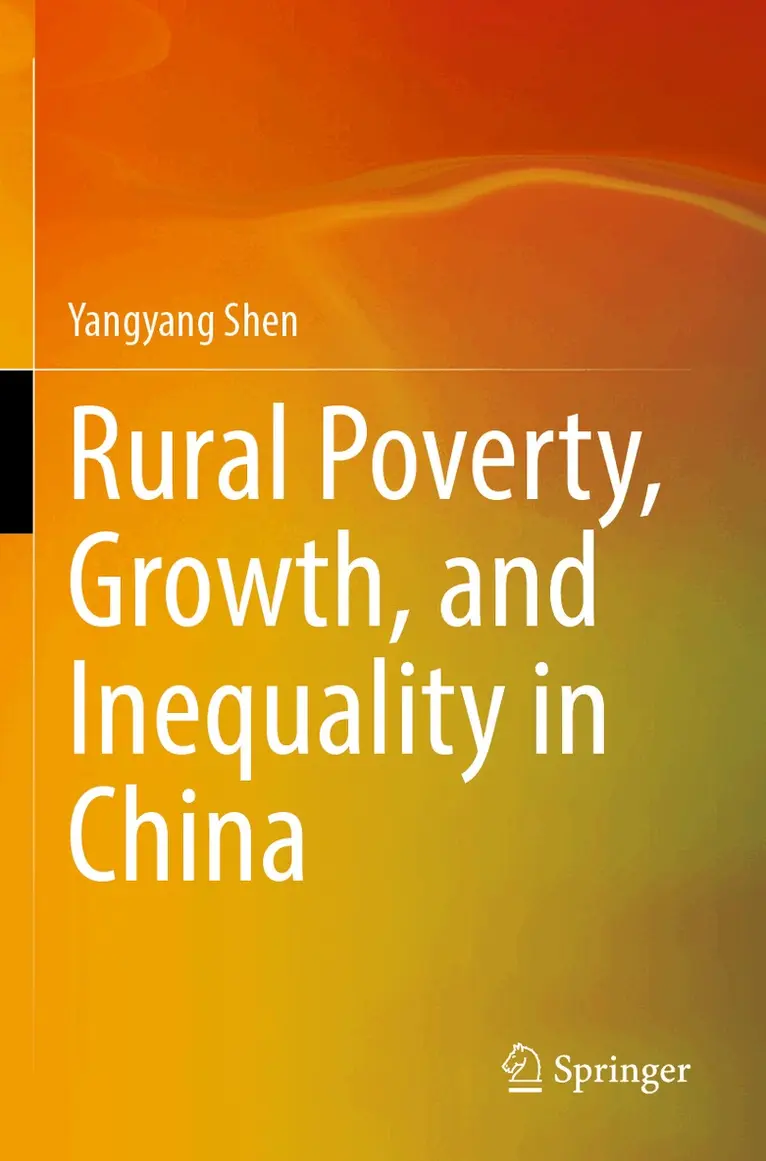
This book aims to empirically and theoretically study how the economic growth and inequality affected China’s rural poverty since China’s reform and opening-up. Apart from the trickle-down effect, some empirical researches show that rising inequality usually links with unfairly shared of the economic growth, which is not good for the poor, and this book particularly concerns with the impact of inequality on poverty reduction. In 11 chapters, it leads readers to review the dynamic changes of rural poverty in China, and estimates rural poverty by various methods, for instance, with analysis by monetary poverty (including income and expenditure poverty), multidimensional poverty, absolute poverty, and relative poverty. Especially attention is paid to apply the “growth-inequality-poverty triangle” model for long-term poverty dynamic changes evaluation. The book revisits poverty reduction strategies in different development periods for rural China and evaluates the poverty eradicationachievements stage-by-stage under different analytical methods, in order to provide an objective assessment. Among the chapters, pro-poor growth, Shapley decomposition, poverty elasticity, density estimation, multidimensional poverty analysis, and policy simulation methods are applied for both national wide discussion and rural sub-group heterogeneity analysis. In addition to students, teachers, and researchers in the areas of development, economic growth, equity, and welfare, the book is also of great interest to policy makers, planners, and non‐government agencies who are concerned with understanding and addressing poverty-related issues in the developing countries.