
Yanick St Jean – författare
Visar alla böcker från författaren . Handla med fri frakt och snabb leverans.
4 produkter
4 produkter
E-bok
Engelska, 2015723 kr
Läs direkt efter köp
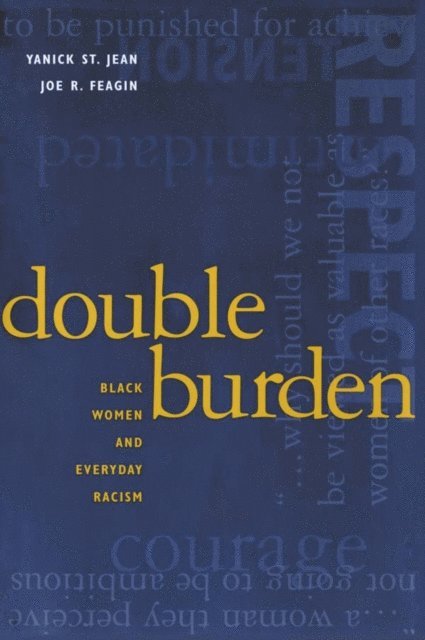
Studies of contemporary black women are rare and scattered, and are often extensions of a legacy beginning in the 19th century that characterized black women as domineering matriarchs, prostitutes, or welfare queens, negative characterizations that are perpetuated by both white and non-white social scientists. Based on over 200 interviews, this book departs from these conventions in significant ways, and, using a "collective memory" conceptual framework, shows how black women cope with and interpret lives often limited by racial barriers not of their making.
E-bok
PDF, Engelska, 2015723 kr
Läs direkt efter köp
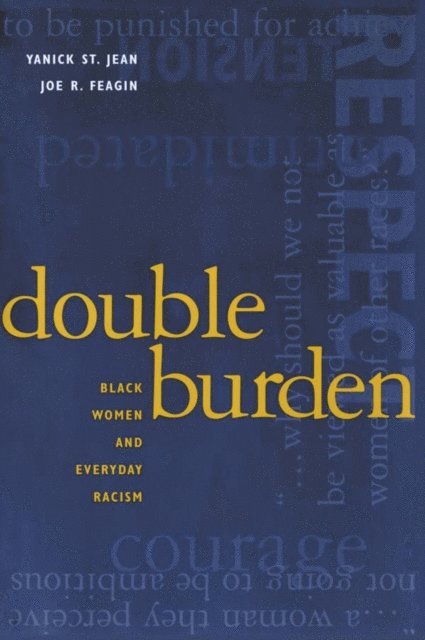
Studies of contemporary black women are rare and scattered, and are often extensions of a legacy beginning in the 19th century that characterized black women as domineering matriarchs, prostitutes, or welfare queens, negative characterizations that are perpetuated by both white and non-white social scientists. Based on over 200 interviews, this book departs from these conventions in significant ways, and, using a "collective memory" conceptual framework, shows how black women cope with and interpret lives often limited by racial barriers not of their making.

Inbunden, Engelska, 1997
2 955 kr
Skickas inom 10-15 vardagar
Studies of contemporary black women are rare and scattered, and are often extensions of a legacy beginning in the 19th century that characterized black women as domineering matriarchs, prostitutes, or welfare queens, negative characterizations that are perpetuated by both white and non-white social scientists. Based on over 200 interviews, this book departs from these conventions in significant ways, and, using a "collective memory" conceptual framework, shows how black women cope with and interpret lives often limited by racial barriers not of their making.
Häftad, Engelska, 1999
611 kr
Skickas inom 10-15 vardagar
Studies of contemporary black women are rare and scattered, and are often extensions of a legacy beginning in the 19th century that characterized black women as domineering matriarchs, prostitutes, or welfare queens, negative characterizations that are perpetuated by both white and non-white social scientists. Based on over 200 interviews, this book departs from these conventions in significant ways, and, using a "collective memory" conceptual framework, shows how black women cope with and interpret lives often limited by racial barriers not of their making.