Yanmin Zhou – författare
Visar alla böcker från författaren Yanmin Zhou. Handla med fri frakt och snabb leverans.
9 produkter
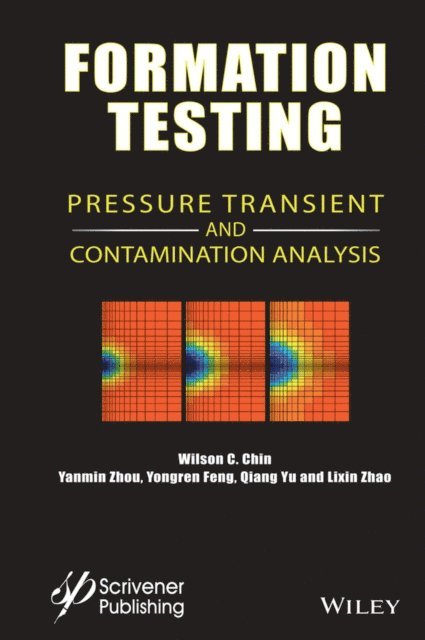
Formation Testing
Pressure Transient and Contamination Analysis
Av Wilson C. Chin, Yanmin Zhou m. fl.
Inbunden, 2014
2644 kr
Lägg i varukorg
The only book available for the reservoir or petroleum engineer covering formation testing—with algorithms for wireline and LWD reservoir analysis developed for transient pressure, contamination modeling, permeability, and pore pressure prediction.Traditional well logging methods, such as …
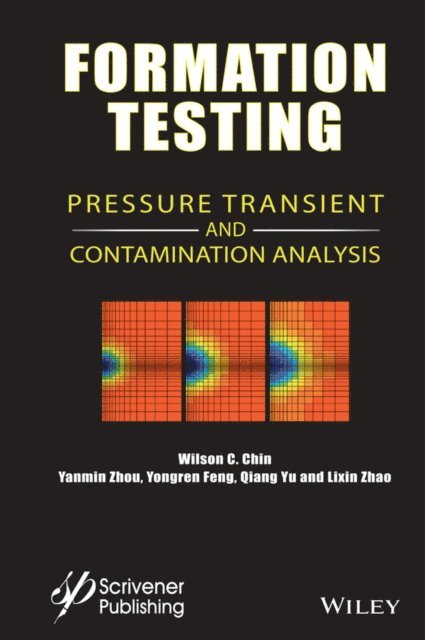
Formation Testing
Pressure Transient and Contamination Analysis
Av Lixin Zhao, Qiang Yu m. fl.
E-bok, 2014
3013 kr
Lägg i varukorg
The only book available for the reservoir or petroleum engineer covering formation testing—with algorithms for wireline and LWD reservoir analysis developed for transient pressure, contamination modeling, permeability, and pore pressure prediction. Traditional well logging methods, such as …
Formation Testing
Pressure Transient and Contamination Analysis
Av Lixin Zhao, Qiang Yu m. fl.
E-bok, 2014
3079 kr
Lägg i varukorg
The only book available for the reservoir or petroleum engineer covering formation testing—with algorithms for wireline and LWD reservoir analysis developed for transient pressure, contamination modeling, permeability, and pore pressure prediction. Traditional well logging methods, such as …
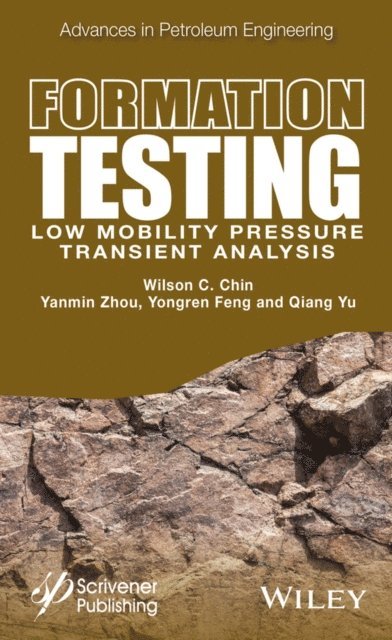
Formation Testing
Low Mobility Pressure Transient Analysis
Av Wilson C. Chin, Yanmin Zhou m. fl.
Inbunden, 2015
2420 kr
Lägg i varukorg
Traditional well logging methods, such as resistivity, acoustic, nuclear and NMR, provide indirect information related to fluid and formation properties. The “formation tester,” offered in wireline and MWD/LWD operations, is different. It collects actual downhole fluid samples for surface analysis, …
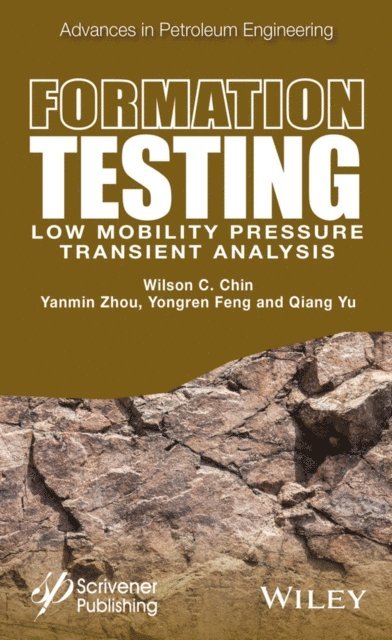
Formation Testing
Low Mobility Pressure Transient Analysis
Av Qiang Yu, Yongren Feng m. fl.
E-bok, 2015
2884 kr
Lägg i varukorg
Traditional well logging methods, such as resistivity, acoustic, nuclear and NMR, provide indirect information related to fluid and formation properties. The “formation tester,” offered in wireline and MWD/LWD operations, is different. It collects actual downhole fluid samples for surface analysis, …
Formation Testing
Low Mobility Pressure Transient Analysis
Av Qiang Yu, Yongren Feng m. fl.
E-bok, 2015
2884 kr
Lägg i varukorg
Traditional well logging methods, such as resistivity, acoustic, nuclear and NMR, provide indirect information related to fluid and formation properties. The “formation tester,” offered in wireline and MWD/LWD operations, is different. It collects actual downhole fluid samples for surface analysis, …
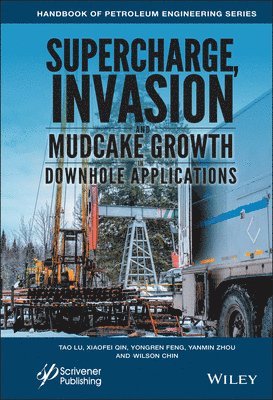
Supercharge, Invasion, and Mudcake Growth in Downhole Applications
Av Tao Lu, Xiaofei Qin m. fl.
Inbunden, 2021
2682 kr
Lägg i varukorg
Mysterious "supercharge effects," encountered in formation testing pressure transient analysis, and reservoir invasion, mudcake growth, dynamic filtration, stuck-pipe remediation, and so on, are often discussed in contrasting petrophysical versus drilling contexts. However, these effects are …
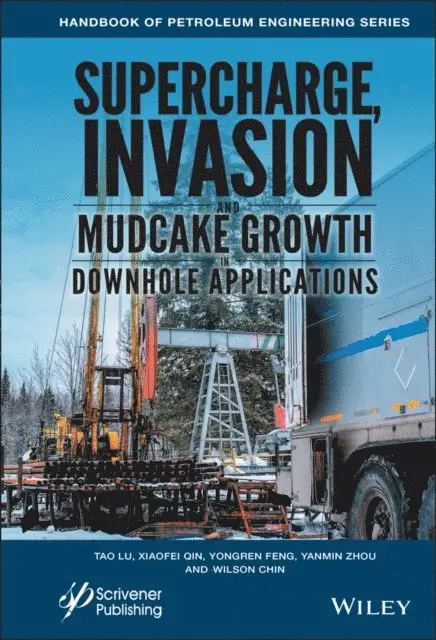
Supercharge, Invasion, and Mudcake Growth in Downhole Applications
Av Wilson C. Chin, Yanmin Zhou m. fl.
E-bok, 2021
3193 kr
Lägg i varukorg
Mysterious "supercharge effects," encountered in formation testing pressure transient analysis, and reservoir invasion, mudcake growth, dynamic filtration, stuck-pipe remediation, and so on, are often discussed in contrasting petrophysical versus drilling contexts. However, these effects are …
Supercharge, Invasion, and Mudcake Growth in Downhole Applications
Av Wilson C. Chin, Yanmin Zhou m. fl.
E-bok, 2021
3124 kr
Lägg i varukorg
Mysterious "supercharge effects," encountered in formation testing pressure transient analysis, and reservoir invasion, mudcake growth, dynamic filtration, stuck-pipe remediation, and so on, are often discussed in contrasting petrophysical versus drilling contexts. However, these effects are …