Yannis A. Phillis – författare
Visar alla böcker från författaren Yannis A. Phillis. Handla med fri frakt och snabb leverans.
6 produkter
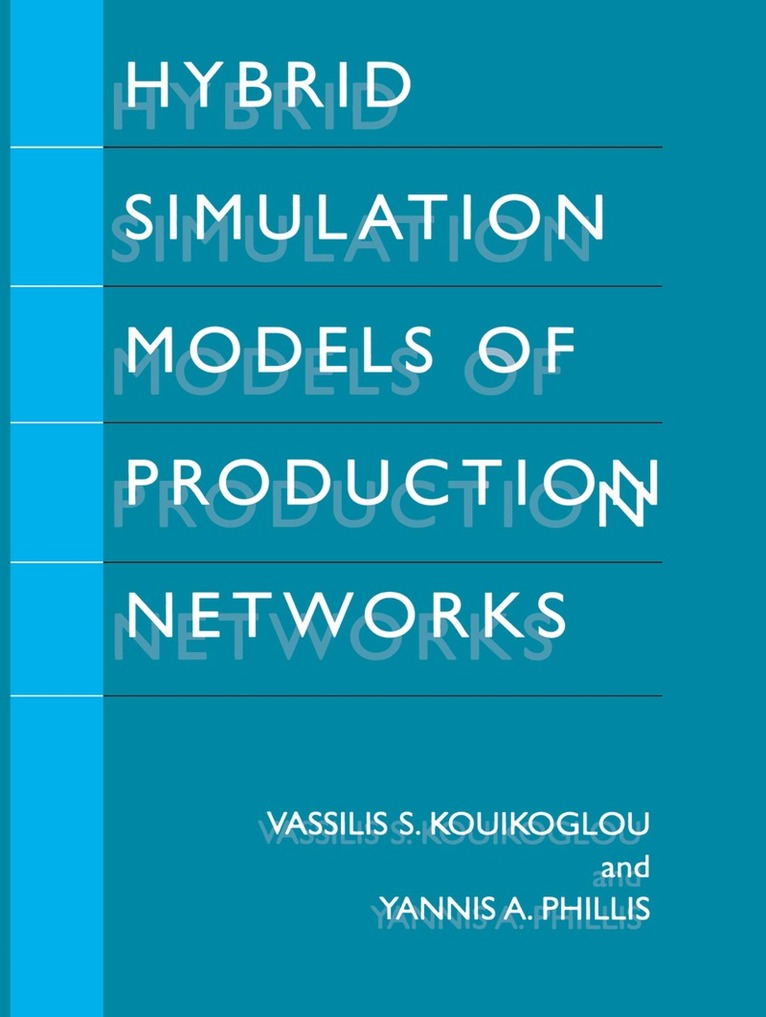
Hybrid Simulation Models of Production Networks
Av Vassilis S. Kouikoglou, Yannis A. Phillis
Inbunden, 2001
1094 kr
Lägg i varukorg
This text is concerned with a most important area of industrial production, that of analysis and optimization of production lines and networks using discrete-event models and simulation. The book introduces a novel approach that combines analytic models and discrete-event simulation. Unlike …
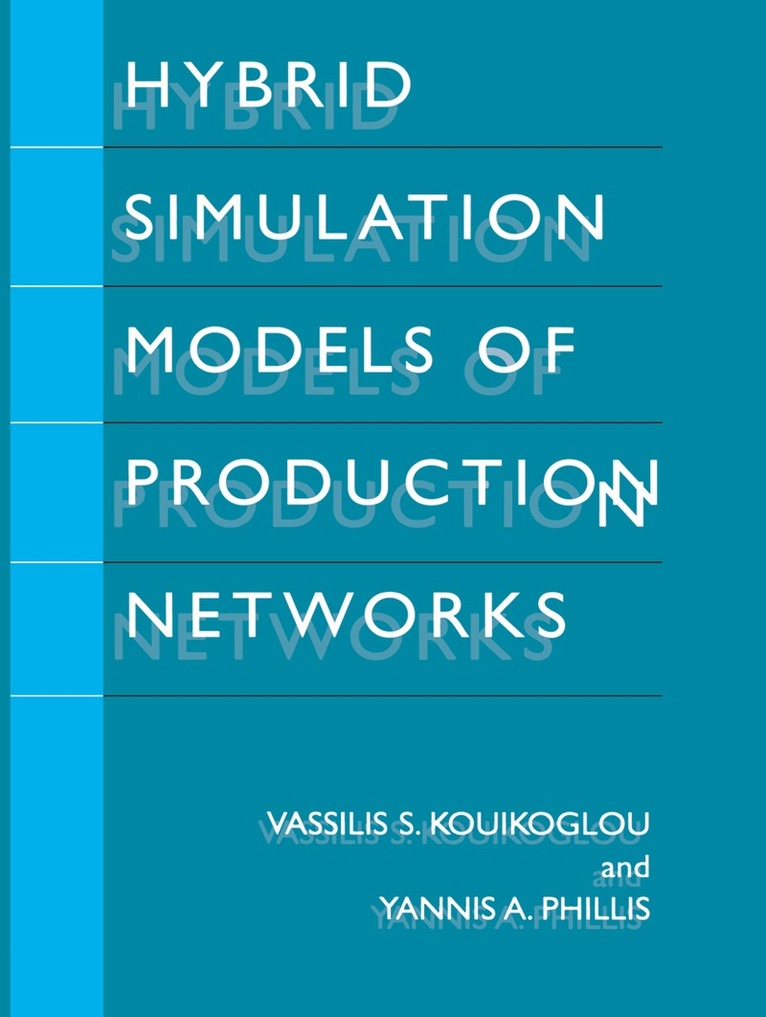
Hybrid Simulation Models of Production Networks
Av Vassilis S. Kouikoglou, Yannis A. Phillis
Häftad, 2010
1094 kr
Lägg i varukorg
Industrial production is one of the most basic human activities indispensable to the economic activity. Due to its complexity, production is not very well understood and modeled as opposed to traditional fields of inquiry such as physics. This book aims at enhancing rigorous understanding of a …
Hybrid Simulation Models of Production Networks
Av Yannis A. Phillis, Vassilis S. Kouikoglou
E-bok, 2013
1459 kr
Lägg i varukorg
Industrial production is one of the most basic human activities indispensable to the economic activity. Due to its complexity, production is not very well understood and modeled as opposed to traditional fields of inquiry such as physics. This book aims at enhancing rigorous understanding of a …
Fuzzy Control of Queuing Systems
Av Vassilis S. Kouikoglou, Yannis A. Phillis m. fl.
E-bok, 2005
1459 kr
Lägg i varukorg
Every day we experience the annoyance of having to queue. The phenomenon is becoming more prevalent in our increasingly congested and urbanised society. Not only the visible queues in traffic jams, airport check in desks and supermarkets, but the more common invisible queues caused by voice calls …
Fuzzy Control of Queuing Systems
Av Runtong Zhang, Yannis A. Phillis m. fl.
Häftad, 2010
1094 kr
Lägg i varukorg
Every day we experience the annoyance of having to queue. The phenomenon is becoming more prevalent in our increasingly congested and urbanised society. Not only the visible queues in traffic jams, airport check in desks and supermarkets, but the more common invisible queues caused by voice calls …
Fuzzy Control of Queuing Systems
Av Runtong Zhang, Yannis A. Phillis m. fl.
Inbunden, 2004
1094 kr
Lägg i varukorg
Every day we experience the annoyance of having to queue. The phenomenon is becoming more prevalent in our increasingly congested and urbanised society. Not only the visible queues in traffic jams, airport check in desks and supermarkets, but the more common invisible queues caused by voice calls …