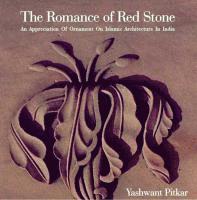
This is an appreciation of architecture of Islam in India. Indo-Islamic architecture is characterised by the prolific use of sandstone -- red stone. It is the culmination of the long tradition of Islamic art that came into bloom right from the faith's first expansion beyond the Arabian Peninsula in the late seventh century. All the great Mughal emperors were prolific commissioners of monuments and their architecture thus remained the finest representation of this syncretion. Mughal architecture has been rich in ornament, almost at times overwhelming the architecture itself. With lively pictures, giving you a feeling of actually experiencing them, the book is divided into three major sections -- Islamic ornament, Common forms in Islamic ornament, and Mughal architecture. Indeed a tribute to the Islamic architecture in India. A musthave book for all who love Mughal architecture. The pictures present a feast of craftsmanship, as an enduring romance with shape and stone, in its unending variations. For a visitor to these buildings, the photographs allow a return, a recollection of architecture as a phenomenon, giving a sensual experience of the visit, a feel for the infinite craft. Mustansir Dalvi's text complements Pitkar's photographs by guiding the reader to an understanding of the variety and symbolism of ornamental forms that grace Islamic architecture, especially in the Indian context. Ornament in its many manifestations transforms the architecture, dematerializing immense monuments into elegant jewel-boxes. Dalvi shows how artisan and patron came together in India in a unique integration of two divergent world views and cultures to create a lasting syncretism of Islamic and Hindu traditions that reached its zenith in the architecture of the Mughal period.
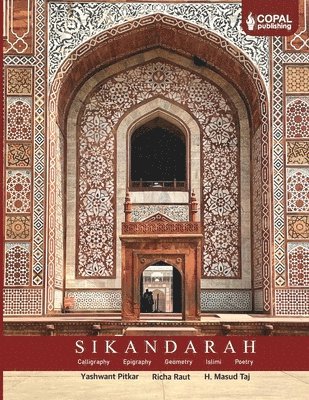
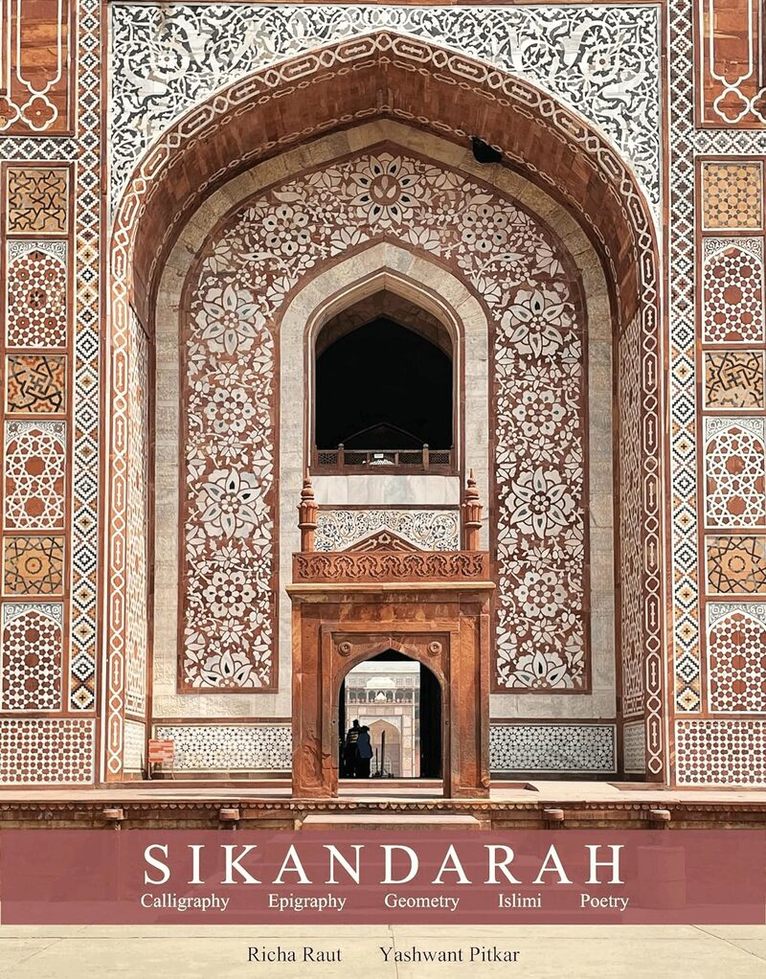
Jalal-ud-din Muhammad Akbar’s resting place is located in Sikandarah (British synonyms to Sikandra) in the outskirts of Agra, Uttar Pradesh. This handsome monument displays a coherent amalgamation of architecture, landscape and detailing through geometry, calligraphy and Islimi in Mughal architecture. Documenting the geometric adornments of this magnificent yet humble monument was the starting of this book. The scope expanded in adding the other details like calligraphy and Islimi thus completing the book. H. Masud Taj, an architect, calligrapher and poet, generously contributed through his elegant calligraphy and further expanding to epigraphy and poetry. He also contributed an essay on the significance of Charbagh. Shruti Barve, a landscape architect, wrote an essay about the landscape and Islimi details binding it together. Following the introduction, the book is seamlessly organized through geometry, photography and essay on Islimi and calligraphy, epigraphy, poetry. The book is a humble attempt in showcasing and interpreting the details which aligned with the interest of the contributors.
This is an appreciation of architecture of Islam in India. Indo-Islamic architecture is characterised by the prolific use of sandstone -- red stone. It is the culmination of the long tradition of Islamic art that came into bloom right from the faith's first expansion beyond the Arabian Peninsula in the late seventh century. All the great Mughal emperors were prolific commissioners of monuments and their architecture thus remained the finest representation of this syncretion. Mughal architecture has been rich in ornament, almost at times overwhelming the architecture itself. With lively pictures, giving you a feeling of actually experiencing them, the book is divided into three major sections -- Islamic ornament, Common forms in Islamic ornament, and Mughal architecture. Indeed a tribute to the Islamic architecture in India. A musthave book for all who love Mughal architecture. The pictures present a feast of craftsmanship, as an enduring romance with shape and stone, in its unending variations. For a visitor to these buildings, the photographs allow a return, a recollection of architecture as a phenomenon, giving a sensual experience of the visit, a feel for the infinite craft. Mustansir Dalvi's text complements Pitkar's photographs by guiding the reader to an understanding of the variety and symbolism of ornamental forms that grace Islamic architecture, especially in the Indian context. Ornament in its many manifestations transforms the architecture, dematerializing immense monuments into elegant jewel-boxes. Dalvi shows how artisan and patron came together in India in a unique integration of two divergent world views and cultures to create a lasting syncretism of Islamic and Hindu traditions that reached its zenith in the architecture of the Mughal period.
Jalal-ud-din Muhammad Akbar’s resting place is located in Sikandarah (British synonyms to Sikandra) in the outskirts of Agra, Uttar Pradesh. This handsome monument displays a coherent amalgamation of architecture, landscape and detailing through geometry, calligraphy and Islimi in Mughal architecture. Documenting the geometric adornments of this magnificent yet humble monument was the starting of this book. The scope expanded in adding the other details like calligraphy and Islimi thus completing the book. H. Masud Taj, an architect, calligrapher and poet, generously contributed through his elegant calligraphy and further expanding to epigraphy and poetry. He also contributed an essay on the significance of Charbagh. Shruti Barve, a landscape architect, wrote an essay about the landscape and Islimi details binding it together. Following the introduction, the book is seamlessly organized through geometry, photography and essay on Islimi and calligraphy, epigraphy, poetry. The book is a humble attempt in showcasing and interpreting the details which aligned with the interest of the contributors.