Yasuomi Ibaraki – författare
Visar alla böcker från författaren Yasuomi Ibaraki. Handla med fri frakt och snabb leverans.
6 produkter
6 produkter
E-bok
Engelska, 20143 082 kr
Läs direkt efter köp
The application of imaging techniques in plant and agricultural sciences had previously been confined to images obtained through remote sensing techniques. Technological advancements now allow image analysis for the nondestructive and objective evaluation of biological objects. This has opened a new window in the field of plant science. Plant Image
Inbunden, Engelska, 2005
2 174 kr
Skickas inom 10-15 vardagar
It is my privilege to contribute the foreword for this unique volume entitled: “Plant Tissue Culture Engineering,” edited by S. Dutta Gupta and Y. Ibaraki. While there have been a number of volumes published regarding the basic methods and applications of plant tissue and cell culture technologies, and even considerable attention provided to bioreactor design, relatively little attention has been afforded to the engineering principles that have emerged as critical contributions to the commercial applications of plant biotechnologies. This volume, “Plant Tissue Culture Engineering,” signals a turning point: the recognition that this specialized field of plant science must be integrated with engineering principles in order to develop efficient, cost effective, and large scale applications of these technologies. I am most impressed with the organization of this volume, and the extensive list of chapters contributed by expert authors from around the world who are leading the emergence of this interdisciplinary enterprise. The editors are to be commended for their skilful crafting of this important volume. The first two parts provide the basic information that is relevant to the field as a whole, the following two parts elaborate on these principles, and the last part elaborates on specific technologies or applications.
E-bok
PDF, Engelska, 20062 741 kr
Läs direkt efter köp
It is my privilege to contribute the foreword for this unique volume entitled: “Plant Tissue Culture Engineering,” edited by S. Dutta Gupta and Y. Ibaraki. While there have been a number of volumes published regarding the basic methods and applications of plant tissue and cell culture technologies, and even considerable attention provided to bioreactor design, relatively little attention has been afforded to the engineering principles that have emerged as critical contributions to the commercial applications of plant biotechnologies. This volume, “Plant Tissue Culture Engineering,” signals a turning point: the recognition that this specialized field of plant science must be integrated with engineering principles in order to develop efficient, cost effective, and large scale applications of these technologies. I am most impressed with the organization of this volume, and the extensive list of chapters contributed by expert authors from around the world who are leading the emergence of this interdisciplinary enterprise. The editors are to be commended for their skilful crafting of this important volume. The first two parts provide the basic information that is relevant to the field as a whole, the following two parts elaborate on these principles, and the last part elaborates on specific technologies or applications.
Inbunden, Engelska, 2014
2 749 kr
Skickas inom 10-15 vardagar
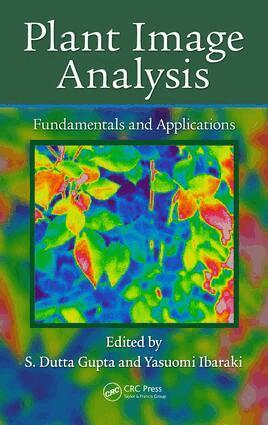
The application of imaging techniques in plant and agricultural sciences had previously been confined to images obtained through remote sensing techniques. Technological advancements now allow image analysis for the nondestructive and objective evaluation of biological objects. This has opened a new window in the field of plant science. Plant Image Analysis: Fundamentals and Applications introduces the basic concepts of image analysis and discusses various techniques in plant imaging, their applications, and future potential. Several types of imaging techniques are discussed including RGB, hyperspectral, thermal, PRI, chlorophyll fluorescence, ROS, and chromosome imaging. The book also covers the use of these techniques in assessing plant growth, early detection of disease and stress, fruit crop yield, plant chromosome analysis, plant phenotyping, and nutrient status both in vivo and in vitro.The book is an authoritative guide for researchers and those teaching in the fields of stress physiology, precision agriculture, agricultural biotechnology, and cell and developmental biology. Graduate students and professionals using machine vision in plant science will also benefit from this comprehensive resource.
E-bok
PDF, Engelska, 20143 174 kr
Läs direkt efter köp
The application of imaging techniques in plant and agricultural sciences had previously been confined to images obtained through remote sensing techniques. Technological advancements now allow image analysis for the nondestructive and objective evaluation of biological objects. This has opened a new window in the field of plant science. Plant Image
Häftad, Engelska, 2010
2 174 kr
Skickas inom 10-15 vardagar
It is my privilege to contribute the foreword for this unique volume entitled: “Plant Tissue Culture Engineering,” edited by S. Dutta Gupta and Y. Ibaraki. While there have been a number of volumes published regarding the basic methods and applications of plant tissue and cell culture technologies, and even considerable attention provided to bioreactor design, relatively little attention has been afforded to the engineering principles that have emerged as critical contributions to the commercial applications of plant biotechnologies. This volume, “Plant Tissue Culture Engineering,” signals a turning point: the recognition that this specialized field of plant science must be integrated with engineering principles in order to develop efficient, cost effective, and large scale applications of these technologies. I am most impressed with the organization of this volume, and the extensive list of chapters contributed by expert authors from around the world who are leading the emergence of this interdisciplinary enterprise. The editors are to be commended for their skilful crafting of this important volume. The first two parts provide the basic information that is relevant to the field as a whole, the following two parts elaborate on these principles, and the last part elaborates on specific technologies or applications.