Yefim Gordon – författare
Visar alla böcker från författaren Yefim Gordon. Handla med fri frakt och snabb leverans.
20 produkter
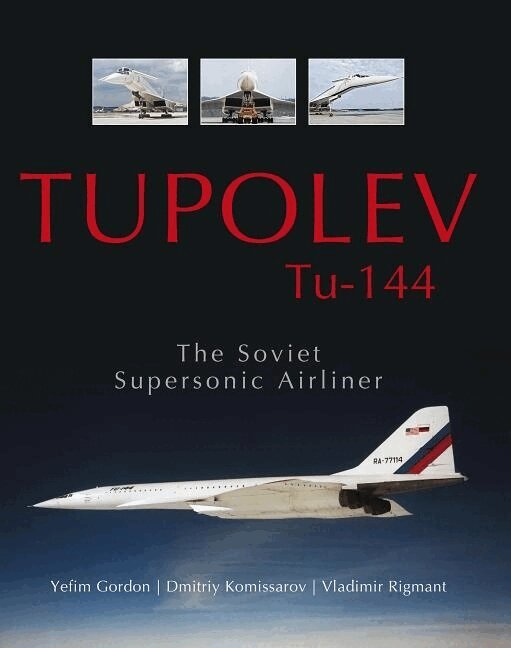
Tupolev Tu‑144
The Soviet Supersonic Airliner
Av Yefim Gordon, Dmitriy Komissarov m. fl.
Inbunden, 2015
5,0 utav 5 stjärnor. Totalt antal röster: (2)
625 kr
Lägg i varukorg
Developed in the 1960s/1970s, the Tu-144 was the Soviet Union’s only practical venture into supersonic commercial aviation. Though its career was all too brief, it was a major technological achievement for the Soviet aircraft industry. The book provides in-depth coverage of the “Concordski,” …
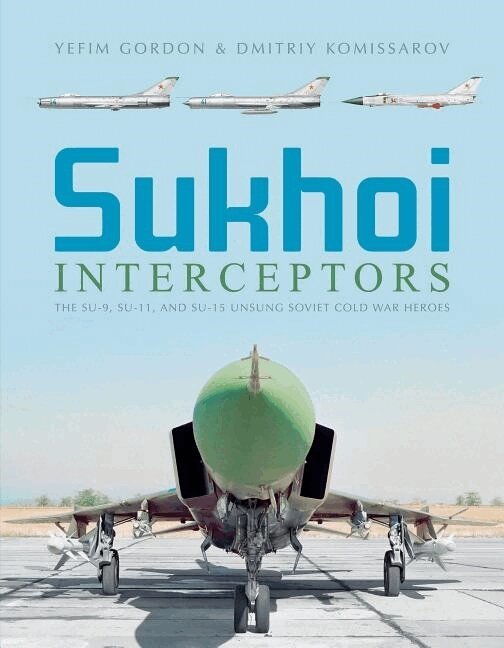
Sukhoi Interceptors
The Su-9, Su-11, and Su-15: Unsung Soviet Cold War Heroes
Av Yefim Gordon, Dmitriy Komissarov
Inbunden, 2020
679 kr
Lägg i varukorg
Closed in 1949, the Sukhoi Design Bureau was reborn in 1953 to meet an urgent demand for a fast interceptor that would counter the threat posed by NATO bombers. It wasted no time developing a succession of missile-armed, Mach 2 interceptors characterized by delta wings; the single-engined Su-9 …
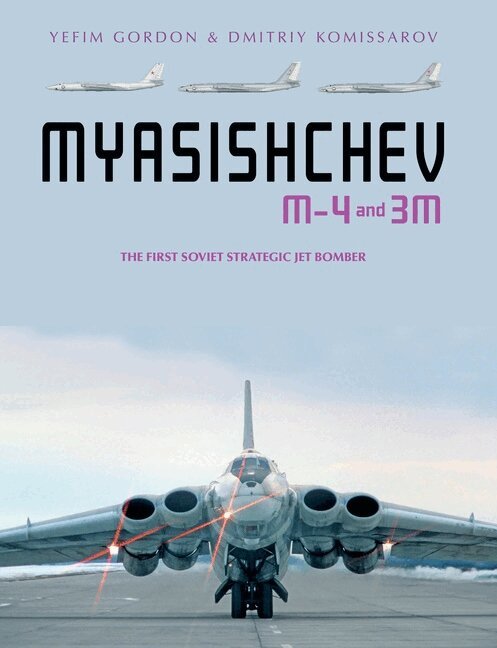
Myasishchev M-4 and 3M
The First Soviet Strategic Jet Bomber
Av Yefim Gordon, Dmitriy Komissarov
Inbunden, 2021
493 kr
Lägg i varukorg
When the Myasishchev design bureau was reborn in 1951, it was immediately tasked with creating a high-speed strategic bomber to balance the threat posed by NATO’s heavy bombers, notably the B-52. Designated M-4 and code-named "Bison" by NATO, the new four-turbojet bomber was developed within an …
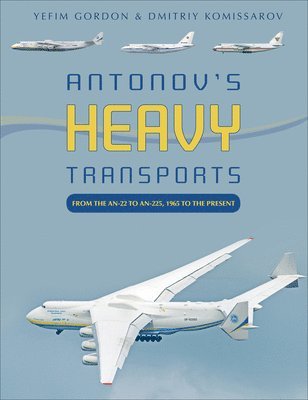
Antonov's Heavy Transports
From the An-22 to An-225, 1965 to the Present
Av Yefim Gordon, Dmitriy Komissarov
Inbunden, 2021
625 kr
Lägg i varukorg
This book charts the development and service history of the Antonov design bureau's heavy transport aircraft. In the late 1950s, the Antonov design bureau began developing the An-22 heavy military transport, intended to carry 50 tons. Powered by four 15,000 hp turboprops, it was the world’s …
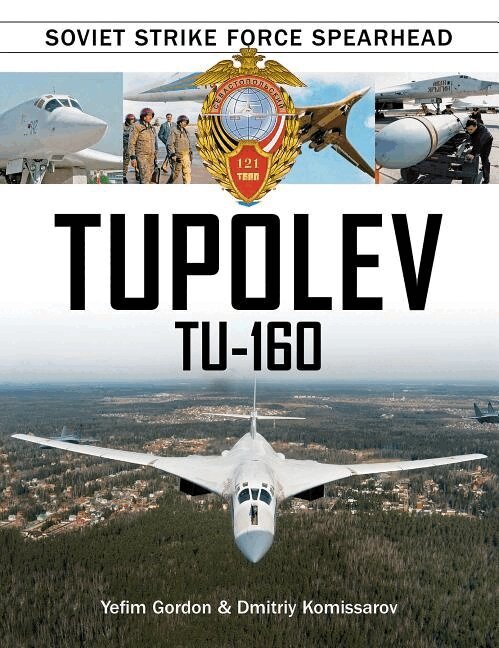
Tupolev Tu‑160
Soviet Strike Force Spearhead
Av Yefim Gordon, Dmitriy Komissarov
Inbunden, 2017
5,0 utav 5 stjärnor. Totalt antal röster: (1)
679 kr
Lägg i varukorg
Developed as the answer to the American B-1, the Tupolev Tu-160 was the Soviet Union’s most potent strategic bomber. Several project versions were rejected, and a highly controversial contest involving some of the Soviet Union’s top-class aircraft design companies took place before the Tu-160 …
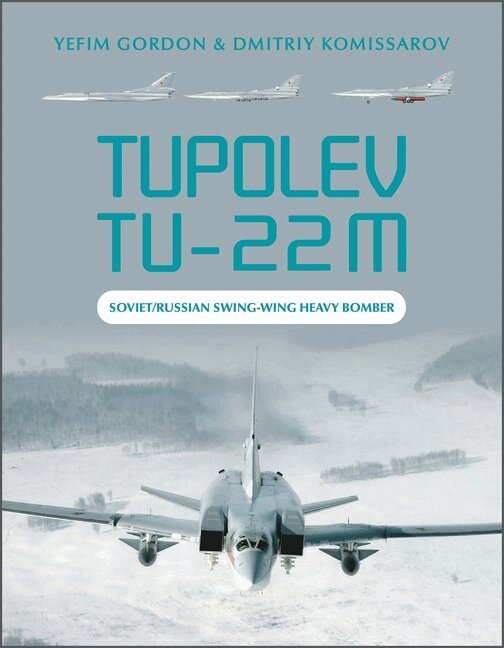
Tupolev Tu-22M
Soviet/Russian Swing-Wing Heavy Bomber
Av Yefim Gordon, Dmitriy Komissarov
Inbunden, 2022
570 kr
Lägg i varukorg
The only English-language book in print on this active-duty Russian supersonic bomber. In the late 1960s, the patriarch of Soviet aircraft design, Andrey Tupolev, offered the Soviet air force a supersonic bomber to replace the 1950s-vintage Tu-22 Blinder with a less capable—but cheaper—alternative …
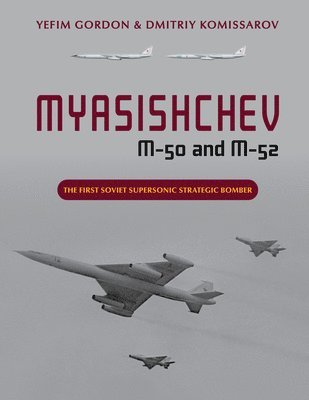
Myasishchev M-50 and M-52
The First Soviet Supersonic Strategic Bomber
Av Yefim Gordon, Dmitriy Komissarov
Inbunden, 2023
493 kr
Lägg i varukorg
Reborn in 1951, the Myasishchev design bureau made its mark by creating the M-4 strategic bomber. Yet, this subsonic aircraft was soon made obsolescent by supersonic fighter technology—any new strategic bomber would need supersonic performance to avoid being intercepted. Hence in 1952, Myasishchev …
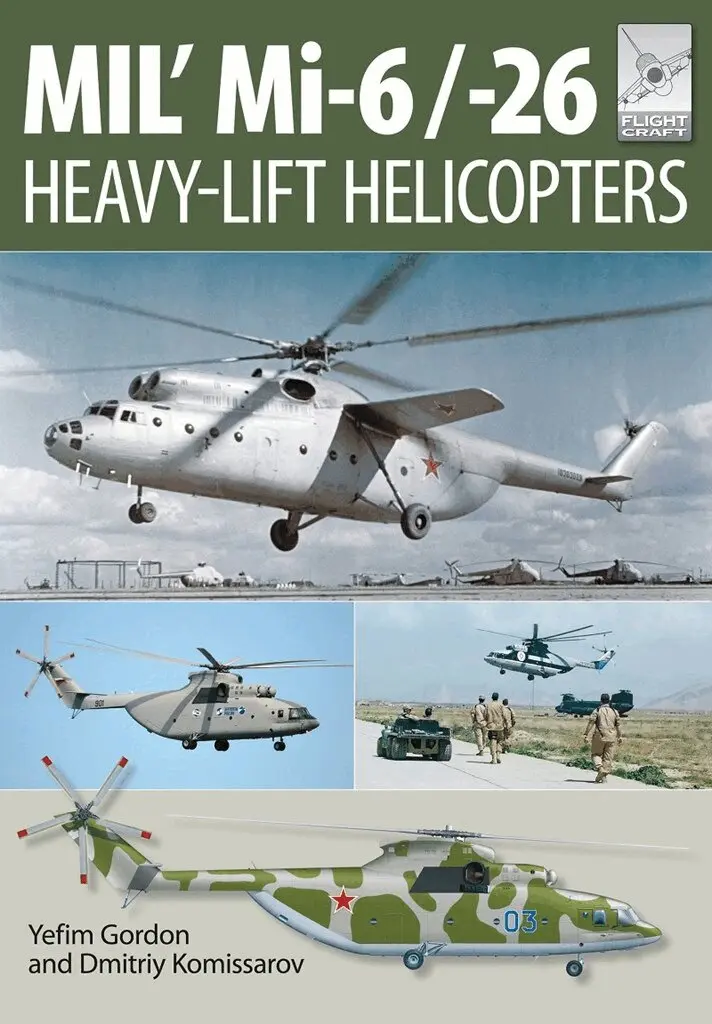
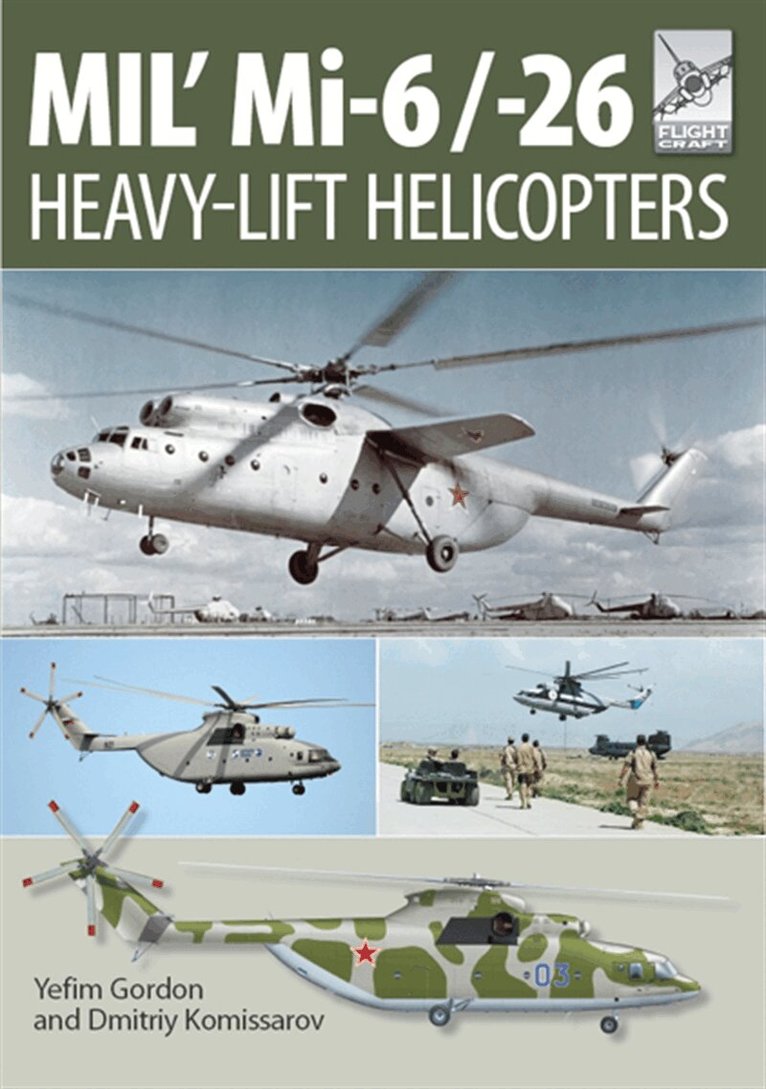
Flight Craft 10: Mi-1, Mi-6 and Mi-26: Heavy Lift Helicopters
Av Yefim Gordon
Häftad, 2016
187 kr
Lägg i varukorg
Developed in the early 1950s to meet a Soviet Army requirement and first flown in June 1957, the Mi-6 was the largest-yet helicopter created in the Soviet Union. Its notable features included a power-plant consisting of two turbo-shaft engines (for the first time on a Soviet helicopter) and stub …
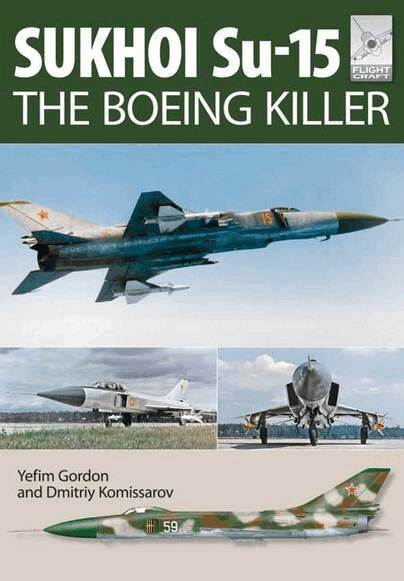
Flight Craft 5: Sukhoi Su-15: The 'Boeing Killer'
Av Yefim Gordon
Häftad, 2015
187 kr
Lägg i varukorg
In the late 1950s, the Sukhoi Design Bureau, already an established fighter maker, started work on a successor to its Su-9 and Su-11 single-engined interceptors for the national Air Defence Force. Similar to its predecessors, the new aircraft designated Su-15 had delta wings; unlike the Su-9/Su-11, …
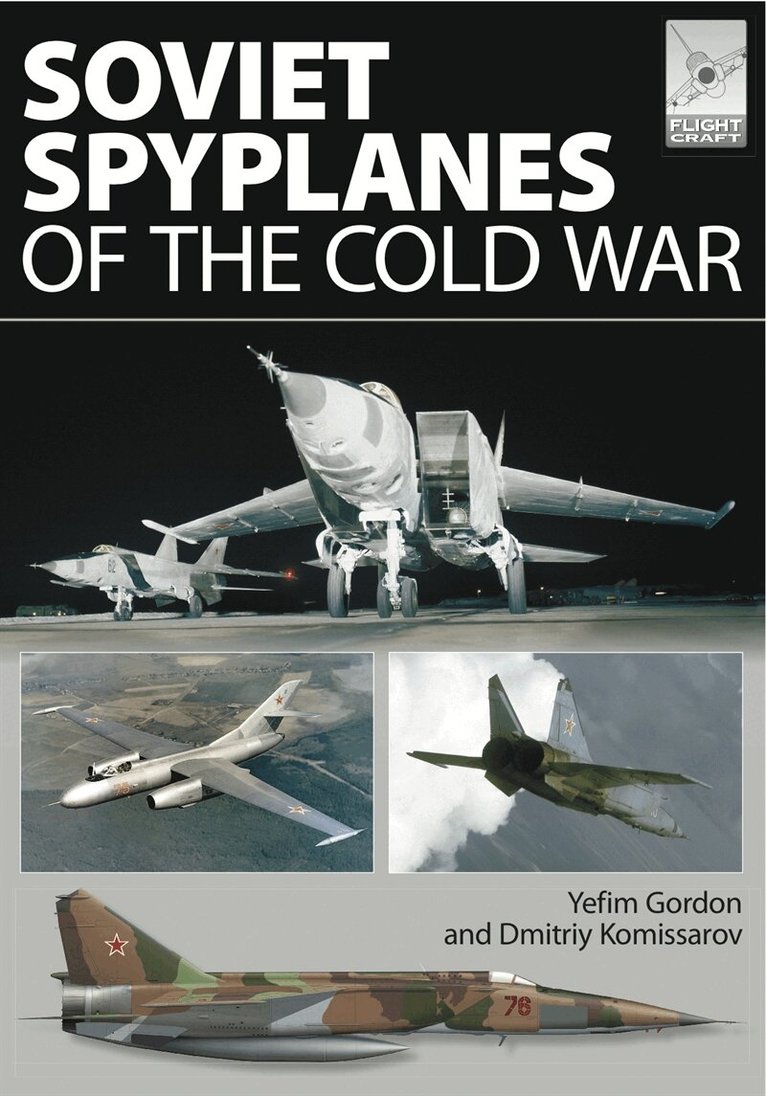
Soviet Spyplanes of the Cold War
Av Yefim Gordon
E-bok, 2021
122 kr
Lägg i varukorg
'Spy in the Sky' matters have long been a source of interest and fascination for aircraft enthusiasts, historians and modellers and none more so than the elusive and secretive Soviet types of the Cold War era. Yefim Gordon presents us here with a range of such types, presenting a collection of …
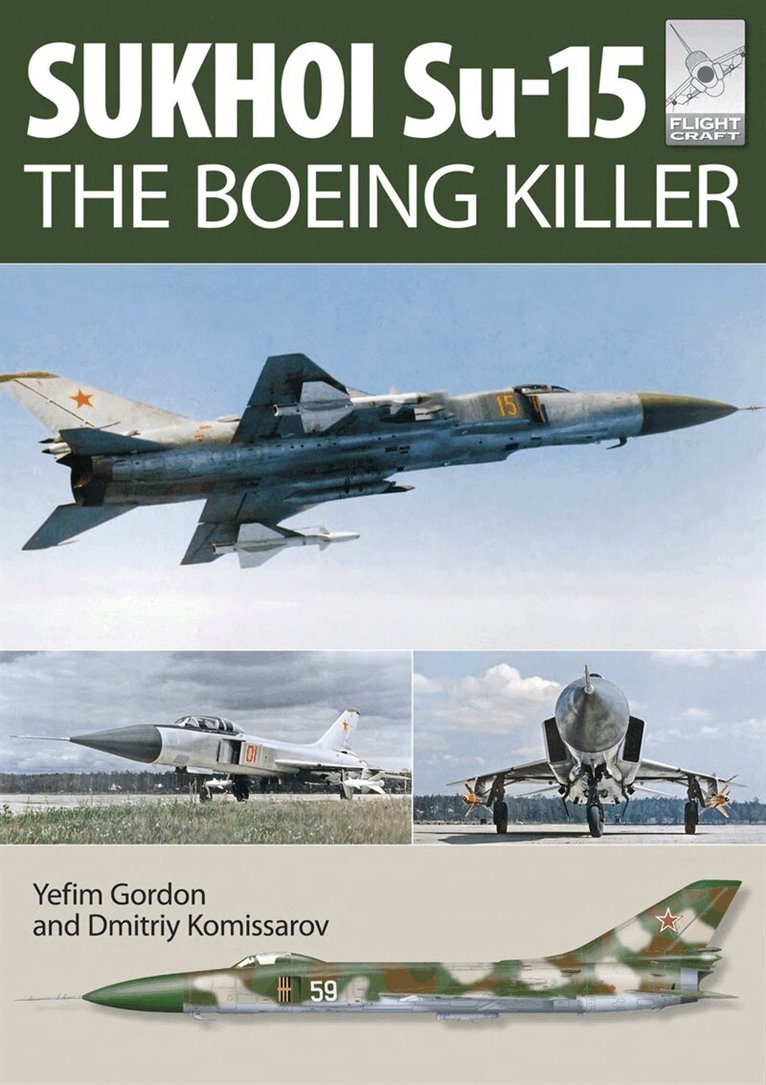
Sukhoi Su-15
The Boeing Killer
Av Yefim Gordon
E-bok, 2021
122 kr
Lägg i varukorg
In the late 1950s, the Sukhoi Design Bureau, already an established fighter maker, started work on a successor to its Su-9 and Su-11 single-engined interceptors for the national Air Defence Force. Similar to its predecessors, the new aircraft designated Su-15 had delta wings; unlike the Su-9/Su-11, …
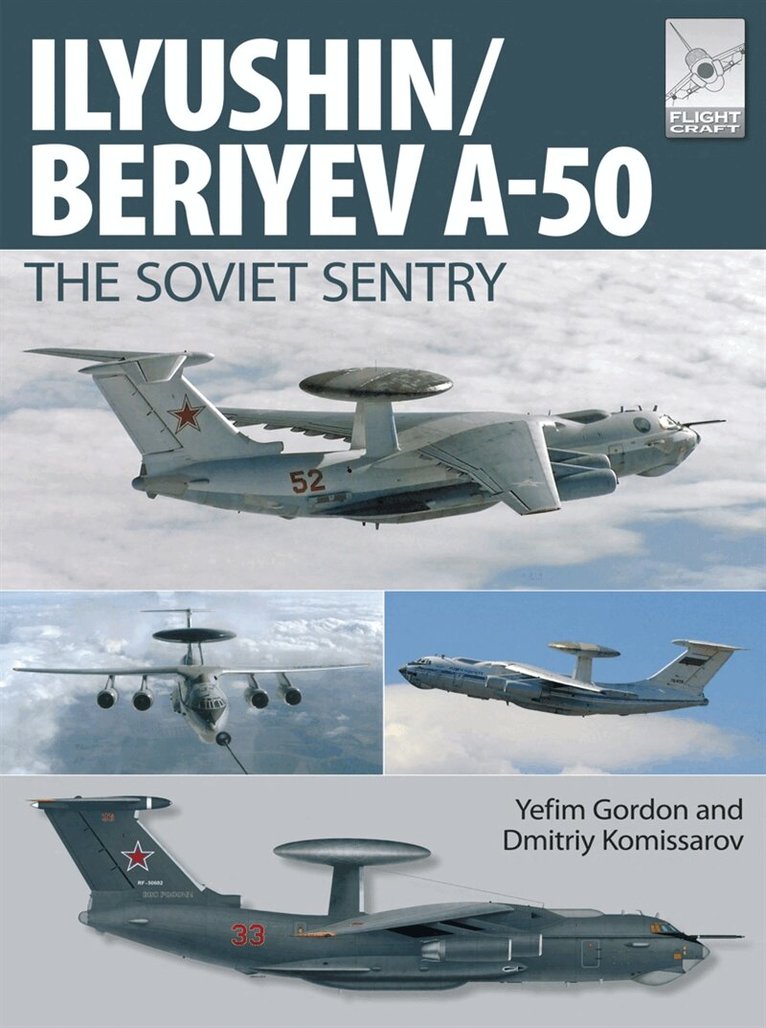
Il’yushin/Beriyev A-50
The ''Soviet Sentry''
Av Yefim Gordon
E-bok, 2021
122 kr
Lägg i varukorg
Brought out in the late 1970s as a successor to the obsolete Tu-126 airborne early warning aircraft, the A-50 co-developed by the Il'yushin and Beriyev bureaux is one of the most interesting military variants in the field of IL-76 military transport. Differing outwardly from the latter mainly in …
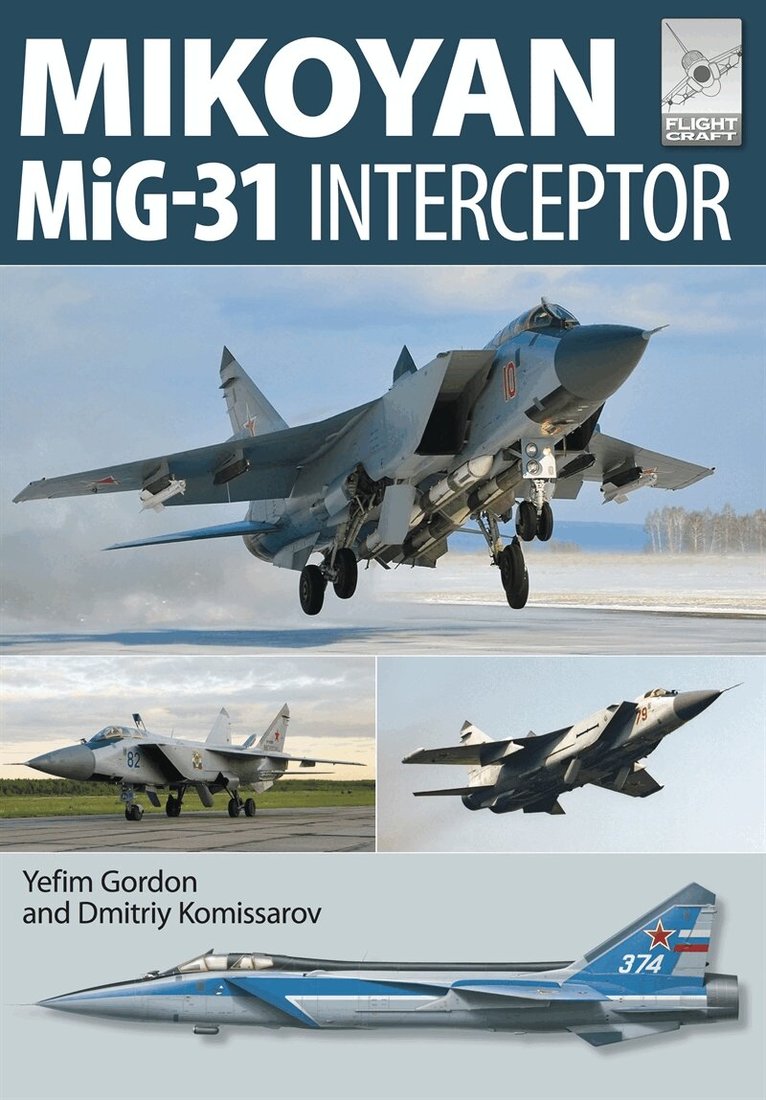
Mikoyan MiG-31
Interceptor
Av Yefim Gordon
E-bok, 2021
126 kr
Lägg i varukorg
The MiG-31 started life as an advanced derivative of the famous MiG-25P interceptor, becoming the first Soviet fourth-generation combat aircraft. First flown in 1975, it differed from its progenitor primarily in having a crew of two (pilot and weapons systems operator), a highly capable passive …
Mi-1, Mi-6 and Mi-26
Heavy-Lift Helicopters
Av Yefim Gordon
E-bok, 2021
126 kr
Lägg i varukorg
Developed in the early 1950s to meet a Soviet Army requirement and first flown in June 1957, the Mi-6 was the largest-yet helicopter created in the Soviet Union. Its notable features included a power-plant consisting of two turbo-shaft engines (for the first time on a Soviet helicopter) and stub …
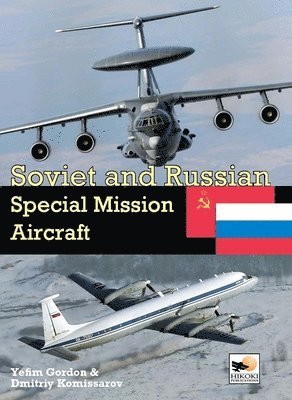
Soviet and Russian Special Mission Aircraft
Av Yefim Gordon
Inbunden, 2022
388 kr
Lägg i varukorg
In the years after the Second World War, aircraft optimised for various kinds of special missions began assuming ever-greater importance in the inventories of the world's leading air forces. The Soviet Union was no exception - numerous special mission versions of Soviet military fixed-wing aircraft …
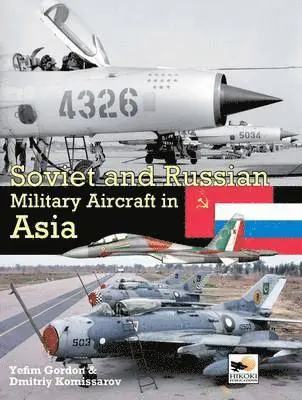
Soviet And Russian Military Aircraft In Asia
Av Dmitriy Komissarov, Yefim Gordon
Inbunden, 2014
430 kr
Lägg i varukorg
Yakovlev Fighters of World War Two
Av Sergey Komissarov, Yefim Gordon
Inbunden, 2015
380 kr
Tillfälligt slut
Founded in 1927, the design bureau headed by Aleksandr S. Yakovlev started out with light aircraft but soon became a "fighter maker" when the prospect of war loomed large. Originally designated I-26, Yakovlev's first simple but rugged fighter, first flew in 1940 and entered production at the end of …
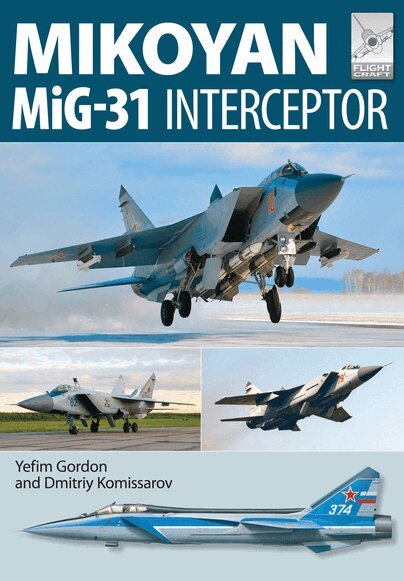
Flight Craft 8: Mikoyan MiG-31
Av Yefim Gordon
Häftad, 2016
192 kr
Tillfälligt slut
The MiG-31 started life as an advanced derivative of the famous MiG-25P interceptor, becoming the first Soviet fourth-generation combat aircraft. First flown in 1975, it differed from its progenitor primarily in having a crew of two (pilot and weapons systems operator), a highly capable passive …
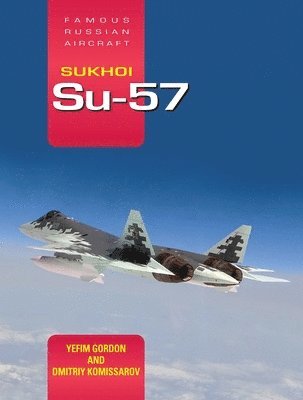
Sukhoi Su-57
Av Yefim Gordon
Inbunden, 2021
429 kr
Tillfälligt slut
As early as 1979, Soviet aircraft designers started work on a programme called I-90, a fighter for the 1990s. Two Soviet aircraft design bureaux took on the task, Mikoyan and Sukhoi. Work began in 1983 but with the dissolution of the Soviet Union the project stalled In 2002 the Russian government …