Yıldız Atasoy - Böcker
Visar alla böcker från författaren Yıldız Atasoy. Handla med fri frakt och snabb leverans.
6 produkter
6 produkter
Commodification of Global Agrifood Systems and Agro-Ecology
Convergence, Divergence and Beyond in Turkey
Häftad, Engelska, 2020
617 kr
Skickas inom 10-15 vardagar
This book explores the shifting relations of food provisioning in Turkey from a comparative global political economy perspective. It offers in-depth ethnographic analysis, interviews and historical insights into the ambiguities and diversities that simultaneously affect the changing conditions of food and agriculture in Turkey. Specific issues examined include the commodification of land, food and labour; the expansion and deepening of industrial standardization; the expansion of a supermarket model; and concomitant changes in, as well as the simultaneous co-existence of, traditional methods of production and marketing. Contrasting observations are drawn from diverse locales to provide examples of convergence, divergence and cohabitation in relation to transnationally advocated industrial models.Commodification of Global Agrifood Systems and Agro-Ecology employs a form of comparative perspective that allows the particular processes of restructuring of agrifood relations in Turkey to be simultaneously distinguished from, yet related to, changes taking place in global power dynamics. Yıldız Atasoy explores agrifood transformation in Turkey with a unique approach that considers a plurality of intertwined normative influences, ontological beliefs, cultural–religious narratives, political struggles and critical–interpretive positions. Based on original research, the book treats changes in food provisioning as an analytical thread capable of uncovering how the normative acceptability of capitalized agriculture and techno-scientific innovation is entangled with processes of class formation, growing inter-capitalist competition and Islamic politics. Such processes, in turn, frame income/wealth generation, landscape management, agro-ecological dynamics and labour practices, as well as the taste and smell of place.
2 155 kr
Skickas inom 10-15 vardagar
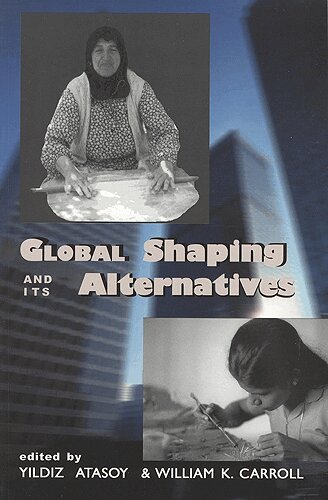
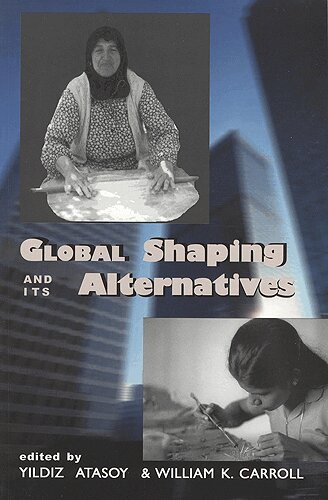
More than 15 years have passed since the end of the Cold War, but uncertainty persists in the political-economic shaping of the world economy and state system. Although many countries have institutionalized neoliberal policies since the mid-1970s, thesepolicies have not taken hold to the same degree, nor have their effects been uniform across all countries. Nevertheless there has been widespread deepening of inequalities, and, therefore, scepticism towards the neoliberal project. Uncertainty prevails not only in the relations between states, but also in the relations between forces of capital, citizens, and political power within states. Moreover, there is conceptual confusion in our understanding of the events and processes of neoliberal global transformation. This collection of essays provides a comprehensive theoretical and empirical examinationof neoliberal restructuring as a complex political process. In an effort to penetrate and clarify this complexity, the book explores the connections between the economy, state, society, and citizens, while also offering current examples of resistance to neoliberalism. The book provides a forum for rethinking politics that represents a turn to societal forces as essential not only to the uncovering of this complexity but also to the formulation of democratic possibilities beyond global hegemonic projects. The book does not seek to produce a new model for social change, nor does it dwell on the spatial aspects of modernity's new form or the emergence of a new state hegemony (China) or new forms of rule (empire) in managing the world capitalist economy. Instead, the book argues that an understanding of hegemonic transformations requires the problematization of global power as embedded in historically specific social relations.
Commodification of Global Agrifood Systems and Agro-Ecology
Convergence, Divergence and Beyond in Turkey
Inbunden, Engelska, 2017
2 150 kr
Skickas inom 10-15 vardagar
This book explores the shifting relations of food provisioning in Turkey from a comparative global political economy perspective. It offers in-depth ethnographic analysis, interviews and historical insights into the ambiguities and diversities that simultaneously affect the changing conditions of food and agriculture in Turkey. Specific issues examined include the commodification of land, food and labour; the expansion and deepening of industrial standardization; the expansion of a supermarket model; and concomitant changes in, as well as the simultaneous co-existence of, traditional methods of production and marketing. Contrasting observations are drawn from diverse locales to provide examples of convergence, divergence and cohabitation in relation to transnationally advocated industrial models.Commodification of Global Agrifood Systems and Agro-Ecology employs a form of comparative perspective that allows the particular processes of restructuring of agrifood relations in Turkey to be simultaneously distinguished from, yet related to, changes taking place in global power dynamics. Yıldız Atasoy explores agrifood transformation in Turkey with a unique approach that considers a plurality of intertwined normative influences, ontological beliefs, cultural–religious narratives, political struggles and critical–interpretive positions. Based on original research, the book treats changes in food provisioning as an analytical thread capable of uncovering how the normative acceptability of capitalized agriculture and techno-scientific innovation is entangled with processes of class formation, growing inter-capitalist competition and Islamic politics. Such processes, in turn, frame income/wealth generation, landscape management, agro-ecological dynamics and labour practices, as well as the taste and smell of place.
671 kr
Skickas inom 10-15 vardagar
More than 15 years have passed since the end of the Cold War, but uncertainty persists in the political-economic shaping of the world economy and state system. Although many countries have institutionalized neoliberal policies since the mid-1970s, thesepolicies have not taken hold to the same degree, nor have their effects been uniform across all countries. Nevertheless there has been widespread deepening of inequalities, and, therefore, scepticism towards the neoliberal project. Uncertainty prevails not only in the relations between states, but also in the relations between forces of capital, citizens, and political power within states. Moreover, there is conceptual confusion in our understanding of the events and processes of neoliberal global transformation. This collection of essays provides a comprehensive theoretical and empirical examinationof neoliberal restructuring as a complex political process. In an effort to penetrate and clarify this complexity, the book explores the connections between the economy, state, society, and citizens, while also offering current examples of resistance to neoliberalism. The book provides a forum for rethinking politics that represents a turn to societal forces as essential not only to the uncovering of this complexity but also to the formulation of democratic possibilities beyond global hegemonic projects. The book does not seek to produce a new model for social change, nor does it dwell on the spatial aspects of modernity's new form or the emergence of a new state hegemony (China) or new forms of rule (empire) in managing the world capitalist economy. Instead, the book argues that an understanding of hegemonic transformations requires the problematization of global power as embedded in historically specific social relations.
415 kr
Skickas inom 7-10 vardagar
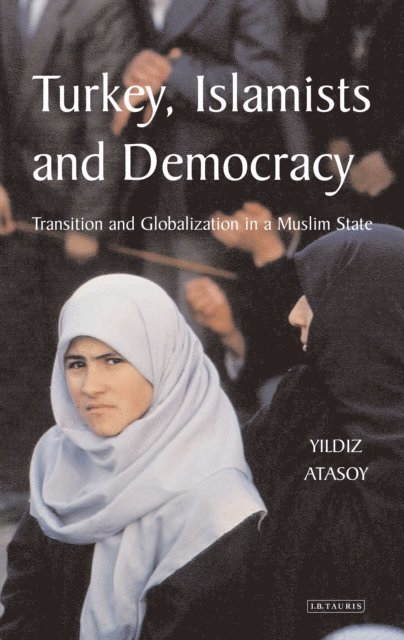
Turkey, Islamists and Democracy
Transition and Globalization in a Muslim State
Inbunden, Engelska, 2005
1 703 kr
Skickas inom 10-15 vardagar
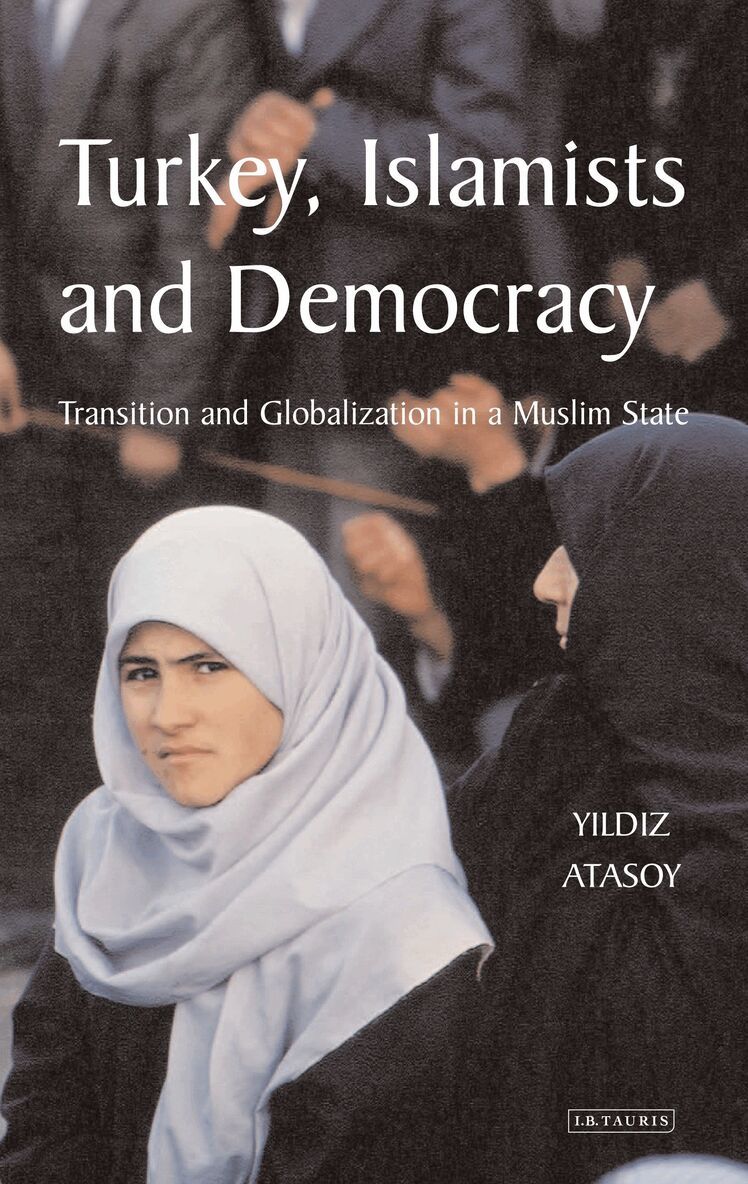
Trailblazing study that radically re-examines political Islam Political Islam in Turkey has been headline news following the Istanbul bombings Much needed study of the economic dimensions of political Islam Turkey, Islamists and Democracy is the story of Islam's engagement with the reorganization of the global economy. Yildiz Atasoy examines the development of political Islam in Turkey within the context of the changing balance of domestic and international forces in the world economy and shows how it has taken on a highly sophisticated, cosmopolitan edge. By examining the incorporation of Islam into the existing relations of the Turkish state from the late Ottoman Empire to the present day, the author demonstrates how political Islam interacts with the global restructuring of classes, states and political actors. Atasoy challenges the view of Islamist politics as an anti-Modern, anti-Western force that is fundamentally opposed to the global economy and instead argues that political Islam is cosmopolitan and embedded in processes which incorporate Western modernity into local cultural practices.