Yiming Liu – författare
Visar alla böcker från författaren Yiming Liu. Handla med fri frakt och snabb leverans.
3 produkter
3 produkter
Inbunden, Engelska, 2026
1 544 kr
Kommande
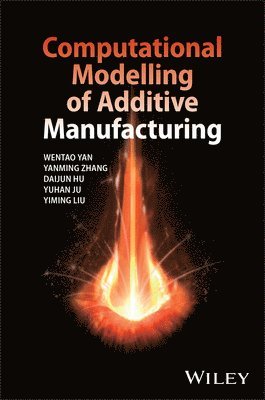
Presents the additive manufacturing process-structure-property relationships and optimizes the manufacturing parameters and machines via computational modeling techniques Computational Modeling of Additive Manufacturing provides a step-by-step guide, covering topics from basic physics and governing equations to the implementation, experimental validation, model capability, and physical mechanisms obtained from simulation, as well as expert perspectives on future outlooks. With a well-rounded exploration of key areas, this book integrates various modeling techniques, including multi-physics modeling of powder, fluid and solid mechanics, heat transfer, microstructure evolutions, data-driven analysis, and a synergy of modeling with other techniques. Modeling of various additive manufacturing processes are included, such as laser/electron beam powder bed fusion, directed energy deposition, binder jetting, and material extrusion. The book presents comprehensive simulations covering a variety of issues for the process-structure-property relationships, including: Multi-phase flow modeling of powder dynamics in powder-bed-based additive manufacturing processesMulti-physics modeling of molten pool dynamics in fusion-based additive manufacturing processes, with mechanistic heat source model, composition-dependent evaporation and chemical reaction modelsModeling of microstructure evolutions including grain and dendrite evolutionsMulti-scale modeling of thermal and residual stresses, and the room- and high-temperature mechanical properties of the additively manufactured partsData-driven surrogate modeling, uncertainty quantification and optimization, and the synergy with digital twins, smart diagnostics, and controlThis book is an essential first-of-its-kind reference for researchers in this specific area, and the larger area of additive manufacturing focusing on experiments, materials design, mechanics, and other areas of interest.
Häftad, Engelska, 2021
705 kr
Skickas inom 10-15 vardagar
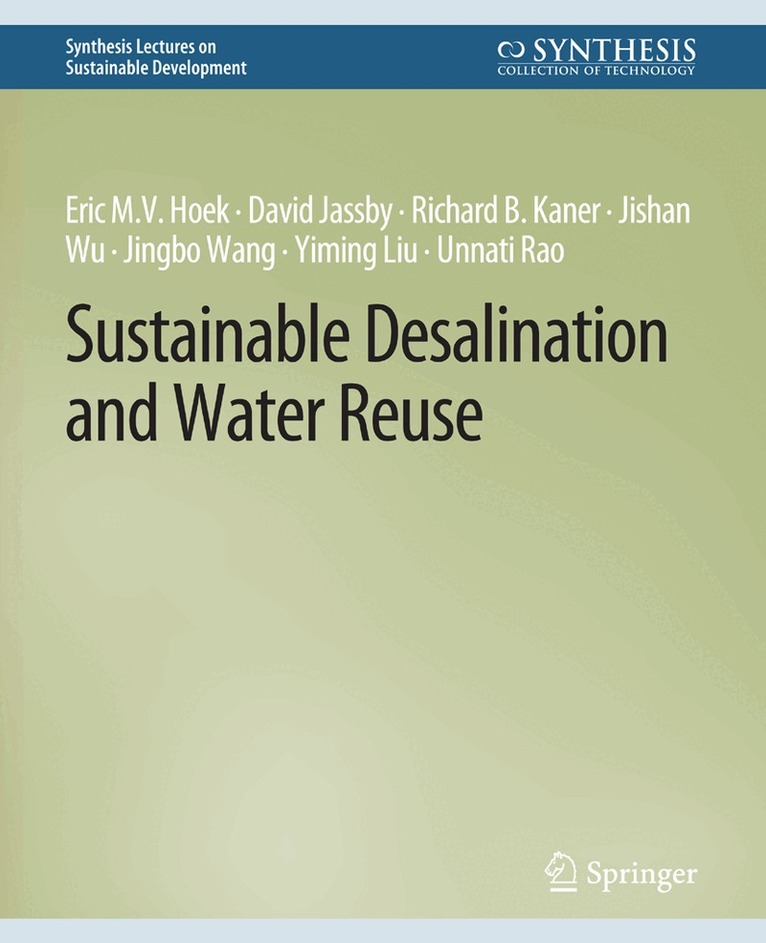
Over the past half century, reverse osmosis (RO) has grown from a nascent niche technology into the most versatile and effective desalination and advanced water treatment technology available. However, there remain certain challenges for improving the cost-effectiveness and sustainability of RO desalination plants in various applications. In low-pressure RO applications, both capital (CAPEX) and operating (OPEX) costs are largely influenced by product water recovery, which is typically limited by mineral scale formation. In seawater applications, recovery tends to be limited by the salinity limits on brine discharge and cost is dominated by energy demand. The combination of water scarcity and sustainability imperatives, in many locations, is driving system designs towards minimal and zero liquid discharge (M/ZLD) for inland brackish water, municipal and industrial wastewaters, and even seawater desalination. Herein, we review the basic principles of RO processes, the state-of-the-art for RO membranes, modules and system designs as well as methods for concentrating and treating brines to achieve MLD/ZLD, resource recovery and renewable energy powered desalination systems. Throughout, we provide examples of installations employing conventional and some novel approaches towards high recovery RO in a range of applications from brackish groundwater desalination to oil and gas produced water treatment and seawater desalination.
E-bok
PDF, Engelska, 2022870 kr
Läs direkt efter köp
Over the past half century, reverse osmosis (RO) has grown from a nascent niche technology into the most versatile and effective desalination and advanced water treatment technology available. However, there remain certain challenges for improving the cost-effectiveness and sustainability of RO desalination plants in various applications. In low-pressure RO applications, both capital (CAPEX) and operating (OPEX) costs are largely influenced by product water recovery, which is typically limited by mineral scale formation. In seawater applications, recovery tends to be limited by the salinity limits on brine discharge and cost is dominated by energy demand. The combination of water scarcity and sustainability imperatives, in many locations, is driving system designs towards minimal and zero liquid discharge (M/ZLD) for inland brackish water, municipal and industrial wastewaters, and even seawater desalination. Herein, we review the basic principles of RO processes, the state-of-the-art for RO membranes, modules and system designs as well as methods for concentrating and treating brines to achieve MLD/ZLD, resource recovery and renewable energy powered desalination systems. Throughout, we provide examples of installations employing conventional and some novel approaches towards high recovery RO in a range of applications from brackish groundwater desalination to oil and gas produced water treatment and seawater desalination.