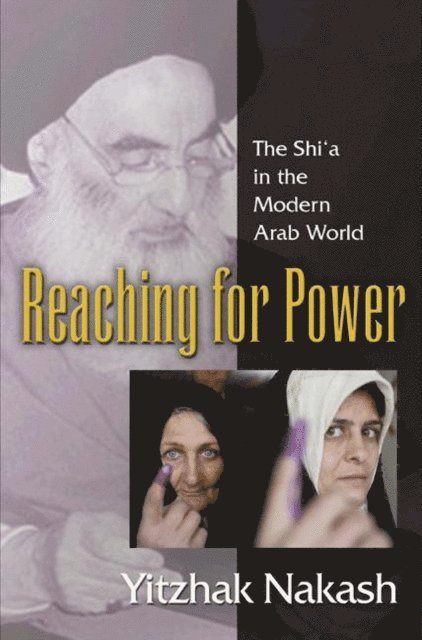
As the world focuses on the conflict in Iraq, the most important political players in that country today are not the Sunni insurgents. Instead, they are Iraq''s Shi''I majority--part of the Middle East''s ninety million Shi''I Muslims who hold the key to the future of the region and the relations between Muslim and Western societies. So contends Yitzhak Nakash, one of the world''s foremost experts on Shi''ism. With his characteristic verve and style, Nakash traces the role of the Shi''is in the struggle that is raging today among Muslims for the soul of Islam. He shows that in contrast to the growing militancy among Sunni groups since the 1990s, Shi''is have shifted their focus from confrontation to accommodation with the West. Constituting sixty percent of the population of Iraq, they stand squarely at the center of the U.S government''s attempt to remake the Middle East and bring democracy to the region. This groundbreaking book addresses the crucial importance of Shi''is to the U.S. endeavor. Yet it also alerts readers to the strong nationalist sentiments of Shi''is, underscoring the difficult challenge that the United States faces in attempting to impose a new order in the Middle East. The book provides a comprehensive historical perspective on Shi''ism, beginning with the emergence of the movement during the seventh century, continuing through its rise as a political force since the Iranian Islamic Revolution of 1978-79, and leading up to the Iraqi elections of January 2005. Drawing extensively on Arabic sources, this comparative study highlights the reciprocal influences shaping the political development of Shi''is in Iraq, Saudi Arabia, Bahrain, and Lebanon, as well as the impact of the revival of Shi''ism on the larger Arab world. The narrative concludes with an assessment of the risks and possibilities arising from the assertion of Shi''I power in Iraq and from America''s attempt to play an increasingly forceful role in the Middle East. A landmark book and a work of remarkable scholarship, Reaching for Power illuminates the Shi''a resurgence amid the shifting geopolitics of the Middle East.