Yonghui Song - Böcker
Visar alla böcker från författaren Yonghui Song. Handla med fri frakt och snabb leverans.
5 produkter
5 produkter
540 kr
Skickas inom 10-15 vardagar
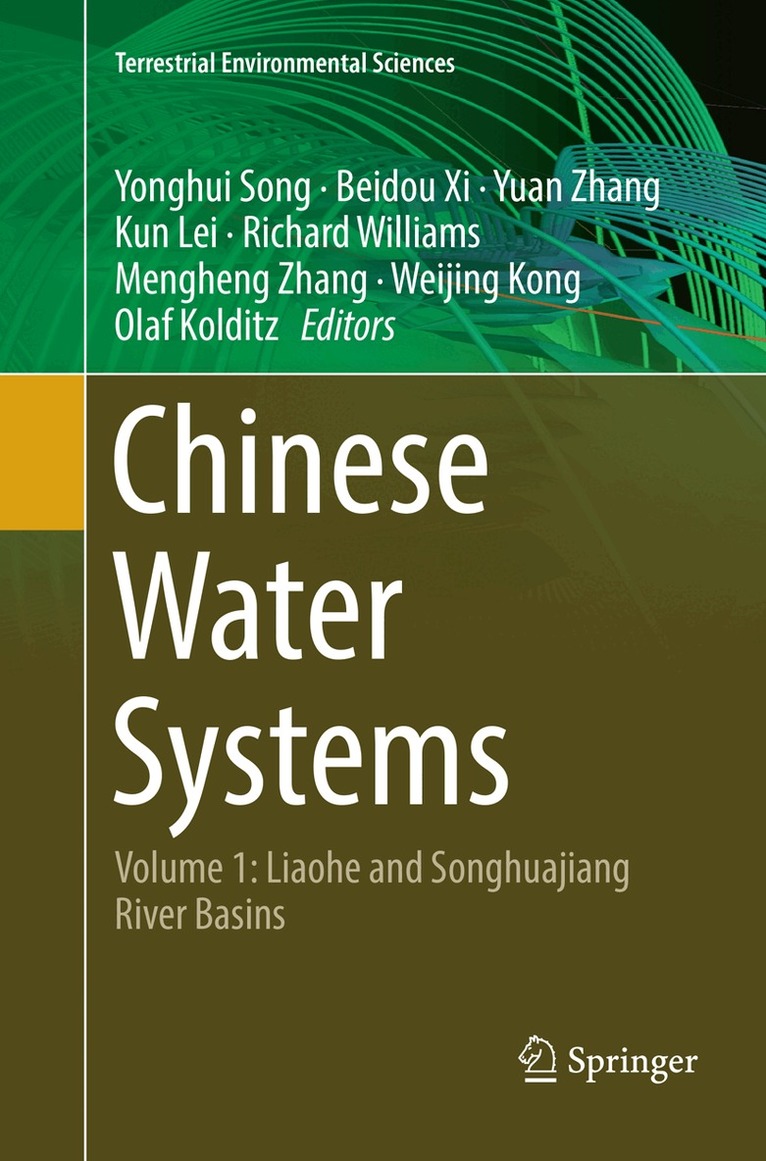
This book describes the huge efforts by the Chinese Government concerning the restoration and future sustainable management of Chinese water systems. It presents the results of a Sino-European joint project concerning the Songhuajiang-Liaohe River Basin (SLRB) in Northeast China conducted by the Chinese Research Academy of Environmental Sciences (CRAES), the Helmholtz Centre for Environmental Research - UFZ, Germany, and the Natural Environment Research Council as represented by the Centre for Ecology and Hydrology (CEH), UK. The book explains in great detail the development of risk assessment and corresponding management methods for (i) controlling water pollution, (ii) assessing river health and ecological restoration options, (iii) characterizing persistent organic pollutants (POPs), and (iv) protecting fragile groundwater resources. It also describes the implemented demonstration sites of SLRB during the project course as well as lessons learnt on efficient project managementand the dissemination of knowledge and technologies.
540 kr
Skickas inom 10-15 vardagar
This open-access book addresses latest Sino-German results of the joint research efforts within Major Water Program of the Chinese Government supported by German research funding. The Major Water Program aims at the restoration of polluted water environments and sustainable management of water resources in China. The joint BMBF-CLIENT project SINOWATER deals with three most significant and strongest polluted Chinese waters, the river Liao and the Dian-lake as well as Tai-lake in the area of the metropolises Shenyang, Kunming and Suzhou, respectively. The project was conducted by the Research Institute for Water and Waste Management at RWTH Aachen (FiW) e.V., Bavarian State Ministry of the Environment and Consumer Protection, Technical University of Munich, RWTH Aachen University, German and Chinese companies (Martin Membrane Systems AG, Steinhardt GmbH Wassertechnik, GuHong, JT-elektronik, bluemetric, Huawang Water, EVU Group, Atemis GmbH, i+f process GmbH) in close cooperation withChinese Academy of Environmental Sciences, Tongji University, and the Dianchi Lake Management Authorities. Overall, the joint Sino-German research project SINOWATER provided solutions for the improvement of the water quality in the mentioned water bodies as well as development and optimization of Good Water Governance. These objectives could be achieved through the implementation of innovative German water technologies and the optimization of water management elements in the fields of industrial and municipal wastewater treatment as well as river and shallow lake management.
433 kr
Skickas inom 10-15 vardagar
This open-access book addresses latest Sino-German results of the joint research efforts within Major Water Program of the Chinese Government supported by German research funding. The Major Water Program aims at the restoration of polluted water environments and sustainable management of water resources in China. The joint BMBF-CLIENT project SINOWATER deals with three most significant and strongest polluted Chinese waters, the river Liao and the Dian-lake as well as Tai-lake in the area of the metropolises Shenyang, Kunming and Suzhou, respectively. The project was conducted by the Research Institute for Water and Waste Management at RWTH Aachen (FiW) e.V., Bavarian State Ministry of the Environment and Consumer Protection, Technical University of Munich, RWTH Aachen University, German and Chinese companies (Martin Membrane Systems AG, Steinhardt GmbH Wassertechnik, GuHong, JT-elektronik, bluemetric, Huawang Water, EVU Group, Atemis GmbH, i+f process GmbH) in close cooperation withChinese Academy of Environmental Sciences, Tongji University, and the Dianchi Lake Management Authorities. Overall, the joint Sino-German research project SINOWATER provided solutions for the improvement of the water quality in the mentioned water bodies as well as development and optimization of Good Water Governance. These objectives could be achieved through the implementation of innovative German water technologies and the optimization of water management elements in the fields of industrial and municipal wastewater treatment as well as river and shallow lake management.
537 kr
Skickas inom 10-15 vardagar
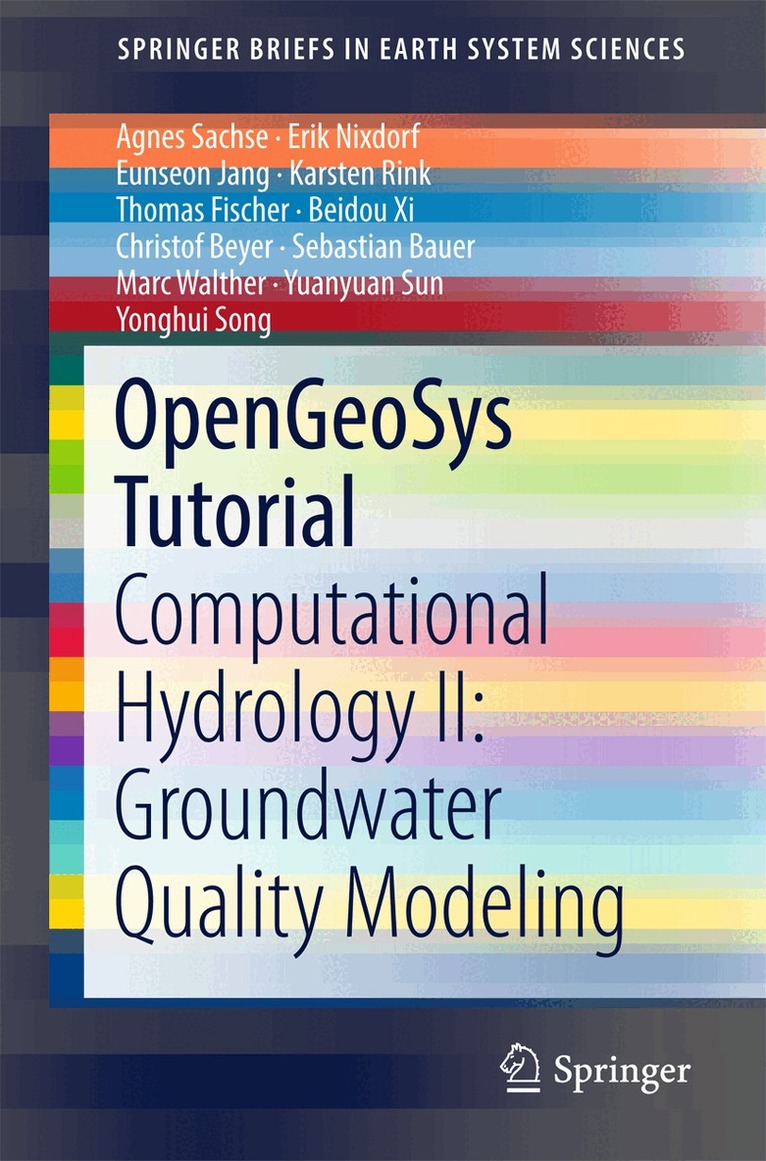
This book explores the application of the open-source software OpenGeoSys (OGS) for hydrological numerical simulations concerning conservative and reactive transport modeling. It provides general information on the hydrological and groundwater flow modeling of a real case study and step-by-step model set-up with OGS, while also highlighting related components such as the OGS Data Explorer. The material is based on unpublished manuals and the results of a collaborative project between China and Germany (SUSTAIN H2O). Though the book is primarily intended for graduate students and applied scientists who deal with hydrological modeling, it also offers a valuable source of information for professional geoscientists wishing to expand their knowledge of the numerical modeling of hydrological processes including nitrate reactive transport modeling. This book is the second in a series that showcases further applications of computational modeling in hydrological science.
540 kr
Skickas inom 10-15 vardagar
This book describes the huge efforts by the Chinese Government concerning the restoration and future sustainable management of Chinese water systems. It presents the results of a Sino-European joint project concerning the Songhuajiang-Liaohe River Basin (SLRB) in Northeast China conducted by the Chinese Research Academy of Environmental Sciences (CRAES), the Helmholtz Centre for Environmental Research - UFZ, Germany, and the Natural Environment Research Council as represented by the Centre for Ecology and Hydrology (CEH), UK. The book explains in great detail the development of risk assessment and corresponding management methods for (i) controlling water pollution, (ii) assessing river health and ecological restoration options, (iii) characterizing persistent organic pollutants (POPs), and (iv) protecting fragile groundwater resources. It also describes the implemented demonstration sites of SLRB during the project course as well as lessons learnt on efficient project managementand the dissemination of knowledge and technologies.