Yonty Friesem – författare
Visar alla böcker från författaren Yonty Friesem. Handla med fri frakt och snabb leverans.
6 produkter
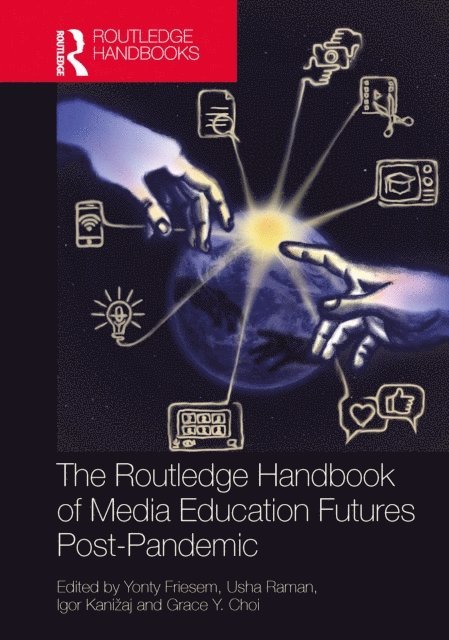
Routledge Handbook of Media Education Futures Post-Pandemic
Av Grace Y. Choi, Igor Kanizaj m. fl.
E-bok, 2022
799 kr
Lägg i varukorg
This handbook showcases how educators and practitioners around the world adapted their routine media pedagogies to meet the challenges of the COVID-19 pandemic, which often led to significant social, economic, and cultural hardships. Combining an innovative mix of traditional chapters, …
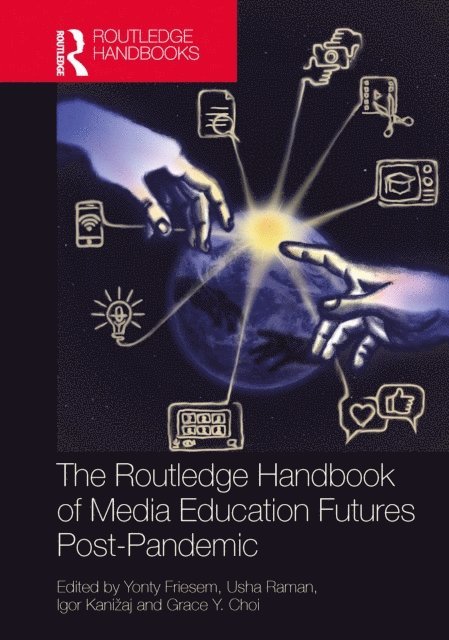
Routledge Handbook of Media Education Futures Post-Pandemic
Av Grace Y. Choi, Igor Kanizaj m. fl.
E-bok, 2022
825 kr
Lägg i varukorg
This handbook showcases how educators and practitioners around the world adapted their routine media pedagogies to meet the challenges of the COVID-19 pandemic, which often led to significant social, economic, and cultural hardships. Combining an innovative mix of traditional chapters, …
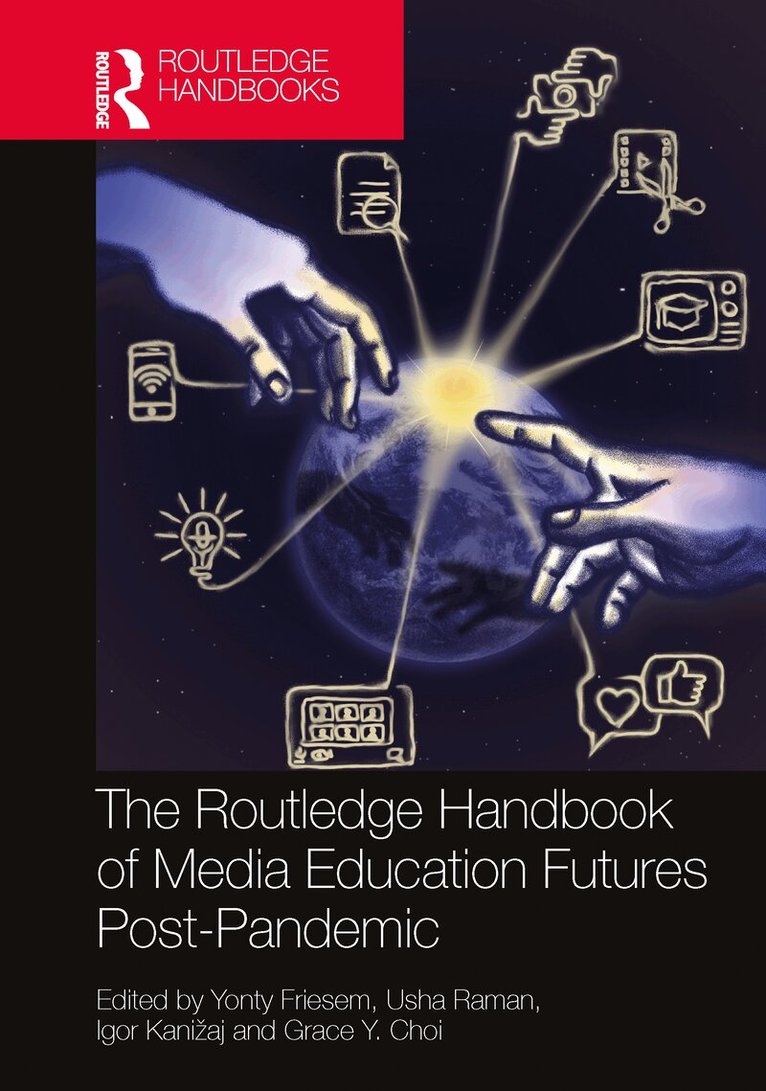
Routledge Handbook of Media Education Futures Post-Pandemic
Av Yonty Friesem, Usha Raman m. fl.
Inbunden, 2022
3686 kr
Lägg i varukorg
This handbook showcases how educators and practitioners around the world adapted their routine media pedagogies to meet the challenges of the COVID-19 pandemic, which often led to significant social, economic, and cultural hardships. Combining an innovative mix of traditional chapters, …
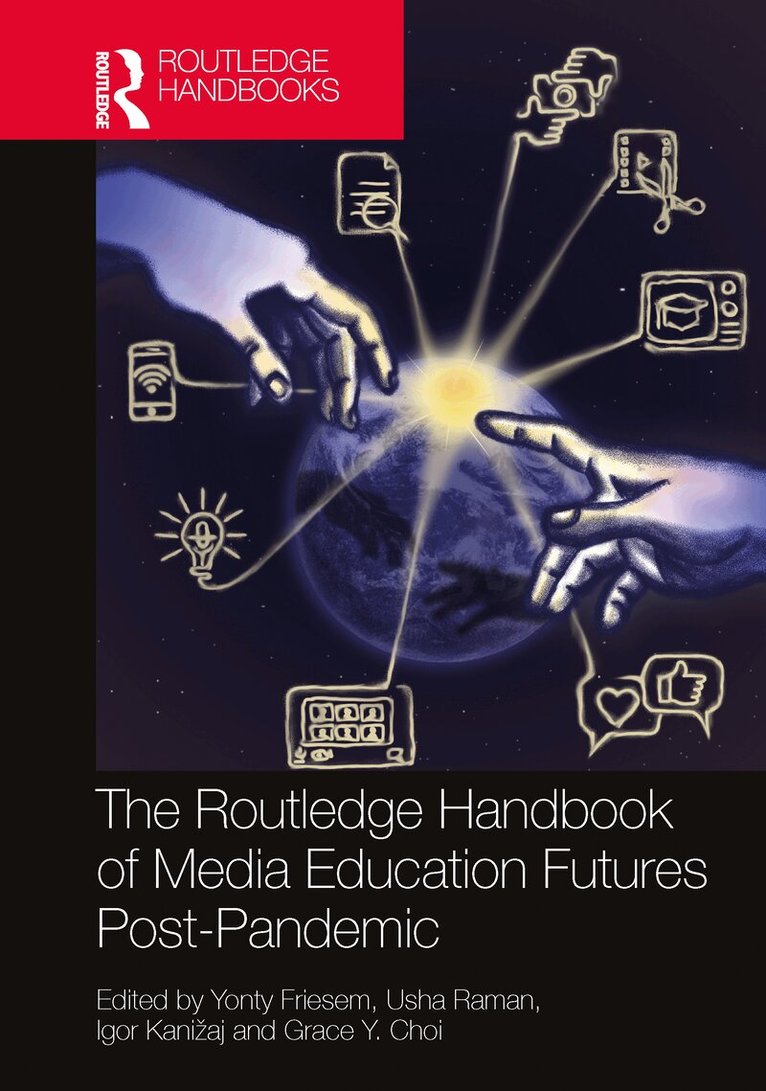
Routledge Handbook of Media Education Futures Post-Pandemic
Av Yonty Friesem, Usha Raman m. fl.
Häftad, 2025
700 kr
Lägg i varukorg
This handbook showcases how educators and practitioners around the world adapted their routine media pedagogies to meet the challenges of the COVID-19 pandemic, which often led to significant social, economic, and cultural hardships. Combining an innovative mix of traditional chapters, …
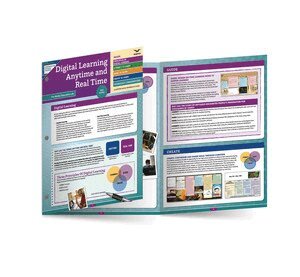
Digital Learning Anytime and Real Time
High School
2021
153 kr
Lägg i varukorg
Since the start of the pandemic, educators all over the world have been learning on the fly how to use the power of digital texts, tools and technologies for “remote emergency instruction”. As teachers quickly discovered, conducting nearly nonstop Zoom meetings, in an effort to replicate …
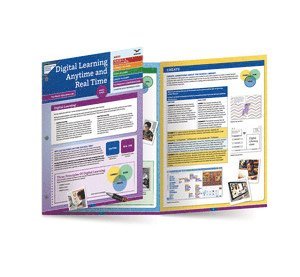
Digital Learning Anytime and Real Time
Middle School
2021
153 kr
Lägg i varukorg
Since the start of the pandemic, educators all over the world have been learning on the fly how to use the power of digital texts, tools and technologies for “remote emergency instruction”. As teachers quickly discovered, conducting nearly nonstop Zoom meetings, in an effort to replicate …