Yoshimi Ito – författare
1 426 kr
Skickas inom 3-6 vardagar
Publisher's Note: Products purchased from Third Party sellers are not guaranteed by the publisher for quality, authenticity, or access to any online entitlements included with the product.
Harness the Latest Modular Design Methods to Increase Productivity, Save Time, and Reduce Costs in Manufacturing
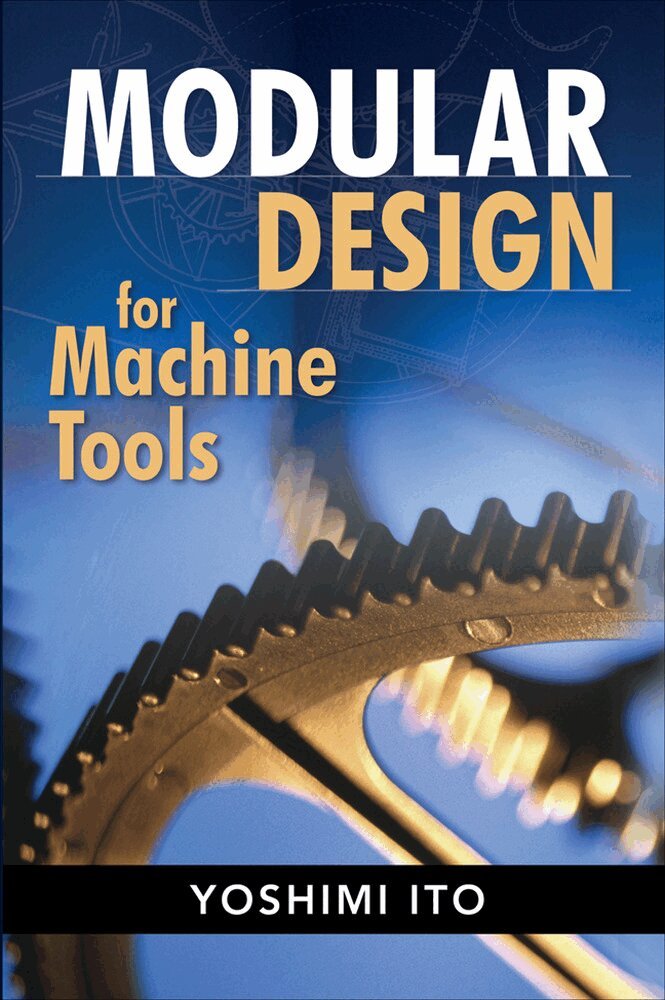
Machine designers and toolmakers can turn to Modular Design for Machine Tools for a complete guide to designing and building machines using modular design methods. The information and techniques presented in this skills-building book will enable readers to shorten machine design time...improve reliability…reduce costs…and simplify service and repair.
Packed with over 100 detailed illustrations, this essential resource explores the basics of modular design…the methodology of machine tools… the description and application of machine tools…interfacial structural configuration in modular design…stationary and sliding joints…model theory and testing…and much more. Comprehensive and easy-to-use, Modular Design for Machine Tools includes:
Expert classification of machine tool joints Concise definitions of machine tool joints and characteristics Similarity evaluations of structural configurationsDesign formulas and features of single flat joints under dynamic loadingSolved examples that illustrate and prove formulasHard-to-find graphs for gear design, comparative tables for machine tool drives, and simplified electrical circuit designsInside This Cutting-Edge Modular Design Guide
• Part 1: Engineering Guide to Modular Design and Description/Methodology of Machine Tools • What Is Modular Design? • Engineering Guide to and Future Perspectives on Modular Design • Description of Machine Tools • Application of Machine Tools to Engineering Design • Part 2: Engineering Design for Machine Tool Joints-Interfacial Structural Configuration in Modular Design • Machine Tool Joints • Engineering Design Fundamentals • Practice and First-Hand Views of Related Engineering Developments: Stationary Joints and Sliding Joints • Engineering Knowledge of Other Joints • Measurement of Interface Pressure by Means of Ultrasonic Waves • Model Theory and Testing1 329 kr
Läs direkt efter köp
Harness the Latest Modular Design Methods to Increase Productivity, Save Time, and Reduce Costs in Manufacturing
Machine designers and toolmakers can turn to Modular Design for Machine Tools for a complete guide to designing and building machines using modular design methods. The information and techniques presented in this skills-building book will enable readers to shorten machine design time...improve reliability…reduce costs…and simplify service and repair.
Packed with over 100 detailed illustrations, this essential resource explores the basics of modular design…the methodology of machine tools… the description and application of machine tools…interfacial structural configuration in modular design…stationary and sliding joints…model theory and testing…and much more. Comprehensive and easy-to-use, Modular Design for Machine Tools includes:
Expert classification of machine tool jointsConcise definitions of machine tool joints and characteristicsSimilarity evaluations of structural configurationsDesign formulas and features of single flat joints under dynamic loadingSolved examples that illustrate and prove formulasHard-to-find graphs for gear design, comparative tables for machine tool drives, and simplified electrical circuit designsInside This Cutting-Edge Modular Design Guide
• Part 1: Engineering Guide to Modular Design and Description/Methodology of Machine Tools • What Is Modular Design? • Engineering Guide to and Future Perspectives on Modular Design • Description of Machine Tools • Application of Machine Tools to Engineering Design • Part 2: Engineering Design for Machine Tool Joints-Interfacial Structural Configuration in Modular Design • Machine Tool Joints • Engineering Design Fundamentals • Practice and First-Hand Views of Related Engineering Developments: Stationary Joints and Sliding Joints • Engineering Knowledge of Other Joints • Measurement of Interface Pressure by Means of Ultrasonic Waves • Model Theory and Testing1 645 kr
Läs direkt efter köp
Proven guidelines for reducing thermal deformation in machine tools
Written by global experts in the field of machine tool engineering, this authoritative work offers tested solutions for reducing thermal deformation in machine tools. Analytical expressions and design data for estimating the magnitude of generated heat and determining the thermal boundary condition are provided. The book presents remedies for decreasing thermal deformation from structural design and NC compensation technology. Computational methods for evaluating and estimating thermal behavior are also included in this detailed guide.
Thermal Deformation in Machine Tools covers:
Fundamentals in design of structural body componentsEstimation of heat sources and thermal deformationStructural materials and design for preferable thermal stabilityVarious remedies for reducing thermal deformationFinite element analysis for thermal behaviorEngineering computation for thermal behavior and thermal performance test687 kr
Läs direkt efter köp
545 kr
Skickas inom 10-15 vardagar
1 619 kr
Skickas inom 10-15 vardagar
1 995 kr
Läs direkt efter köp
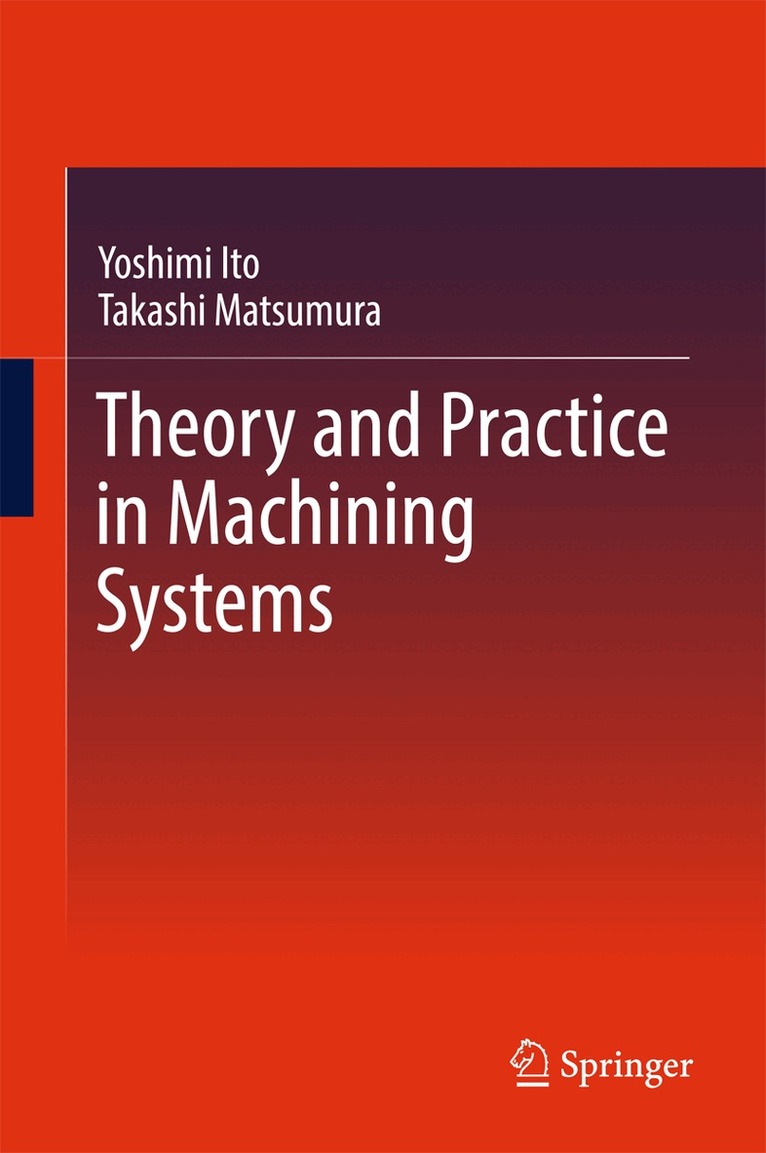
This book describes machining technology from a wider perspective by considering it within the machining space. Machining technology is one of the metal removal activities that occur at the machining point within the machining space. The machining space consists of structural configuration entities, e.g., the main spindle, the turret head and attachments such the chuck and mandrel, and also the form-generating movement of the machine tool itself.
The book describes fundamental topics, including the form-generating movement of the machine tool and the important roles of the attachments, before moving on to consider the supply of raw materials into the machining space, and the discharge of swarf from it, and then machining technology itself.
Building on the latest research findings “Theory and Practice in Machining System” discusses current challenges in machining. Thus, with the inclusion of introductory and advanced topics, the book can be used as a gui
de and survey of machining technology for students and also as the basis for the planning of future research by professors and researchers in universities and scientific institutions. Professional engineers can use the book as a signpost to technical developments that will be applied in industry in coming years.1 619 kr
Skickas inom 10-15 vardagar