Youssef Mnaili – författare
Visar alla böcker från författaren . Handla med fri frakt och snabb leverans.
2 produkter
2 produkter
Inbunden, Engelska, 2027
1 479 kr
Kommande
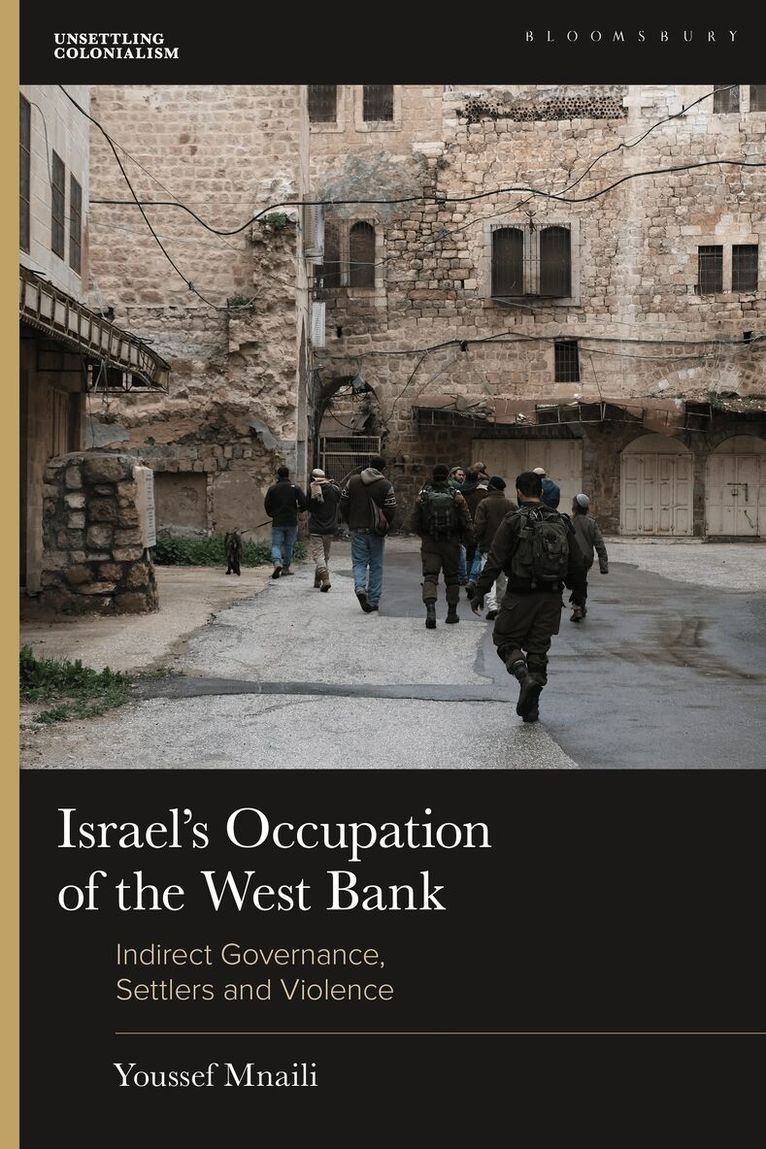
The Occupied Palestinian West Bank is central to the Israeli colonial project. It serves as a significant example of occupation. Yet little is understood about how Israeli rule over this area operates. Drawing on extensive fieldwork in Israel and Palestine, including interviews with state officials, settlers and military personnel, this book examines the evolution of Israeli rule over the West Bank since 1967. The book situates this post-1967 machinery within the longer history of the Zionist settler-colonial project, revealing that contemporary state-settler dynamics reproduce a division of labour with roots that predate 1948. In the book, Youssef Mnaili argues that Israeli governments have increasingly relied on Jewish settlers, approximately 700,000 civilians established in the occupied territories to perform key security and administrative roles. This reliance allows the state to distance itself from controversial practices such as surveillance and violence. Rather than representing a fundamental rupture, the disagreements between state and settlers reflect a shared colonial logic:one camp produces facts on the ground whilst the other produces legitimacy. At the same time, however, the book reveals that a paradox emerges: while the Israeli government attempts to regulate the settlers, it inadvertently strengthens their control over the land, rendering the occupation effectively permanent.In highlighting the state's dependence on settlers for military recruitment and ground operations, Youssef Mnaili offers a unique perspective on the shifting power dynamics between the Israeli state and the settlers. He concludes that the state-settler relationship is not a disagreement over whether to pursue the colonial project, but rather a division of labour over how to run it, how fast, and at what cost. Any durable resolution to the occupation must therefore reckon with this shared foundational commitment.
Inbunden, Engelska, 2027
1 131 kr
Kommande
This volume introduces the theorisation of indirect governance to the scholarship on the Middle East and North Africa. It argues that MENA governance – maintaining order, enforcing laws, revenue collection, the management of religion, and military engagements – necessitates the delegation of authority to third parties. A central theme is the tension between rulers and their intermediaries: as third-party actors grow more capable and entrenched, they accumulate influence that can gradually escape the grasp of those who empowered them. Drawing on original data from Iranian and Syrian archives, fieldwork in Tunisia, Iran, Israel/Palestine, and Saudi Arabia, and original research in Jordan and Egypt, the volume explores why certain governance configurations endure while others falter. In doing so, it offers a novel perspective on the rise of authoritarianism, tribalism, the politics of religion, civil-military relations, and political violence in the MENA region.