Yousuke Takahama - Böcker
Visar alla böcker från författaren Yousuke Takahama. Handla med fri frakt och snabb leverans.
4 produkter
4 produkter
Del 373 - Current Topics in Microbiology and Immunology
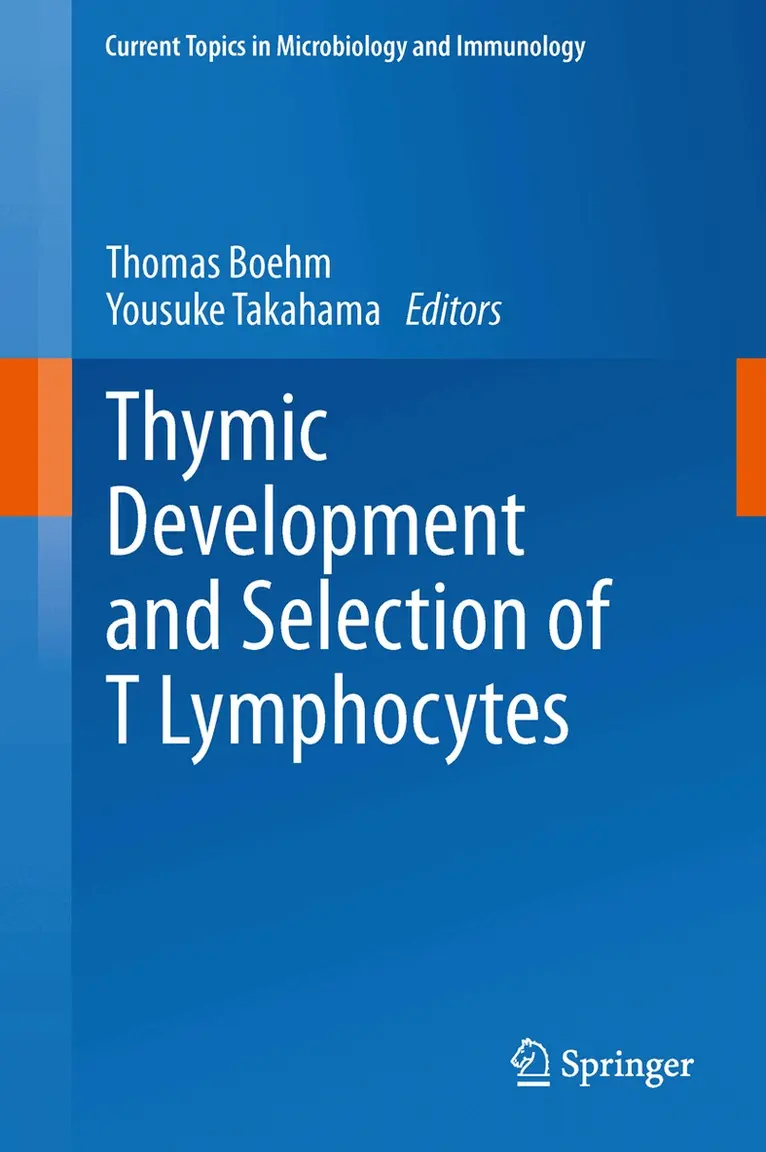
Thymic Development and Selection of T Lymphocytes
Inbunden, Engelska, 2013
1 095 kr
Skickas inom 10-15 vardagar
The thymus is an evolutionarily ancient primary lymphoid organ common to all vertebrates in which T cell development takes place. Failing thymus function is associated with immunodeficiency and/or autoimmunity. In this volume, leading experts provide a comprehensive overview of recent advances in thymopoiesis research. The chapters cover the development of the thymic epithelial microenvironment, address the formation of a diverse and self-tolerant repertoire of T cell receptors as the basis for cellular immunity, discuss the mechanisms by which progenitor cells colonize the thymus and detail the molecular basis for T lineage decisions. The reviews illustrate the important role of the multifaceted process of thymopoiesis for adaptive immunity.
1 095 kr
Skickas inom 10-15 vardagar
The thymus is an evolutionarily ancient primary lymphoid organ common to all vertebrates in which T cell development takes place. Failing thymus function is associated with immunodeficiency and/or autoimmunity. In this volume, leading experts provide a comprehensive overview of recent advances in thymopoiesis research. The chapters cover the development of the thymic epithelial microenvironment, address the formation of a diverse and self-tolerant repertoire of T cell receptors as the basis for cellular immunity, discuss the mechanisms by which progenitor cells colonize the thymus and detail the molecular basis for T lineage decisions. The reviews illustrate the important role of the multifaceted process of thymopoiesis for adaptive immunity.
1 624 kr
Skickas inom 10-15 vardagar
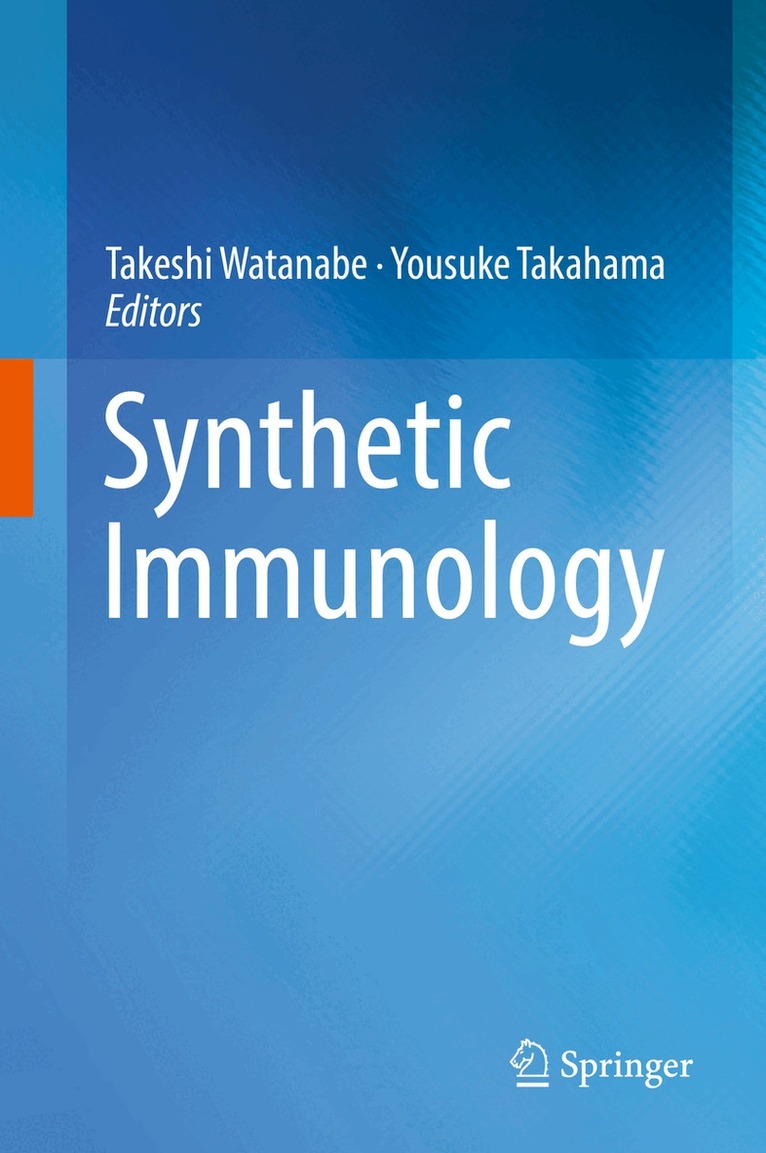
This book reviews the emerging studies of synthetic immunology, including the development and regeneration of immune cells, immune organ development and artificial regeneration, and the synthetic approach towards understanding human immune system.Immunology has developed rapidly over the last 50 years through the incorporation of new methods and concepts in cell and molecular biology, genetics, genomics and proteomics. This progress is the result of works by many excellent researchers all over the world. Currently, immunological research has accumulated detailed knowledge on basic mechanisms of immunity and is in the process to change medical practices. Yet, due to the enormous complexity of the immune system, many aspects on the regulation and function of this system remain unknown. Synthetic biology uses gain-of-function rather than loss-of-function approaches. The goals of synthetic biology can be described in a simple phrase “rebuild, alter, and understand,” namely, to rebuild minimal functional systems using well-defined parts from nature and then to perturb the system to understand its working principles. Given the richness of accumulated knowledge in molecular and cellular mechanisms of the immune system, we now begin adapting the concepts of synthetic biology to immunology. An immune response is a spatiotemporal phenomenon occurring at a given time and at a specialized place in the body. One goal of synthetic immunology is to reconstruct artificial microenvironments for better understanding of an immune response. We hope this yet-to-be-experimental approach of synthetic immunology and the compilation of this book will aid our further understanding of the immune system and future devising the tools to manipulate the immune system for therapy and prevention of the diseases.
1 624 kr
Skickas inom 10-15 vardagar
This book reviews the emerging studies of synthetic immunology, including the development and regeneration of immune cells, immune organ development and artificial regeneration, and the synthetic approach towards understanding human immune system.Immunology has developed rapidly over the last 50 years through the incorporation of new methods and concepts in cell and molecular biology, genetics, genomics and proteomics. This progress is the result of works by many excellent researchers all over the world. Currently, immunological research has accumulated detailed knowledge on basic mechanisms of immunity and is in the process to change medical practices. Yet, due to the enormous complexity of the immune system, many aspects on the regulation and function of this system remain unknown. Synthetic biology uses gain-of-function rather than loss-of-function approaches. The goals of synthetic biology can be described in a simple phrase “rebuild, alter, and understand,” namely, to rebuild minimal functional systems using well-defined parts from nature and then to perturb the system to understand its working principles. Given the richness of accumulated knowledge in molecular and cellular mechanisms of the immune system, we now begin adapting the concepts of synthetic biology to immunology. An immune response is a spatiotemporal phenomenon occurring at a given time and at a specialized place in the body. One goal of synthetic immunology is to reconstruct artificial microenvironments for better understanding of an immune response. We hope this yet-to-be-experimental approach of synthetic immunology and the compilation of this book will aid our further understanding of the immune system and future devising the tools to manipulate the immune system for therapy and prevention of the diseases.