Yrjo Engestrom – författare
Visar alla böcker från författaren Yrjo Engestrom. Handla med fri frakt och snabb leverans.
11 produkter
11 produkter
Häftad, Engelska, 1999
782 kr
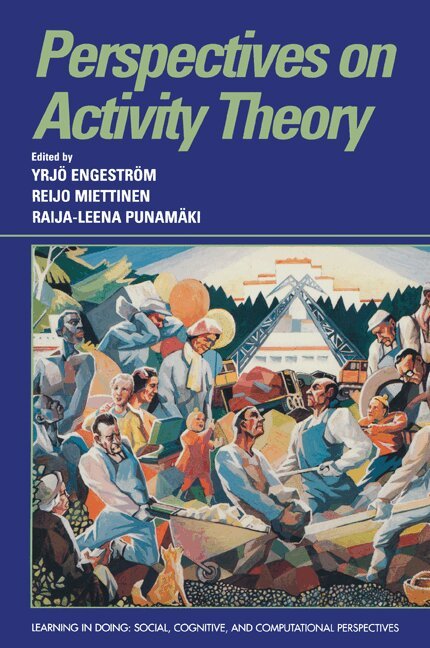
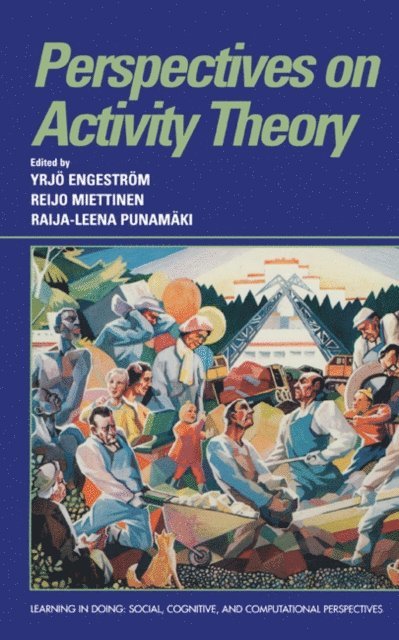
Activity theory is an interdisciplinary approach to human sciences that originates in the cultural-historical psychology school, initiated by Vygotsky, Leont'ev, and Luria. It takes the object-oriented, artifact-mediated collective activity system as its unit of analysis, thus bridging the gulf between the individual subject and the societal structure. This 1999 volume includes 26 chapters on activity theory by authors from ten countries. In Part I of the book, central theoretical issues are discussed from different points of view. Some topics addressed in this part are epistemology, methodology, and the relationship between biological and cultural factors. Part II is devoted to the acquisition and development of language. This part includes a chapter that analyzes writing activity in Japanese classrooms, and a case study of literacy skills of a man with cerebral palsy. Part III contains chapters on play, learning, and education, and Part IV addresses the meaning of technology and the development of work activities. The final part covers issues of therapy and addiction.
Inbunden, Engelska, 2003
1 324 kr
Skickas inom 5-8 vardagar
This book opens up new theoretical perspectives and practical possibilities to analyze the learning opportunities emerging in the transitional zones between educational institutions and workplaces. International contributors draw on a range of ideas developed within constructivistic, socio-cultural and activity theory and focus in different ways on the processes of transition, transfer and boundary crossing as central to learning, especially in vocational and professional education contexts. The book begins with four chapters which locate the renewed interest in transfer and the emerging interest in boundary crossing in the context of knowledge society in terms of the following: the historical development of learning theories, the theoretical advances made in socio-cultural approaches as regards learning, transfer and boundary crossing, and sociological approaches to links between school and workplace learning. Part II contains seven chapters that present studies on learning and transfer in different domains of vocational and professional education. Part III presents three studies that describe and analyze learning in workplaces. The chapters of these three parts report on a range of empirical and developmental studies which have developed new 'tools for learning and transfer' in vocational education. The book ends with an epilogue consisting of a critical reflection on the earlier chapters in relation to how they approach two key transfer issues - the relationship between school knowledge and the knowledge acquired in working life, and the relationship between transfer and boundary crossing at the individual and collective levels. The chapters of this book are based on original research undertaken by members and invited experts of a European COST Action A 11 Working Group 2 which includes researchers from twelve different countries.
Inbunden, Engelska, 1997
1 641 kr
Skickas inom 7-10 vardagar
This volume brings together articles from the Quarterly Newsletter of the Laboratory of Comparative Human Cognition that are important benchmarks in the recent history of research and theory on the cultural and contextual foundations of human development. The central theme of this discussion can be posed as a question: how shall we develop a psychology that takes as its starting point the actions of people participating in routine, culturally organized activities? The discussion is organized in terms of a set of overarching themes of importance to psychologists and other social scientists: The nature of context; experiments as contexts; cultural historical theories of culture, context, and development; the analysis of classroom settings as a social important context of development, the psychological analysis of activity in situ, and questions of power and discourse.
Häftad, Engelska, 1997
752 kr
Skickas inom 7-10 vardagar
This volume brings together articles from the Quarterly Newsletter of the Laboratory of Comparative Human Cognition that are important benchmarks in the recent history of research and theory on the cultural and contextual foundations of human development. The central theme of this discussion can be posed as a question: how shall we develop a psychology that takes as its starting point the actions of people participating in routine, culturally organized activities? The discussion is organized in terms of a set of overarching themes of importance to psychologists and other social scientists: The nature of context; experiments as contexts; cultural historical theories of culture, context, and development; the analysis of classroom settings as a social important context of development, the psychological analysis of activity in situ, and questions of power and discourse.
E-bok
Engelska, 2024445 kr
Läs direkt efter köp
E-bok
PDF, Engelska, 2024462 kr
Läs direkt efter köp
E-bok
Engelska, 2018492 kr
Läs direkt efter köp
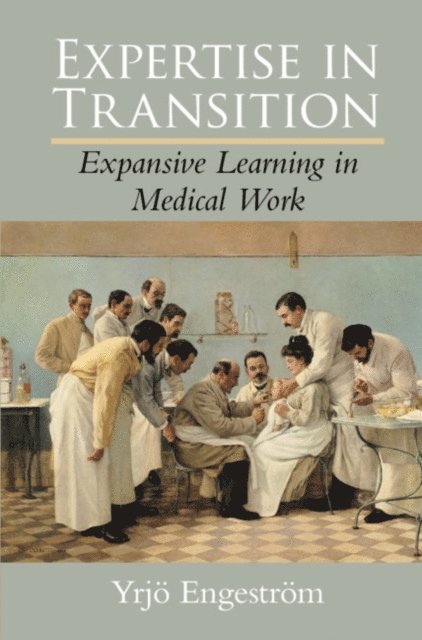
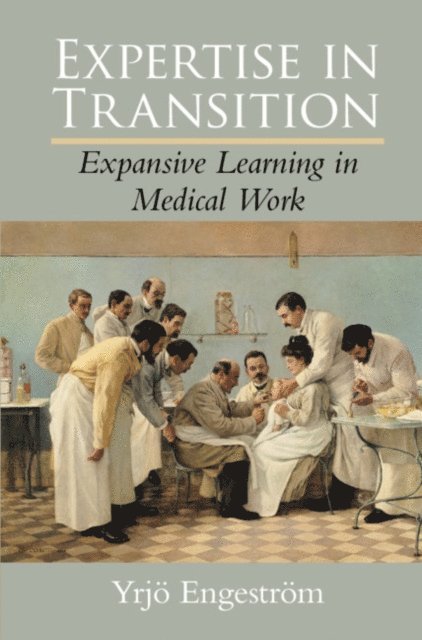
This book challenges standard notions of expertise. In today''s world, truly effective expertise is built on fluid collaboration between practitioners from multiple backgrounds. Such collaborative expertise must also be transformative, must be able to tackle emerging new problems and changes in its organizational framework. Engeström argues that the transition toward collaborative and transformative expertise is based on three pillars: expertise needs to be understood and cultivated as a collective activity; expertise needs to be built on flexible knot-working among diverse practitioners; and expertise needs to be fostered as the expansive learning of models and patterns of activity that are in progress. In this book, Engeström recasts expertise as fluid collaboration on complex tasks that requires envisioning the future and mastering change.
E-bok
PDF, Engelska, 2018492 kr
Läs direkt efter köp
This book challenges standard notions of expertise. In today''s world, truly effective expertise is built on fluid collaboration between practitioners from multiple backgrounds. Such collaborative expertise must also be transformative, must be able to tackle emerging new problems and changes in its organizational framework. Engeström argues that the transition toward collaborative and transformative expertise is based on three pillars: expertise needs to be understood and cultivated as a collective activity; expertise needs to be built on flexible knot-working among diverse practitioners; and expertise needs to be fostered as the expansive learning of models and patterns of activity that are in progress. In this book, Engeström recasts expertise as fluid collaboration on complex tasks that requires envisioning the future and mastering change.
E-bok
PDF, Engelska, 1999920 kr
Läs direkt efter köp
Activity theory is an interdisciplinary approach to human sciences that originates in the cultural-historical psychology school, initiated by Vygotsky, Leont''ev, and Luria. It takes the object-oriented, artifact-mediated collective activity system as its unit of analysis, thus bridging the gulf between the individual subject and the societal structure. This 1999 volume includes 26 chapters on activity theory by authors from ten countries. In Part I of the book, central theoretical issues are discussed from different points of view. Some topics addressed in this part are epistemology, methodology, and the relationship between biological and cultural factors. Part II is devoted to the acquisition and development of language. This part includes a chapter that analyzes writing activity in Japanese classrooms, and a case study of literacy skills of a man with cerebral palsy. Part III contains chapters on play, learning, and education, and Part IV addresses the meaning of technology and the development of work activities. The final part covers issues of therapy and addiction.
523 kr
Läs direkt efter köp
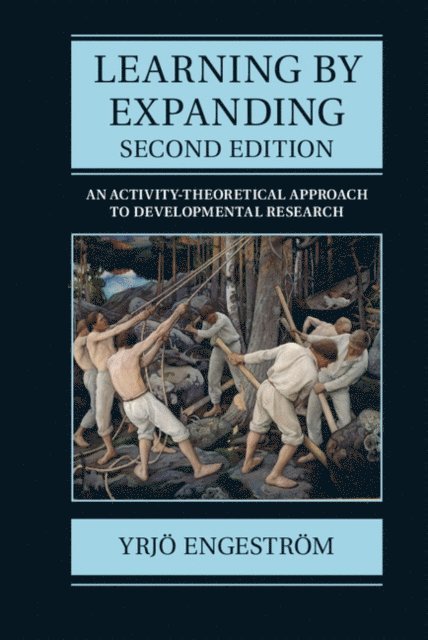
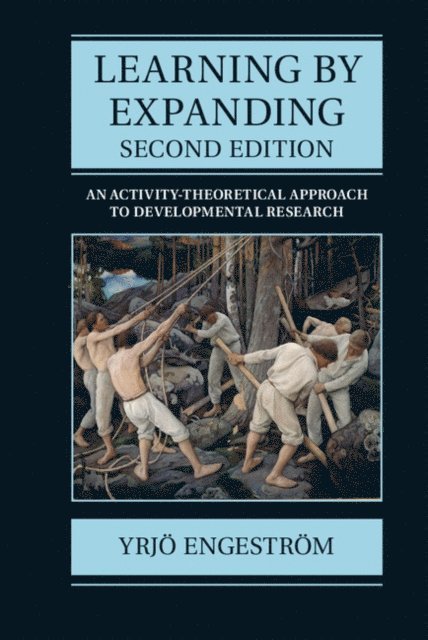
Learning by Expanding challenges traditional theories that consider learning to be a process of acquisition and reorganization of cognitive structures within the closed boundaries of specific tasks or problems. Yrjö Engeström argues that this type of learning increasingly fails to meet the challenges of complex social change and fails to create novel artifacts and ways of life. In response, he presents an innovative theory of expansive learning activity, offering a foundation for understanding and designing learning as a transformation of human activities and organizations. The second edition of this seminal text features a substantive new introduction that illustrates the development and implementation of Engeström''s theory since its inception.
E-bok
PDF, Engelska, 2014505 kr
Läs direkt efter köp
Learning by Expanding challenges traditional theories that consider learning to be a process of acquisition and reorganization of cognitive structures within the closed boundaries of specific tasks or problems. Yrjö Engeström argues that this type of learning increasingly fails to meet the challenges of complex social change and fails to create novel artifacts and ways of life. In response, he presents an innovative theory of expansive learning activity, offering a foundation for understanding and designing learning as a transformation of human activities and organizations. The second edition of this seminal text features a substantive new introduction that illustrates the development and implementation of Engeström''s theory since its inception.