Yu.D. Tretyakov – författare
Visar alla böcker från författaren Yu.D. Tretyakov. Handla med fri frakt och snabb leverans.
2 produkter
2 produkter
Inbunden, Engelska, 1997
2 166 kr
Skickas inom 10-15 vardagar
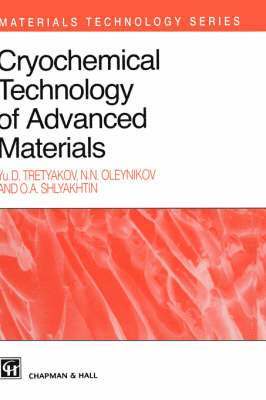
A wide range of advanced materials are prepared by cryogenic processing methods (also called freeze-drying synthesis). This book focuses on the cryochemical technology of advanced inorganic materials, which has been the subject of the authors' research for many years. This book is the first in the 30-year history of this technology completely devoted to the processes and application of cryochemical synthesis. The authors also draw special attention to the fundamental aspects of cryochemical processes and their physcio-chemical background. Considerably more research has been performed on this subject in the USSR than anywhere else and this book also contains a large volume of previously unpublished scientific material. Cryochemical Technology of Advanced Materials will be of interest to materials scientists and chemical engineers, especially those working on catalysis, adsorbents, coatings powder metallurgy, semiconductors, ceramics and organic synthesis.
E-bok
PDF, Engelska, 1993979 kr
Läs direkt efter köp
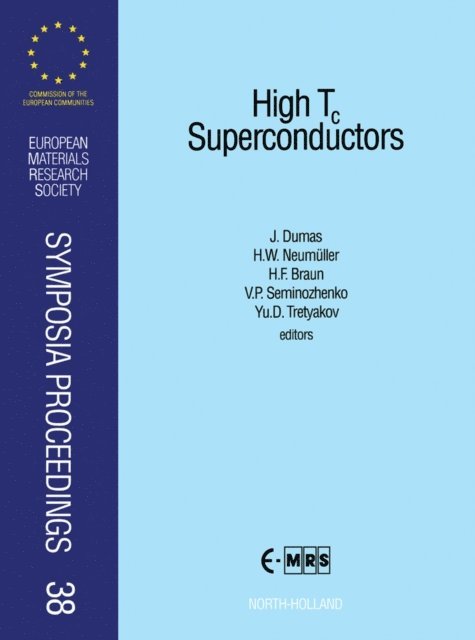
A wide range of progress in materials development [single crystals, ceramics, thin films, wire and tapes] is reported in the 169 papers in this volume. The main focus of the papers is in attaining a better understanding of the relationship between microstructure and electrical properties. Invited papers cover topics such as the effects of substitution and doping; multilayers; nanostructure characterisation; electric field effects in High Tc Superconductors [HTS]; surface stability; critical currents; flux pinning and magnetooptic imaging of flux patterns; effects of irradiation induced defects; properties and preparation of materials; microwave properties and electronic devices. A clearly broadened basis for understanding processes and mechanisms in [HTS] is portrayed. Appreciable progress has been achieved in the reproducible manufacturing of high quality materials supported by very efficient methods in microstructural analysis. This essential improvement is reflected in the increased number of practical devices encouraging the use of HTS in applications for electronics and power engineering, all of which are reviewed in depth in this work.