Yue Gao – författare
Visar alla böcker från författaren Yue Gao. Handla med fri frakt och snabb leverans.
12 produkter
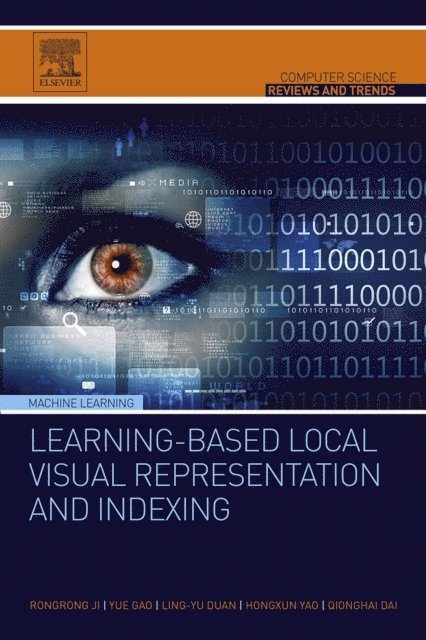
Learning-Based Local Visual Representation and Indexing
Av Rongrong Ji, Yue Gao m. fl.
Häftad, 2015
404 kr
Lägg i varukorg
Learning-Based Local Visual Representation and Indexing , reviews the state-of-the-art in visual content representation and indexing, introduces cutting-edge techniques in learning based visual representation, and discusses emerging topics in visual local representation, and introduces the most …
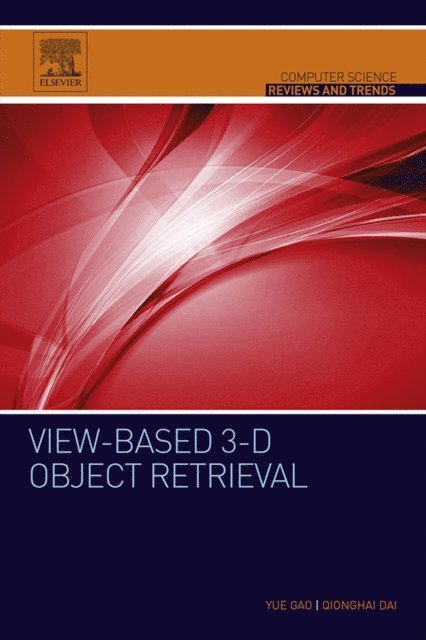
View-based 3-D Object Retrieval
Av Yue Gao, Qionghai Dai
Häftad, 2014
377 kr
Lägg i varukorg
Content-based 3-D object retrieval has attracted extensive attention recently and has applications in a variety of fields, such as, computer-aided design, tele-medicine,mobile multimedia, virtual reality, and entertainment. The development of efficient and effective content-based 3-D object …
Learning-Based Local Visual Representation and Indexing
Av Qionghai Dai, Hongxun Yao m. fl.
E-bok, 2015
472 kr
Lägg i varukorg
Learning-Based Local Visual Representation and Indexing, reviews the state-of-the-art in visual content representation and indexing, introduces cutting-edge techniques in learning based visual representation, and discusses emerging topics in visual local representation, and introduces the most …
View-based 3-D Object Retrieval
Av Qionghai Dai, Yue Gao
E-bok, 2014
472 kr
Lägg i varukorg
Content-based 3-D object retrieval has attracted extensive attention recently and has applications in a variety of fields, such as, computer-aided design, tele-medicine,mobile multimedia, virtual reality, and entertainment. The development of efficient and effective content-based 3-D object …
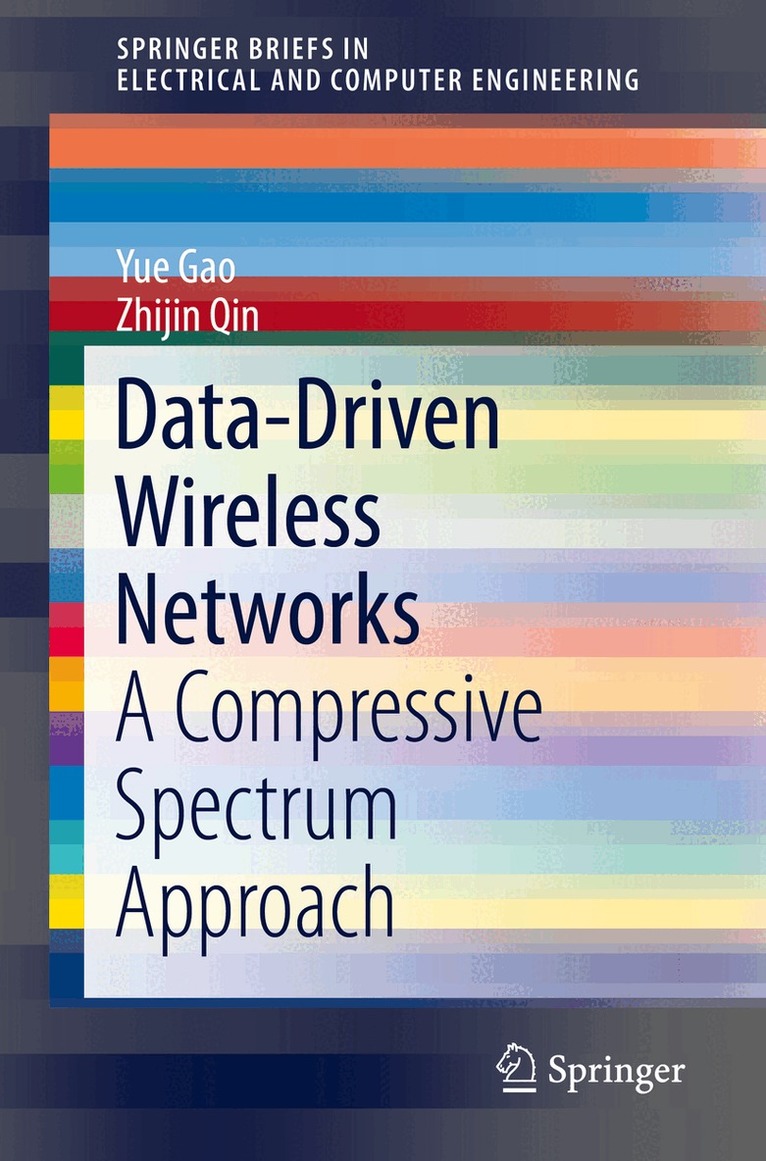
Data-Driven Wireless Networks
A Compressive Spectrum Approach
Av Yue Gao, Zhijin Qin
Häftad, 2018
550 kr
Lägg i varukorg
This SpringerBrief discusses the applications of spare representation in wireless communications, with a particular focus on the most recent developed compressive sensing (CS) enabled approaches. With the help of sparsity property, sub-Nyquist sampling can be achieved in wideband cognitive radio …
Data-Driven Wireless Networks
A Compressive Spectrum Approach
Av Zhijin Qin, Yue Gao
E-bok, 2018
710 kr
Lägg i varukorg
This SpringerBrief discusses the applications of spare representation in wireless communications, with a particular focus on the most recent developed compressive sensing (CS) enabled approaches. With the help of sparsity property, sub-Nyquist sampling can be achieved in wideband cognitive radio …
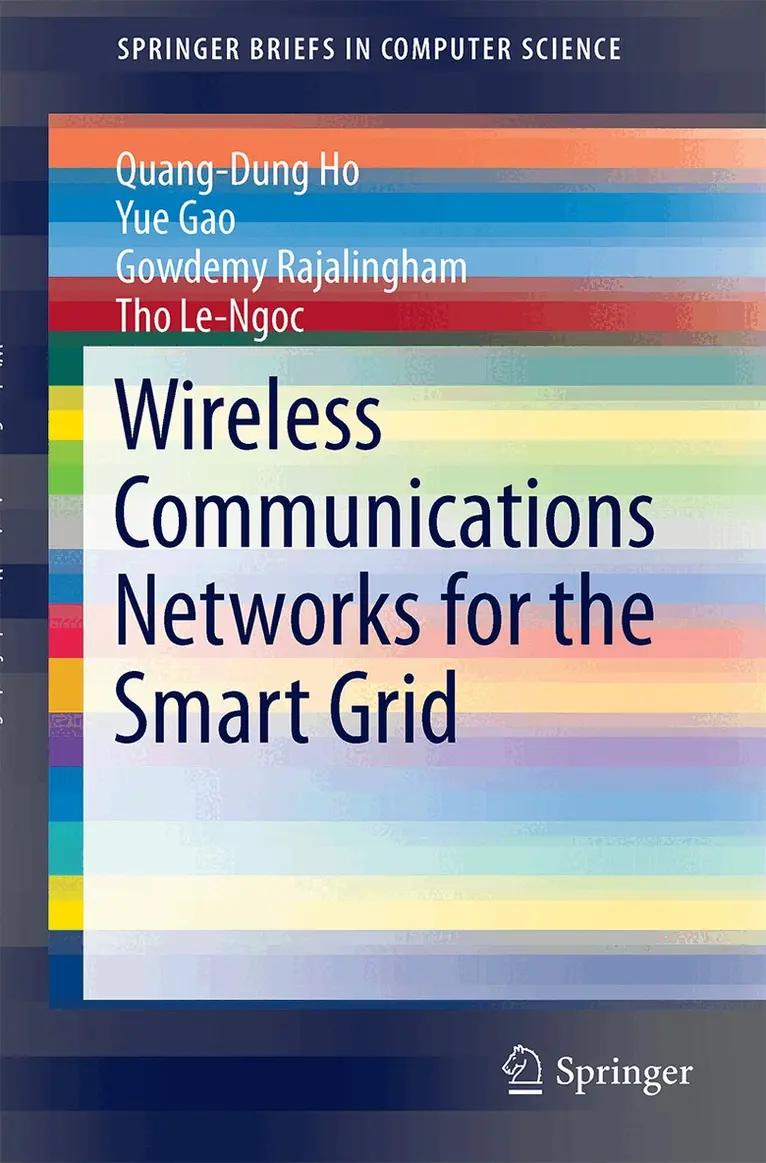
Wireless Communications Networks for the Smart Grid
Av Quang-Dung Ho, Yue Gao m. fl.
Häftad, 2014
550 kr
Lägg i varukorg
This brief presents a comprehensive review of the network architecture and communication technologies of the smart grid communication network (SGCN). It then studies the strengths, weaknesses and applications of two promising wireless mesh routing protocols that could be used to implement the SGCN. …
Wireless Communications Networks for the Smart Grid
Av Tho Le-Ngoc, Gowdemy Rajalingham m. fl.
E-bok, 2014
734 kr
Lägg i varukorg
This brief presents a comprehensive review of the network architecture and communication technologies of the smart grid communication network (SGCN). It then studies the strengths, weaknesses and applications of two promising wireless mesh routing protocols that could be used to implement the SGCN. …
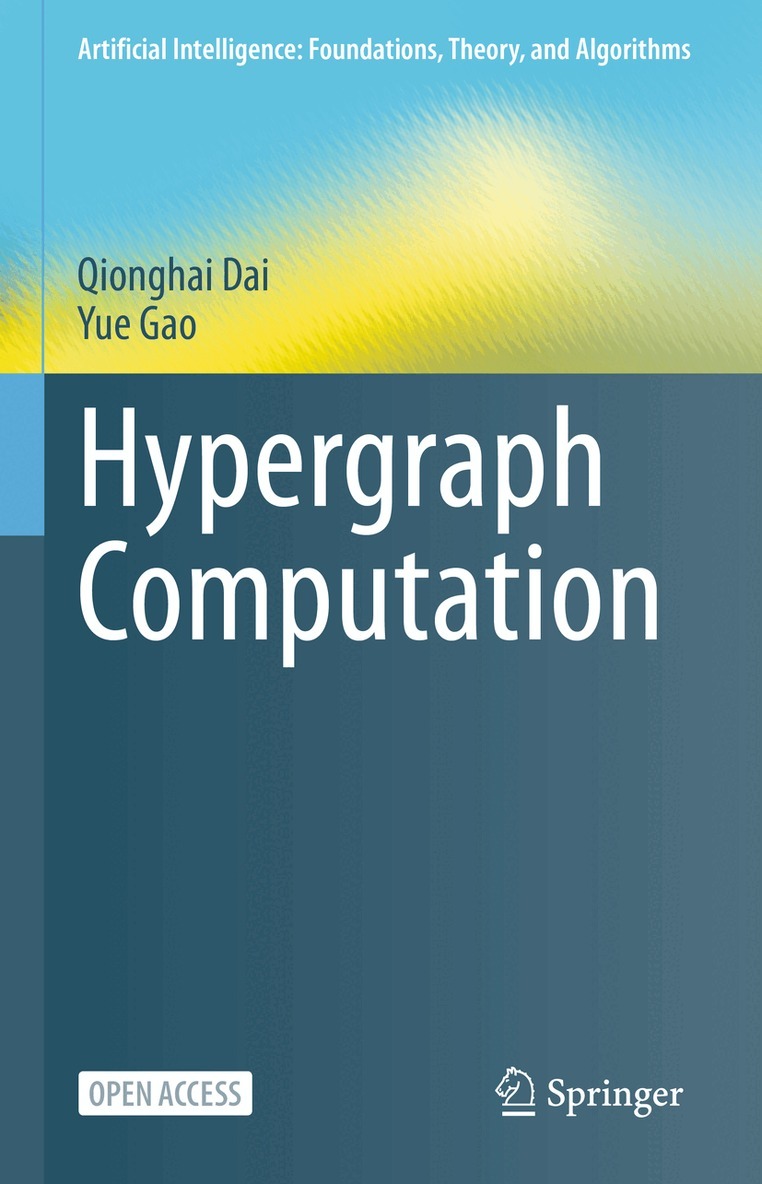
Hypergraph Computation
Av Qionghai Dai, Yue Gao
Inbunden, 2023
566 kr
Lägg i varukorg
This open access book discusses the theory and methods of hypergraph computation. Many underlying relationships among data can be represented using graphs, for example in the areas including computer vision, molecular chemistry, molecular biology, etc. In the last decade, methods like graph-based …
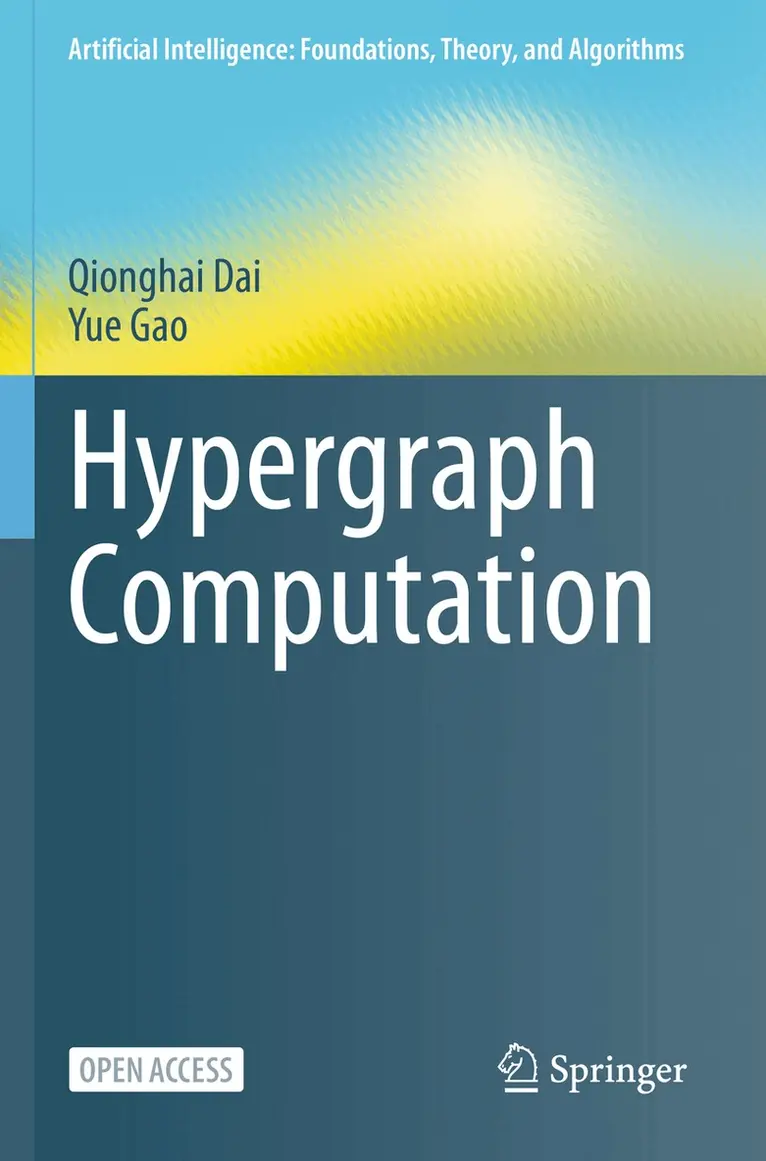
Hypergraph Computation
Av Qionghai Dai, Yue Gao
Häftad, 2023
455 kr
Lägg i varukorg
This open access book discusses the theory and methods of hypergraph computation. Many underlying relationships among data can be represented using graphs, for example in the areas including computer vision, molecular chemistry, molecular biology, etc. In the last decade, methods like graph-based …