Yuezhi Zhao – författare
Visar alla böcker från författaren Yuezhi Zhao. Handla med fri frakt och snabb leverans.
10 produkter
Media, Market, and Democracy in China
Between the Party Line and the Bottom Line
Av Yuezhi Zhao
Häftad, 1998
329 kr
Lägg i varukorg
How do market forces influence the media in China? How does the Party both introduce and try to contain the market's influence? How do commercial imperatives both accommodate and challenge Party control? Yuezhi Zhao interviewed a wide range of scholars, media administrators, and media professionals …
Communication in China
Political Economy, Power, and Conflict
Av Yuezhi Zhao
Inbunden, 2008
1697 kr
Lägg i varukorg
The stakes for control over the means of communication in China have never been so high as the country struggles with breathtaking social change. This authoritative book analyzes the key dimensions of the transformation in China's communication system since the early 1990s and examines the highly …
Communication in China
Political Economy, Power, and Conflict
Av Yuezhi Zhao
Häftad, 2008
711 kr
Lägg i varukorg
The stakes for control over the means of communication in China have never been so high as the country struggles with breathtaking social change. This authoritative book analyzes the key dimensions of the transformation in China's communication system since the early 1990s and examines the highly …
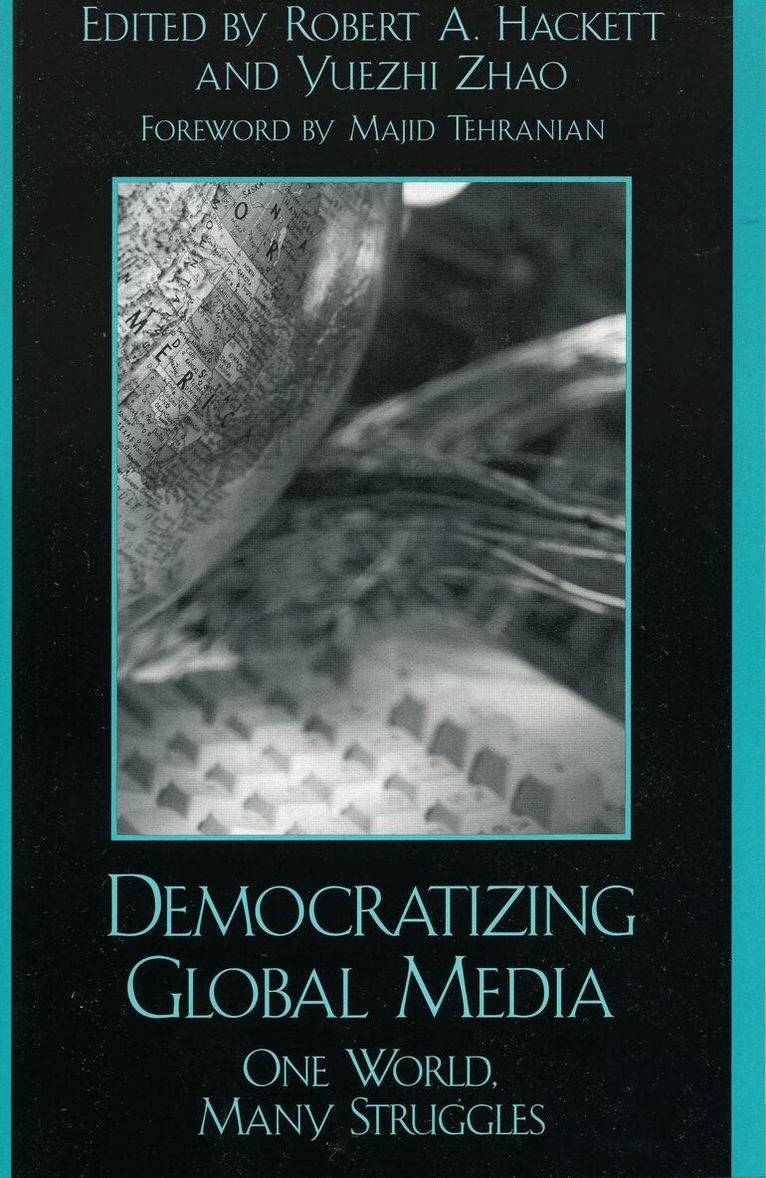
Democratizing Global Media
One World, Many Struggles
Av Robert A. Hackett, Yuezhi Zhao
Häftad, 2005
852 kr
Lägg i varukorg
Democratizing Global Media explores the complex relationship between globalizing media and the spread of democracy around the world. An international, interdisciplinary group of journalists and scholars discusses key—and often contentious—issues such as the power of media, the benefits of media …
Global Communications
Toward a Transcultural Political Economy
Av Paula Chakravartty, Yuezhi Zhao
Inbunden, 2007
1603 kr
Lägg i varukorg
This provocative book takes a new approach toward understanding the uneven flows of global communications. Rather than guiding its discussion by geography, types of media, or traditional separations of power and resistance, Global Communications examines political economic power and communication …
Global Communications
Toward a Transcultural Political Economy
Av Paula Chakravartty, Yuezhi Zhao
Häftad, 2008
732 kr
Lägg i varukorg
This provocative book takes a new approach toward understanding the uneven flows of global communications. Rather than guiding its discussion by geography, types of media, or traditional separations of power and resistance, Global Communications examines political economic power and communication …
Communication in China
Political Economy, Power, and Conflict
Av Yuezhi Zhao
E-bok, 2008
779 kr
Lägg i varukorg
The stakes for control over the means of communication in China have never been so high as the country struggles with breathtaking social change. This authoritative book analyzes the key dimensions of the transformation in China''s communication system since the early 1990s and examines the highly …
Sustaining Democracy?
Journalism and the Politics of Objectivity
Av Robert A. Hackett, Yuezhi Zhao
E-bok, 1998
469 kr
Lägg i varukorg
The news media are often accused of lacking objectivity. Sustaining Democracy? asks whether it is worth trying to be objective in the first place by addressing current, and highly topical, debates on the relationship between journalism and democracy in Canada and the United States. These debates …
Democratizing Global Media
One World, Many Struggles
Av Robert A. Hackett, Yuezhi Zhao
Inbunden, 2005
1436 kr
Tillfälligt slut
Democratizing Global Media explores the complex relationship between globalizing media and the spread of democracy around the world. An international, interdisciplinary group of journalists and scholars discusses key—and often contentious—issues such as the power of media, the benefits of media …
Sustaining Democracy?
Journalism and the Politics of Objectivity
Av Robert A. Hackett, Yuezhi Zhao
Häftad, 1998
384 kr
Tillfälligt slut