Yuka Kadoi - Böcker
Visar alla böcker från författaren Yuka Kadoi. Handla med fri frakt och snabb leverans.
5 produkter
5 produkter
1 433 kr
Skickas inom 7-10 vardagar
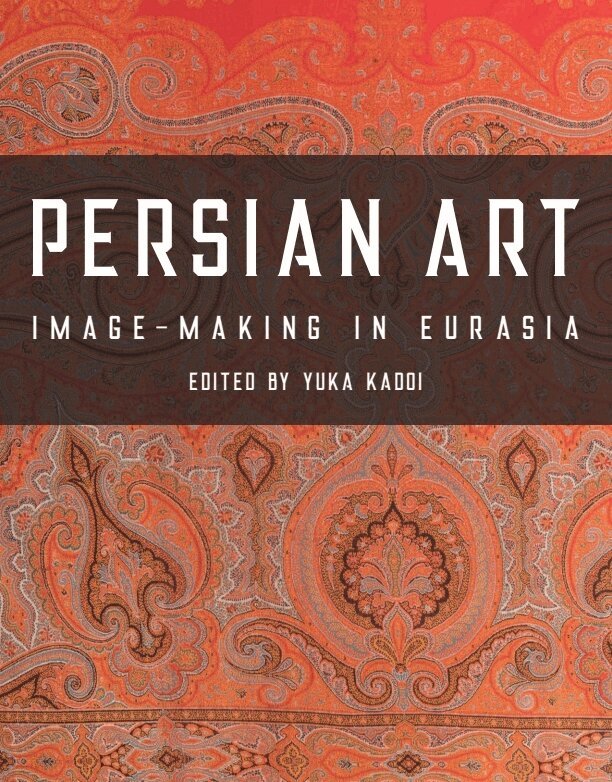
In this illustrated book, nine contributors explore multifaceted aspects of art, architecture and material culture of the Persian cultural realm, encompassing West Asia, Anatolia, Central Asia, South Asia, East Asia and Europe. Each chapter examines the historical, religious or scientific role of visual culture in the shaping, influencing and transforming of distinctive ‘Persian’ aesthetics across the various historical periods, ranging from pre-Islamic, medieval and early modern Islamic to modern times.
561 kr
Skickas inom 7-10 vardagar
This beautifully illustrated history of Safavid Isfahan (1501 1722) explores the architectural and urban forms and networks of socio-cultural action that reflected a distinctly early-modern and Perso-Shi'i practice of kingship. An immense building campaign, initiated in 1590-91, transformed Isfahan from a provincial, medieval, and largely Sunni city into an urban-centered representation of the first Imami Shi'i empire in the history of Islam. The historical process of Shi'ification of Safavid Iran and the deployment of the arts in situating the shifts in the politico-religious agenda of the imperial household informs Sussan Babaie's study of palatial architecture and urban environments of Isfahan and the earlier capitals of Tabriz and Qazvin. Babaie argues that since the Safavid claim presumed the inheritance both of the charisma of the Shi'i Imams and of the aura of royal splendor integral to ancient Persian notions of kingship, a ceremonial regime was gradually devised in which access and proximity to the shah assumed the contours of an institutionalized form of feasting. Talar-palaces, a new typology in Islamic palatial designs, and the urban-spatial articulation of access and proximity are the architectural anchors of this argument. Cast in the comparative light of urban spaces and palace complexes elsewhere and earlier in the Timurid, Ottoman, and Mughal realms as well as in the early modern European capitals Safavid Isfahan emerges as the epitome of a new architectural-urban paradigm in the early modern age.
Del 10 - Studies in Persian Cultural History
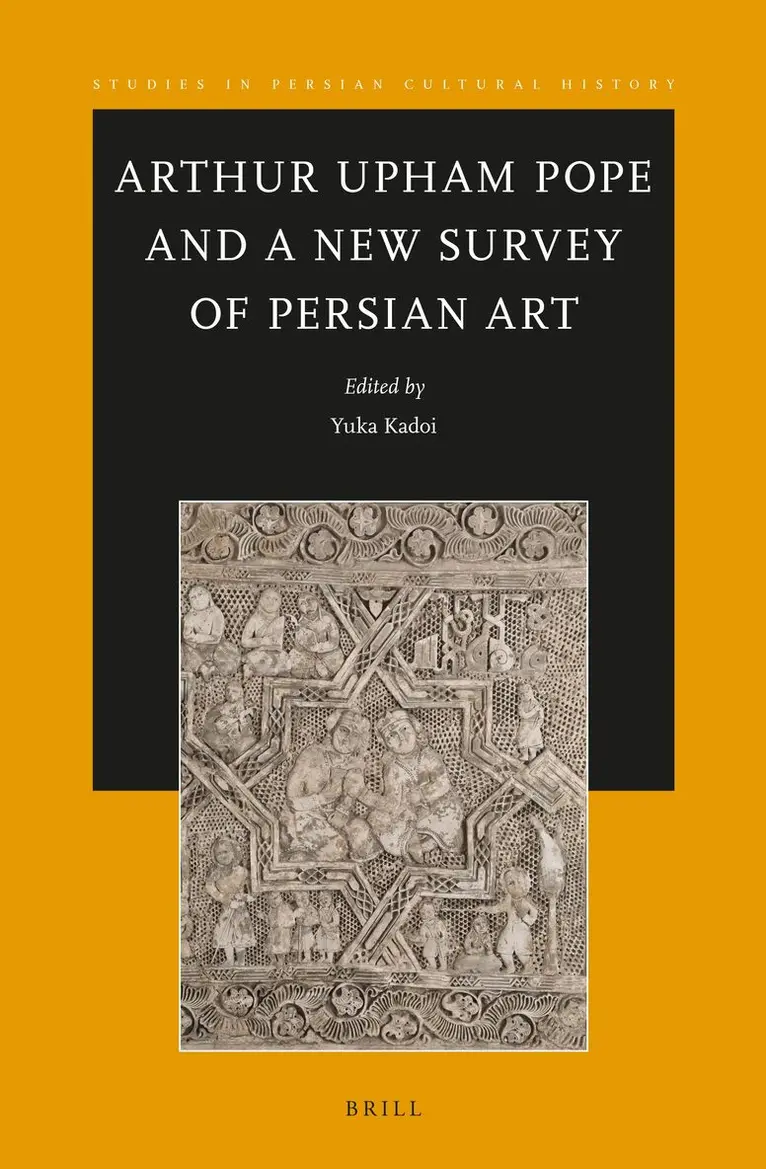
Arthur Upham Pope and A New Survey of Persian Art
Inbunden, Engelska, 2016
3 282 kr
Skickas inom 5-8 vardagar
In Arthur Upham Pope and A New Survey of Persian Art, fourteen scholars explore the legacy of Arthur Upham Pope (1881–1969) by tracing the formation of Persian art scholarship and connoisseurship during the twentieth century. Widely considered as a self-made scholar, curator, and entrepreneur, Pope was credited for establishing the basis of what we now categorize broadly as Persian art. His unrivalled professional achievement, together with his personal charisma, influenced the way in which many scholars and collectors worldwide came to understand the art, architecture and material culture of the Persian world. This ultimately resulted in the establishment of the aesthetic criteria for assessing the importance of cultural remains from modern-day Iran. With contributions by Lindsay Allen, Sheila S. Blair, Jonathan M. Bloom, Talinn Grigor, Robert Hillenbrand, Yuka Kadoi, Sumru Belger Krody, Judith A. Lerner, Kimberly Masteller, Cornelia Montgomery, Bernard O’Kane, Keelan Overton, Laura Weinstein, and Donald Whitcomb.
806 kr
Skickas inom 5-8 vardagar
In Arthur Upham Pope and A New Survey of Persian Art, fourteen scholars explore the legacy of Arthur Upham Pope (1881–1969) by tracing the formation of Persian art scholarship and connoisseurship during the twentieth century. Widely considered as a self-made scholar, curator, and entrepreneur, Pope was credited for establishing the basis of what we now categorize broadly as Persian art. His unrivalled professional achievement, together with his personal charisma, influenced the way in which many scholars and collectors worldwide came to understand the art, architecture and material culture of the Persian world. This ultimately resulted in the establishment of the aesthetic criteria for assessing the importance of cultural remains from modern-day Iran. With contributions by Lindsay Allen, Sheila S. Blair, Jonathan M. Bloom, Talinn Grigor, Robert Hillenbrand, Yuka Kadoi, Sumru Belger Krody, Judith A. Lerner, Kimberly Masteller, Cornelia Montgomery, Bernard O’Kane, Keelan Overton, Laura Weinstein, and Donald Whitcomb.
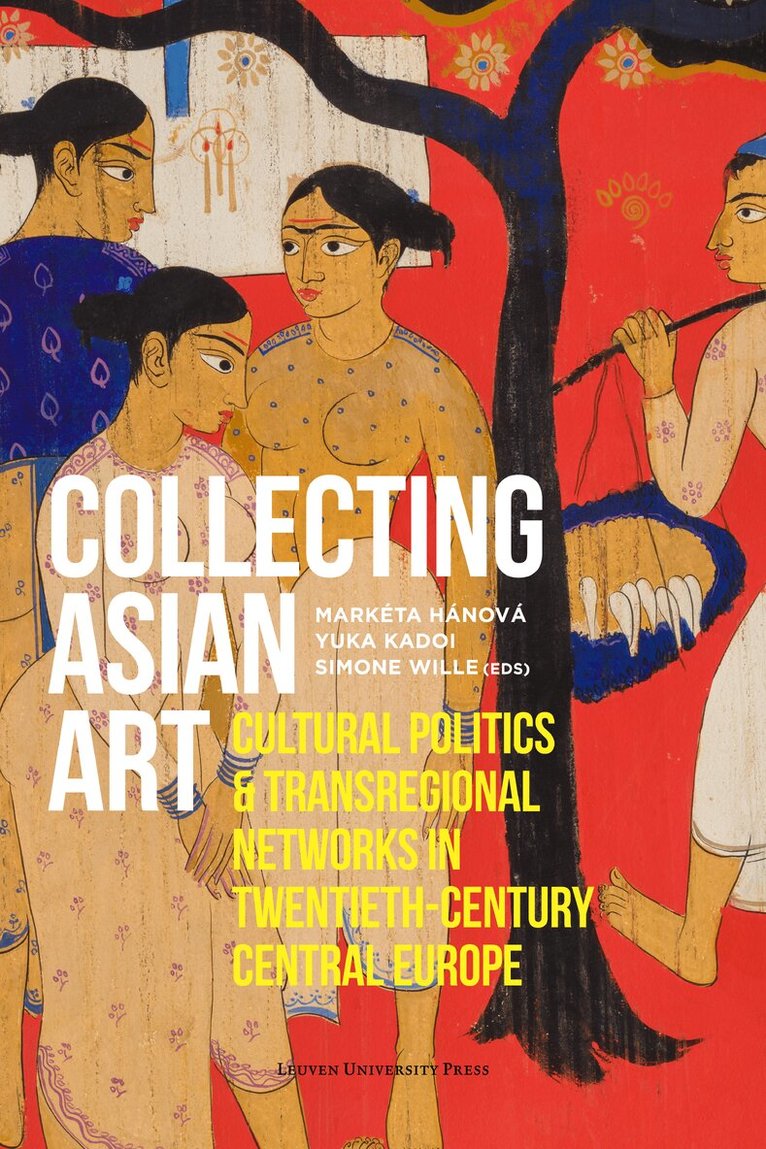
Collecting Asian Art
Cultural Politics and Transregional Networks in Twentieth-Century Central Europe
Häftad, Engelska, 2024
758 kr
Skickas inom 5-8 vardagar
Museum collections of Asian art in Central Europe.Rather than centering on the well-known collections in Western European and North American museums, Collecting Asian Art turns to museum collections of Asian art in Central Europe which emerged from the late 19th century onwards. Highlighting the dimensions of Central European connectedness, this volume explores how these collections evolved and changed under changing cultural and political conditions from the pre-World War I to the post-World War II periods. With a primary focus on collections of East Asian, South Asian, and West Asian art in Vienna, Prague, Berlin, Warsaw, Kraków, Budapest, and Ljubljana, it outlines the transregional connections and networks that gradually developed.Collecting Asian Art locates Asian art across the twentieth-century in Central Europe via discourse and ideology, and discusses key collections and the way individual collectors built their networks. It thus explores transregional connections that developed through collecting activities and strategies in the prewar, interwar and postwar eras. Contributors also examine the personal connections between a group of Indologists from postwar Prague and modernist Indian artists from the early 1950s to the 1980s and also discuss the systematic archiving of East Asian art collections in Slovenia. A concluding conversation looks at colonisation and decolonisation from a broader perspective by approaching it through recent art historical discussions on the global dimensions of modernism. By defining the region through its external relationships and its entanglements with regions across Asia rather than as a self-contained unit, the contributions in this volume outline how these transregional connections and networks evolved and changed over time, thus highlighting their singularity in comparison to developments in Western Europe. Based on recent research, Collecting Asian Art reveals neglected sources while reinterpreting well-known ones.Contributors: Zdenka Klimtová (National Gallery in Prague); Agnieszka Kluczewska-Wójcik (Polish Institute of World Art Studies); Partha Mitter (University of Sussex); Michaela Pejčochová (National Gallery in Prague); Uta Rahman Steinert (Staatliche Museen zu Berlin); Iván Szántó (Eötvös Loránd University); Nataša Vampelj Suhadolnik (University of Ljubljana); Johannes Wieninger (MAK – Museum of Applied Arts); Tomáš Winter (Czech Academy of Sciences).Ebook available in Open Access. This publication is GPRC-labeled (Guaranteed Peer-Reviewed Content).