Yuri P. Yatsenko – författare
Visar alla böcker från författaren Yuri P. Yatsenko. Handla med fri frakt och snabb leverans.
7 produkter
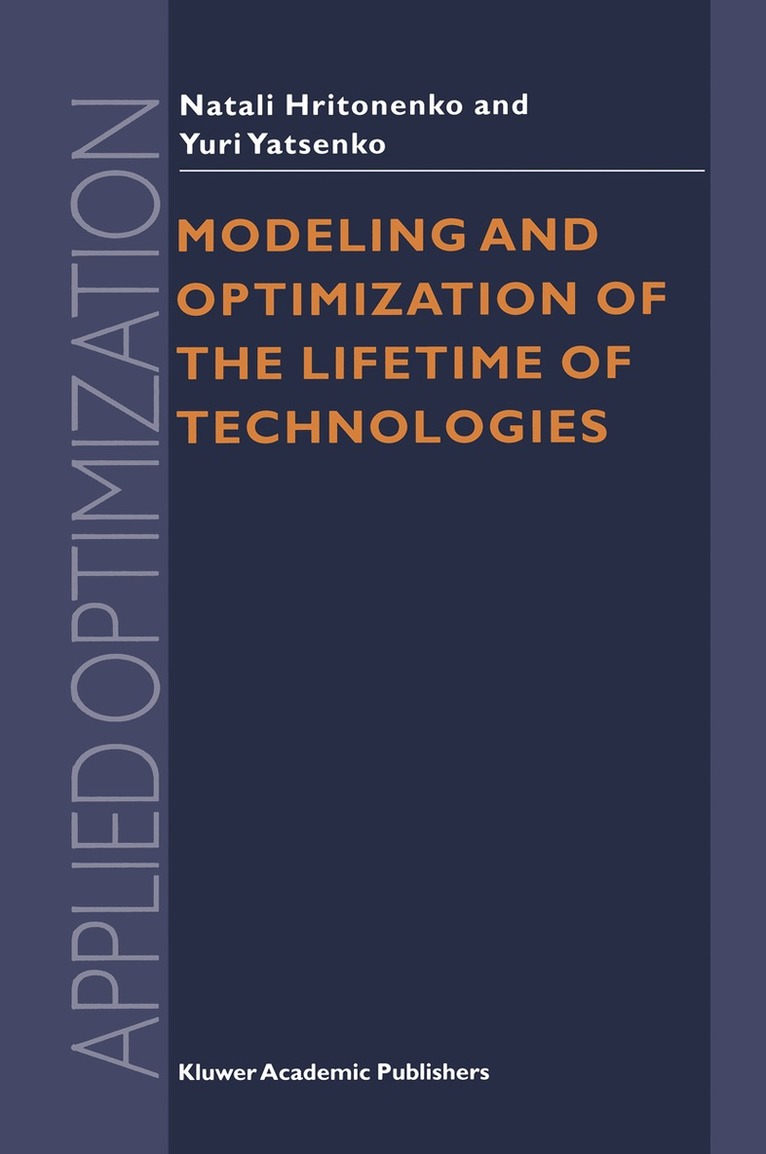
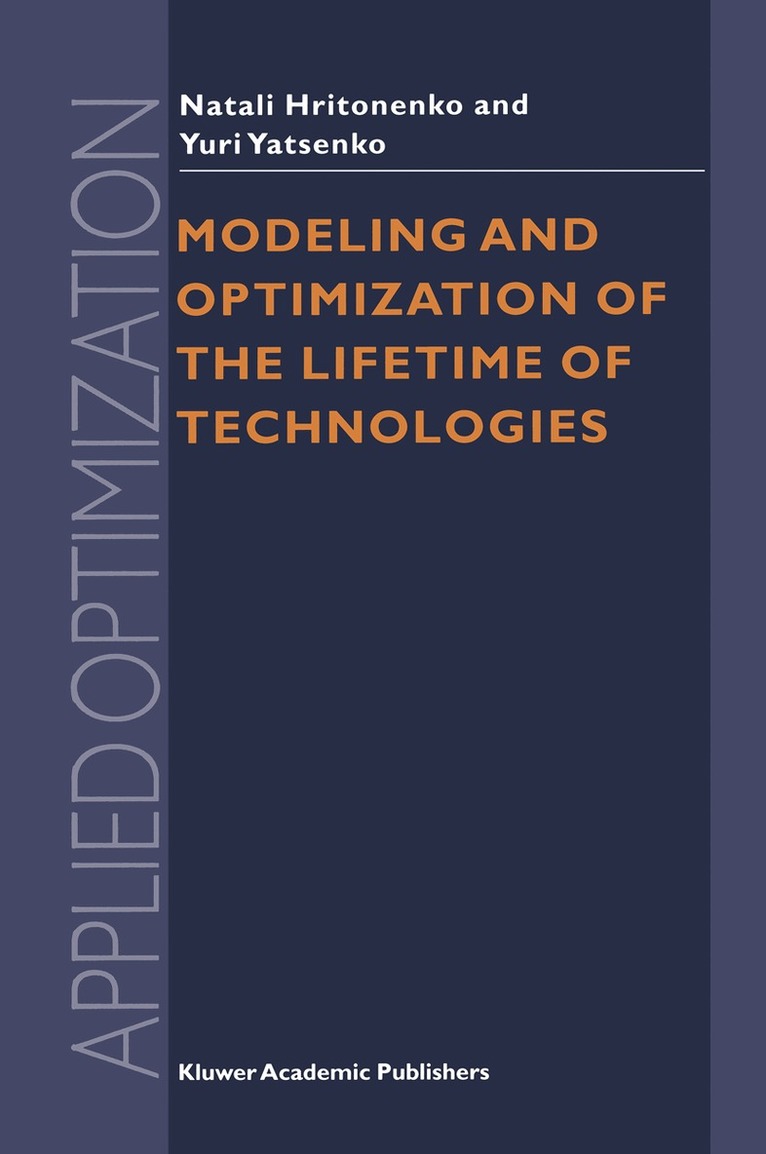
Modeling and Optimization of the Lifetime of Technologies
Av N.V. Hritonenko, Yuri P. Yatsenko
Inbunden, 1996
1096 kr
Lägg i varukorg
This work treats the integral economic models with embodied technological change and the controlled lifetime of technologies. Features of the book include: the theoretical basis and algorithmic tools for the analysis of industrial renovation under technical change; a variety of models and …
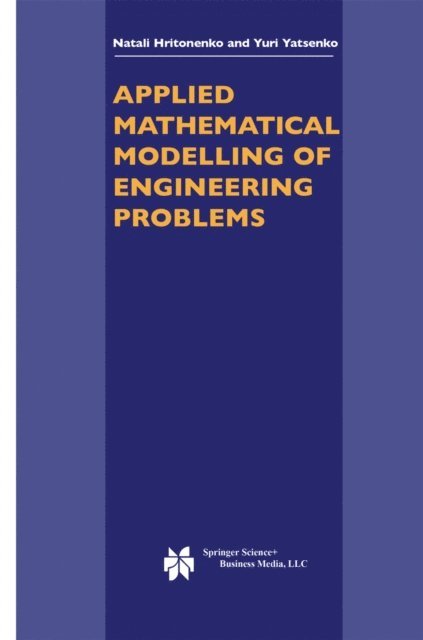
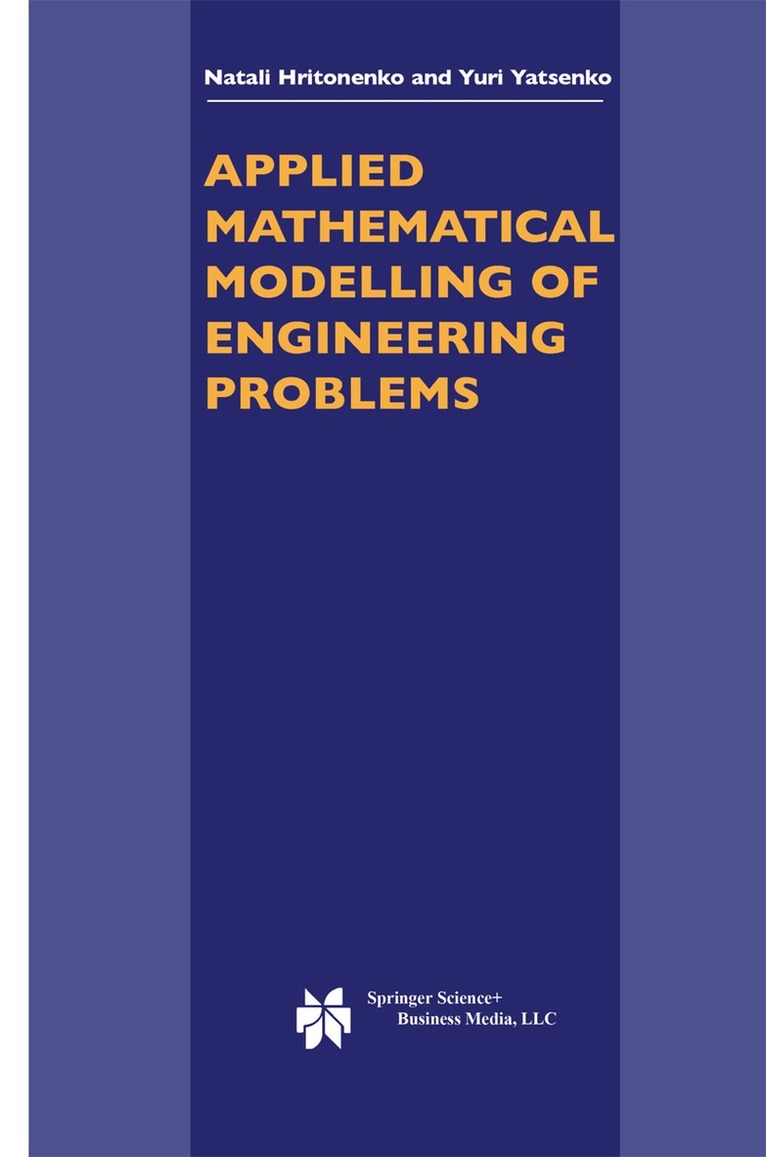
Applied Mathematical Modelling of Engineering Problems
Av Yuri P. Yatsenko, N.V. Hritonenko
E-bok, 2013
2065 kr
Lägg i varukorg
The subject of the book is the "know-how" of applied mathematical modelling: how to construct specific models and adjust them to a new engineering environment or more precise realistic assumptions; how to analyze models for the purpose of investigating real life phenomena; and how the models can …
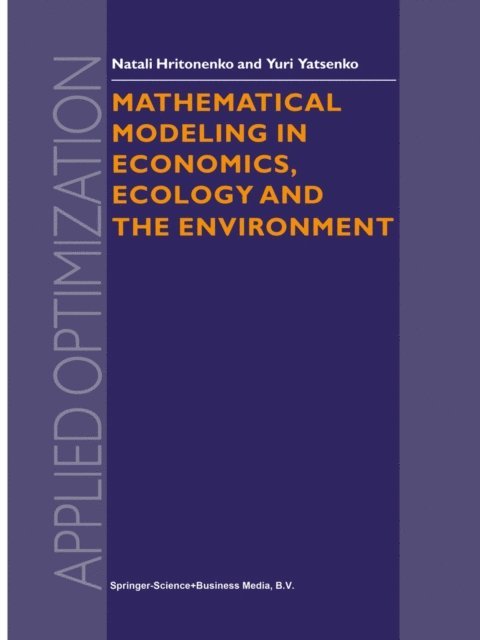
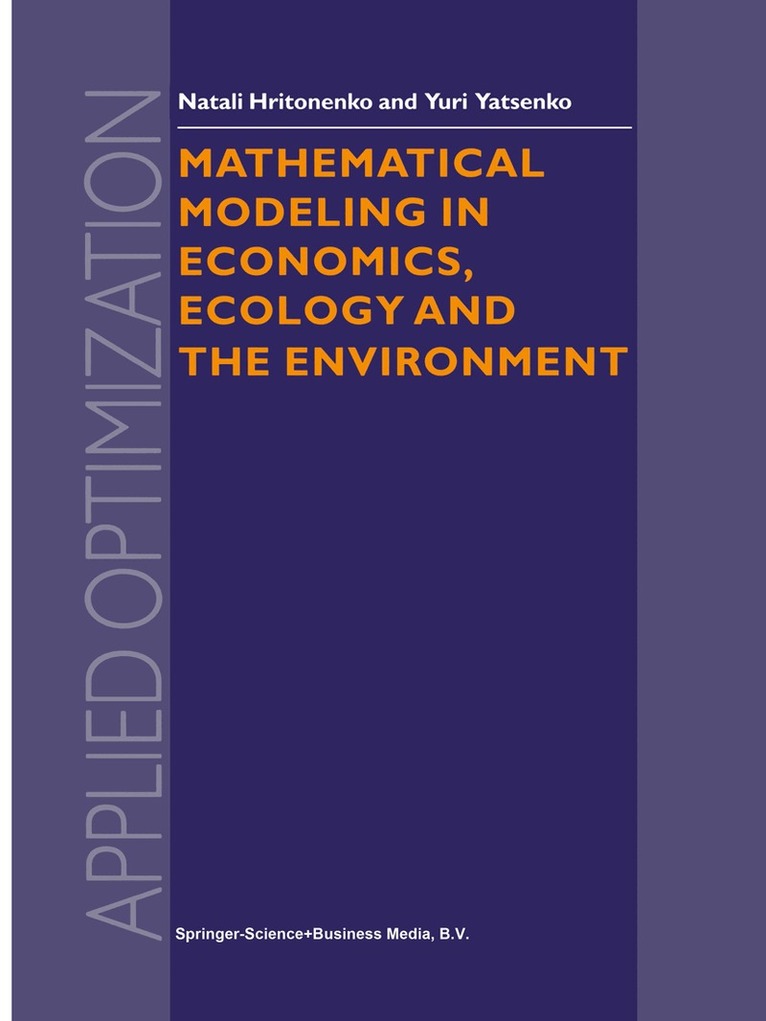
Mathematical Modeling in Economics, Ecology and the Environment
Av Yuri P. Yatsenko, N.V. Hritonenko
E-bok, 2013
2054 kr
Lägg i varukorg
The problems of interrelation between human economics and natural environment include scientific, technical, economic, demographic, social, political and other aspects that are studied by scientists of many specialities. One of the important aspects in scientific study of environmental and …
Modeling and Optimization of the Lifetime of Technologies
Av Yuri P. Yatsenko, N.V. Hritonenko
E-bok, 2013
1427 kr
Lägg i varukorg
Modern economic growth is characterized by structural changes based on the introduction of new technologies into economics. The replacement and renova tion of technologies in industrial environments undergoing technical change is clearly one of the key aspects of economic development. The …
Modeling and Optimization of the Lifetime of Technologies
Av N.V. Hritonenko, Yuri P. Yatsenko m. fl.
Häftad, 2011
1096 kr
Lägg i varukorg
Modern economic growth is characterized by structural changes based on the introduction of new technologies into economics. The replacement and renova tion of technologies in industrial environments undergoing technical change is clearly one of the key aspects of economic development. The …
Applied Mathematical Modelling of Engineering Problems
Av N.V. Hritonenko, Yuri P. Yatsenko
Häftad, 2012
1641 kr
Lägg i varukorg
The subject of the book is the "know-how" of applied mathematical modelling: how to construct specific models and adjust them to a new engineering environment or more precise realistic assumptions; how to analyze models for the purpose of investigating real life phenomena; and how the models can …
Mathematical Modeling in Economics, Ecology and the Environment
Av N.V. Hritonenko, Yuri P. Yatsenko
Häftad, 2010
2024 kr
Tillfälligt slut
The book covers a wide range of known models, from classical (Cobb-Douglass production function, Leontief input-output analysis, Verhulst-Pearl and Lotka-Volterra models of population dynamics, etc.) to the models of world dynamics and the models of water contamination propagation after the …