Yves Kodratoff – författare
Visar alla böcker från författaren Yves Kodratoff. Handla med fri frakt och snabb leverans.
11 produkter
11 produkter
E-bok
PDF, Engelska, 2014779 kr
Läs direkt efter köp
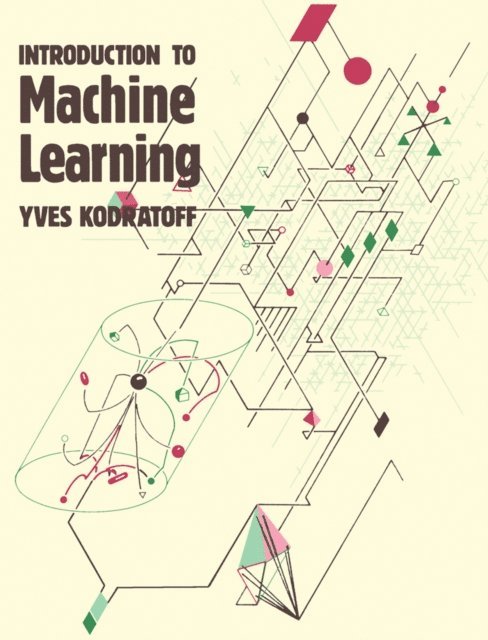
A textbook suitable for undergraduate courses in machine learningand related topics, this book provides a broad survey of the field.Generous exercises and examples give students a firm grasp of theconcepts and techniques of this rapidly developing, challenging subject.Introduction to Machine Learning synthesizes and clarifiesthe work of leading researchers, much of which is otherwise availableonly in undigested technical reports, journals, and conference proceedings.Beginning with an overview suitable for undergraduate readers, Kodratoffestablishes a theoretical basis for machine learning and describesits technical concepts and major application areas. Relevant logicprogramming examples are given in Prolog.Introduction to Machine Learning is an accessible and originalintroduction to a significant research area.
E-bok
PDF, Engelska, 2014779 kr
Läs direkt efter köp
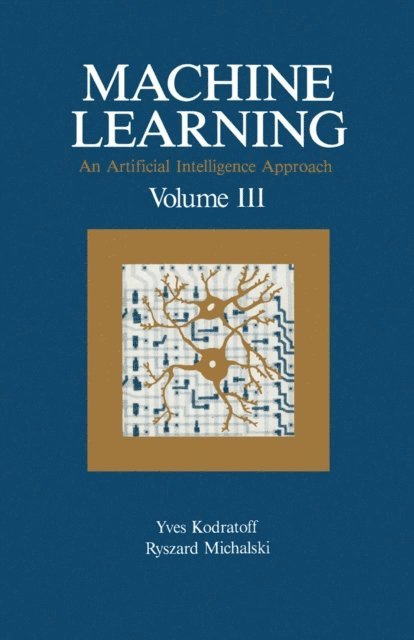
Machine Learning: An Artificial Intelligence Approach, Volume III presents a sample of machine learning research representative of the period between 1986 and 1989. The book is organized into six parts. Part One introduces some general issues in the field of machine learning. Part Two presents some new developments in the area of empirical learning methods, such as flexible learning concepts, the Protos learning apprentice system, and the WITT system, which implements a form of conceptual clustering. Part Three gives an account of various analytical learning methods and how analytic learning can be applied to various specific problems. Part Four describes efforts to integrate different learning strategies. These include the UNIMEM system, which empirically discovers similarities among examples; and the DISCIPLE multistrategy system, which is capable of learning with imperfect background knowledge. Part Five provides an overview of research in the area of subsymbolic learning methods. Part Six presents two types of formal approaches to machine learning. The first is an improvement over Mitchell''s version space method; the second technique deals with the learning problem faced by a robot in an unfamiliar, deterministic, finite-state environment.
Häftad, Engelska, 2003
362 kr
Skickas inom 5-8 vardagar
Häftad, Engelska, 2020
416 kr
Skickas inom 5-8 vardagar
E-bok
Engelska, 2020422 kr
Läs direkt efter köp
This book took its start with the author's realization that what Old Norse calls 'magic' can be understood as 'unconscious', as stated by C. G. Jung: (we find) 'magical means everything where unconscious influences are at work.' This book reveals the exi
Häftad, Engelska, 2002
1 125 kr
Skickas inom 10-15 vardagar
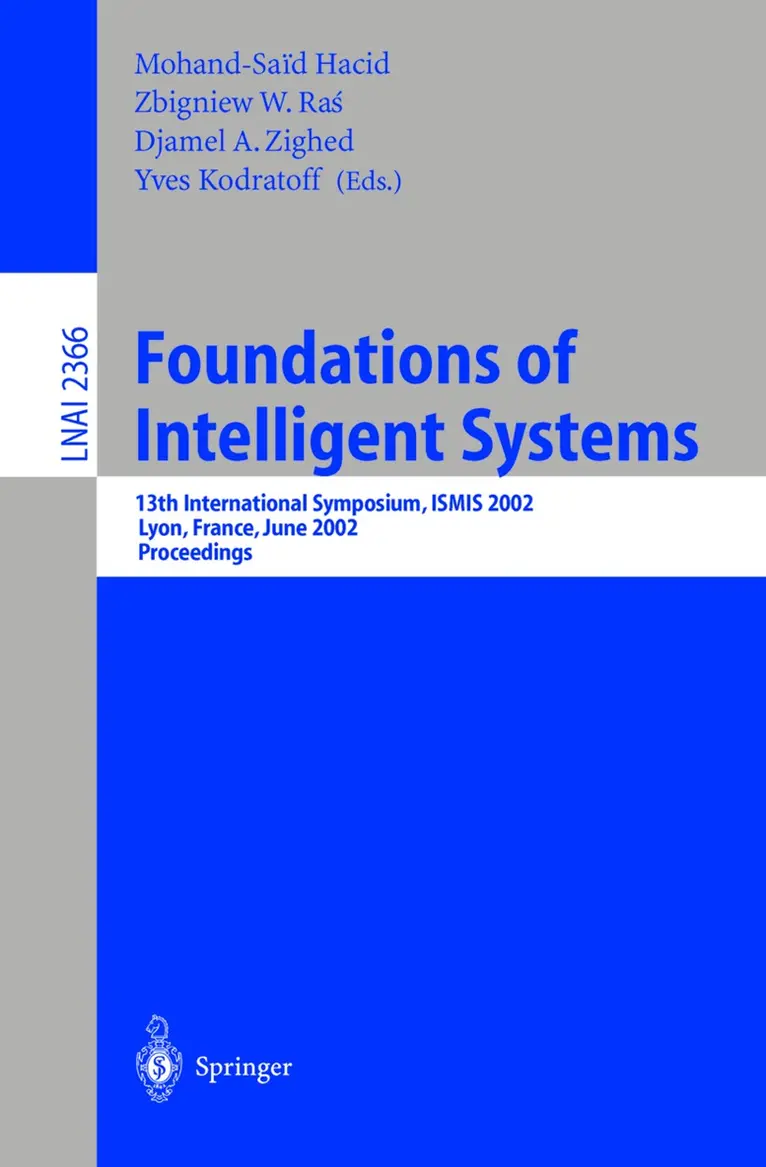
This volume contains the papers selected for presentation at the 13th International Symposium on Methodologies for Intelligent Systems ISMIS 2002, held in Lyon, France, 27-29 June, 2002. The symposium was organized by the UniversitO Claude Bernard Lyon 1, the UniversitO Lumiere Lyon 2, l'Institut National des Sciences AppliquOes de Lyon, and hosted by the UniversitO Claude Bernard Lyon 1. The ISMIS conference series was started in 1986 in Knoxville, Tennessee. Since then it has been held in Charlotte (North Carolina), Knoxville (Tennessee), Turin (Italy), Trondheim (Norway), Warsaw (Poland), and Zakopane (Poland). The program committee selected the following major areas for ISMIS 2002: Intelligent Multimedia, Intelligent Information Retrieval, Intelligent Information Systems, Knowledge Representation and Integration, Learning and Knowledge Discovery, Logic for Artificial Intelligence, Methodologies (modeling, design, validation, performance evaluation), and Soft Computing. The contributed papers were selected from approximately 160 full draft papers by the following program committee: L. Carlucci Aiello, N. Belkhiter, P. Berka, E. Bertino, P. Bosc, H. Briand, J. Calmet, S.Carberry, L. Carbonara, B. Catania, T. Catarci, N.J. Cercone, J. Chen, W. Chu, L. De Raedt, J. Debenham, R. Demolombe, B.C. Desai, E. El-Kwae, T. Elomaa, P. Emmerman, F. Esposito, J. Fan, P.A. Flach, P. Gallinari, A. Giordana, M.-S. Hacid, M. Hadzikadic, H.J. Hamilton, D. Hislop, C.A. Johnson, W. Kloesgen, Y. Kodratoff, L. Lakhal, T.Y. Lin, D. Malerba, D. Maluf, S. Matwin, R. Meersman, R.S. Michalski, S. Miguet, M. Mukaidono, N. Nicoloyannis, S. Ohsuga, L.
E-bok
PDF, Engelska, 20031 408 kr
Läs direkt efter köp
1 367 kr
Läs direkt efter köp
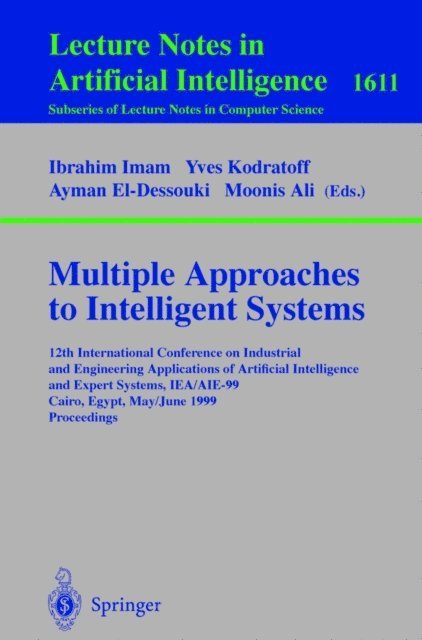
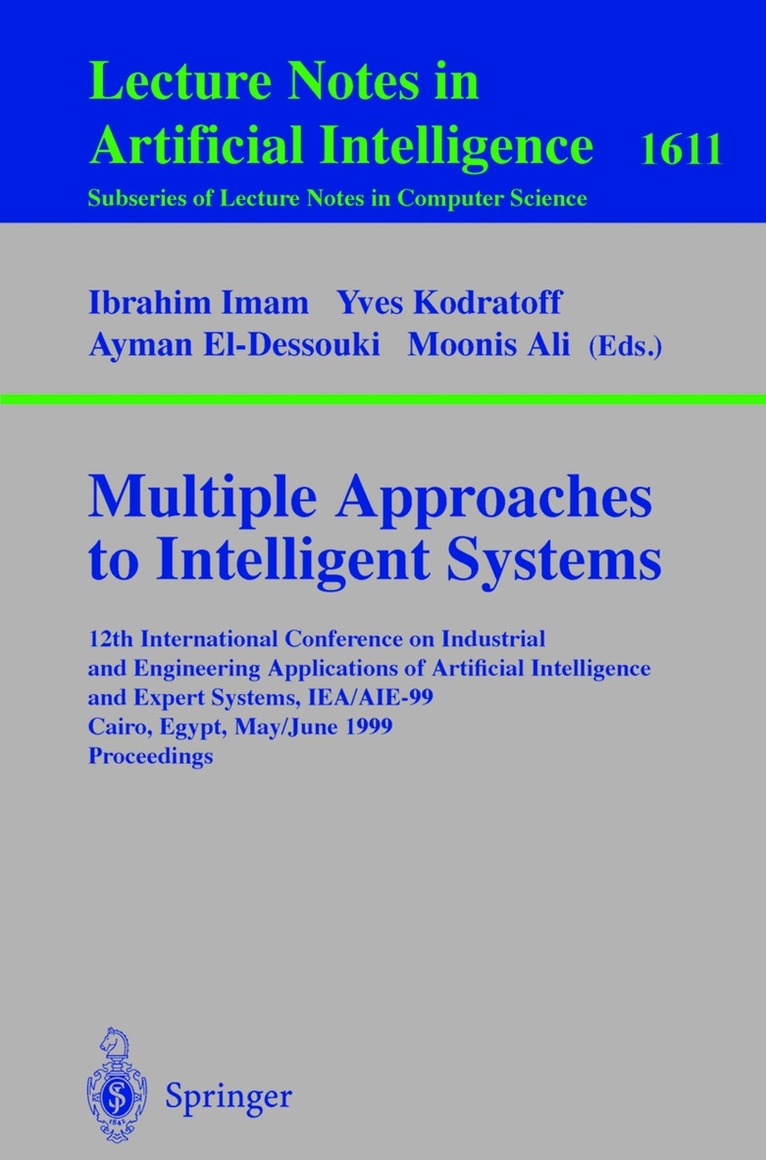
We never create anything, We discover and reproduce. The Twelfth International Conference on Industrial and Engineering Applications of Artificial Intelligence and Expert Systems has a distinguished theme. It is concerned with bridging the gap between the academic and the industrial worlds of Artificial Intelligence (AI) and Expert Systems. The academic world is mainly concerned with discovering new algorithms, approaches, and methodologies; however, the industrial world is mainly driven by profits, and concerned with producing new products or solving customers’ problems. Ten years ago, the artificial intelligence research gap between academia and industry was very broad. Recently, this gap has been narrowed by the emergence of new fields and new joint research strategies in academia. Among the new fields which contributed to the academic-industrial convergence are knowledge representation, machine learning, searching, reasoning, distributed AI, neural networks, data mining, intelligent agents, robotics, pattern recognition, vision, applications of expert systems, and others. It is worth noting that the end results of research in these fields are usually products rather than empirical analyses and theoretical proofs. Applications of such technologies have found great success in many domains including fraud detection, internet service, banking, credit risk and assessment, telecommunication, etc. Progress in these areas has encouraged the leading corporations to institute research funding programs for academic institutes. Others have their own research laboratories, some of which produce state of the art research.
Häftad, Engelska, 1991
565 kr
Skickas inom 10-15 vardagar
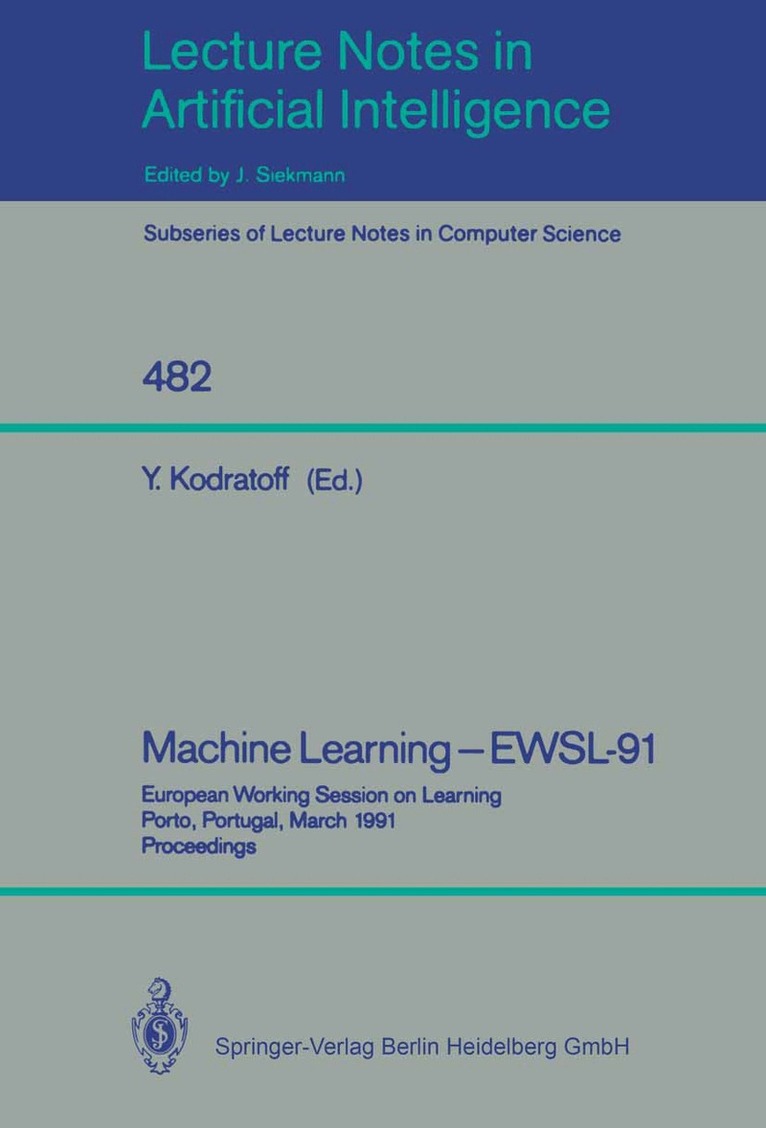
This book contains the proceedings of the 5th European Working Session on Learning (EWSL-91), which describes the most recent advances in the field, especially those originating from European research groups. The topics have been divided into groups covering new trends in machine learning (ML), such as in multi-strategy learning, inversion of resolution and multi-agents, as well as established topics such as discovery, numeric and statistical approaches, theorem proving and explanation-based learning, and case-based reasoning.
Häftad, Engelska, 1993
565 kr
Skickas inom 10-15 vardagar
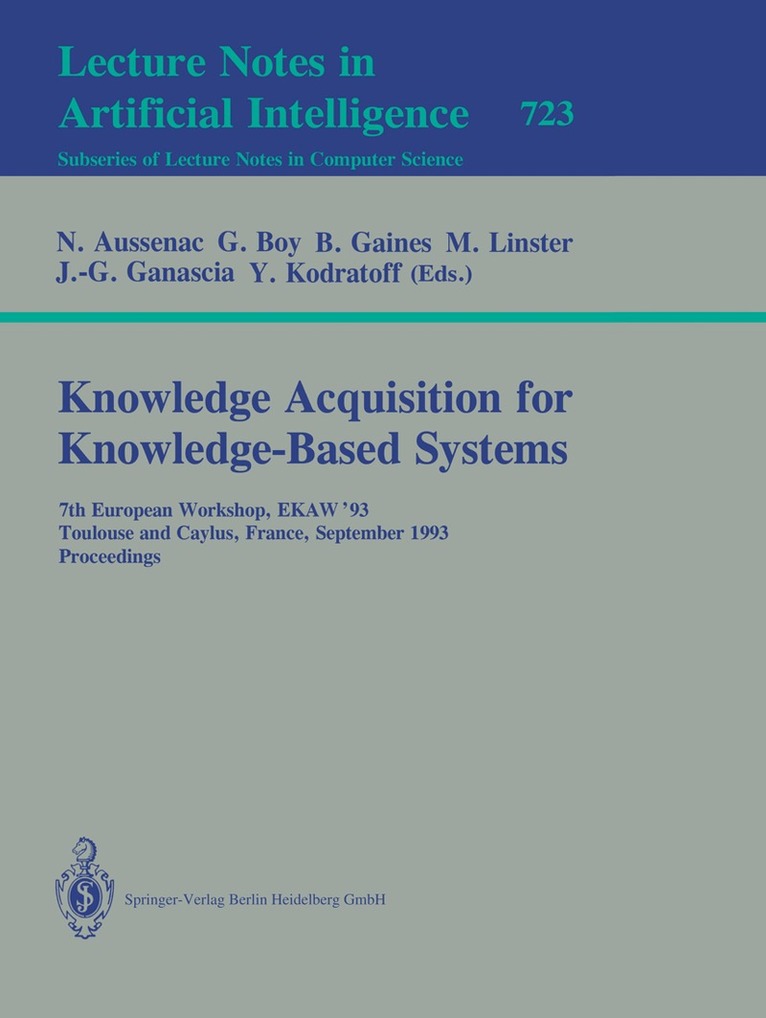
This volume constitutes the proceedings of the 7thEuropean Knowledge Acquisition Workshop (EKAW `93), held inToulouse and Caylus, France, in September 1993.Traditionally the EKAW workshops deal with the variousaspects of knowledge acquisition as a crucial topic inartificial intelligence as well as in computer science,engineering in general, and cognitive science. EKAW `93 hadist emphasis on knowledge acquisition for knowledge-basedsystems; besides the scientific workshop on the inter-disciplinary topic of knowledge acquisition there also wasoffered an open day as a users' forum open to the public.This proceedings contains the best papers presented at thescientific workshop after they had been selected by aninternational program committee consisting of leadingexperts in the field. The volume includes two surveys by GuyBoy and Brian Gaines and is divided in two main parts: thefirst part on problem solving models has sections onbuilding steps, support tools, and comparison of approaches;the second part on life cycle and methodologies is dividedin sections on refinement, methodologies, workbenches, andelicitation techniques.
1 123 kr
Skickas inom 10-15 vardagar
We never create anything, We discover and reproduce. The Twelfth International Conference on Industrial and Engineering Applications of Artificial Intelligence and Expert Systems has a distinguished theme. It is concerned with bridging the gap between the academic and the industrial worlds of Artificial Intelligence (AI) and Expert Systems. The academic world is mainly concerned with discovering new algorithms, approaches, and methodologies; however, the industrial world is mainly driven by profits, and concerned with producing new products or solving customers’ problems. Ten years ago, the artificial intelligence research gap between academia and industry was very broad. Recently, this gap has been narrowed by the emergence of new fields and new joint research strategies in academia. Among the new fields which contributed to the academic-industrial convergence are knowledge representation, machine learning, searching, reasoning, distributed AI, neural networks, data mining, intelligent agents, robotics, pattern recognition, vision, applications of expert systems, and others. It is worth noting that the end results of research in these fields are usually products rather than empirical analyses and theoretical proofs. Applications of such technologies have found great success in many domains including fraud detection, internet service, banking, credit risk and assessment, telecommunication, etc. Progress in these areas has encouraged the leading corporations to institute research funding programs for academic institutes. Others have their own research laboratories, some of which produce state of the art research.