Yves Punie – författare
379 kr
Skickas inom 3-6 vardagar
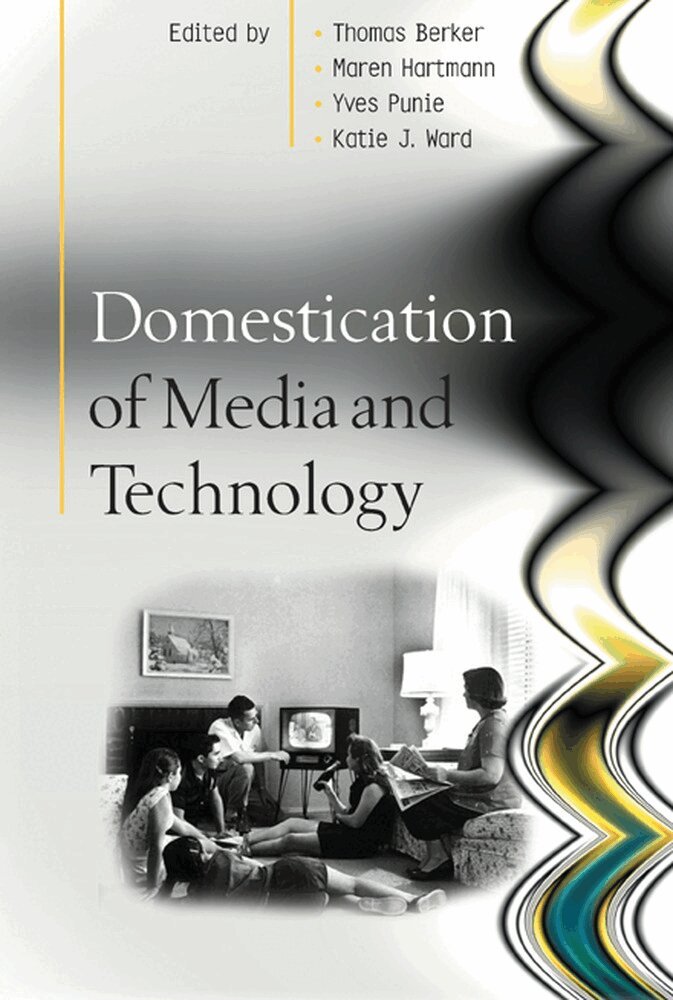
The first part of Domestication of Media and Technology provides an overview of the conceptual development and theory of domestication. In the second part of the book, contributors look at a diverse range of empirical studies that use the domestication approach to examine the dynamics between users and technologies. These studies include:
Mobile information and communications techologies (ICTs) and the transformation of the relationship between private and the public spheres Home-based internet use: the two-way dynamic between the household and its social environmentDisadvantaged women in Europe undertaking introductory internet coursesUrban middle-class families in China who embrace ICTs and view them as instruments of upward mobility and symbols of success The book offers valuable insights for both experienced researchers and students looking for an introduction to the concept of domestication.Contributors: Maria Bakardjieva, University of Calgary; Thomas Berker, Norwegian University of Science and Technology; Leslie Haddon, Essex University; Maren Hartmann, University of Erfurt; Deirdre Hynes, Dublin City University; Sun Sun Lim, National University of Singapore; Anna Maria Russo Lemor, University of Colorado at Boulder; David Morley, Goldsmiths College, University of London; Jo Pierson, TNO-STB, Delft, Netherlands; Yves Punie, Institute for Prospective Technological Studies (IPTS) in Seville; Els Rommes, Nijmegen University; Roger Silverstone, London School of Economics and Political Science; Knut H. Sørensen, Norwegian University of Science and Technology; Katie J. Ward, University of Sheffield.
367 kr
Läs direkt efter köp
The first part of Domestication of Media and Technology provides an overview of the conceptual development and theory of domestication. In the second part of the book, contributors look at a diverse range of empirical studies that use the domestication approach to examine the dynamics between users and technologies. These studies include:
Mobile information and communications techologies (ICTs) and the transformation of the relationship between private and the public spheres Home-based internet use: the two-way dynamic between the household and its social environmentDisadvantaged women in Europe undertaking introductory internet coursesUrban middle-class families in China who embrace ICTs and view them as instruments of upward mobility and symbols of success The book offers valuable insights for both experienced researchers and students looking for an introduction to the concept of domestication.Contributors: Maria Bakardjieva, University of Calgary; Thomas Berker, Norwegian University of Science and Technology; Leslie Haddon, Essex University; Maren Hartmann, University of Erfurt; Deirdre Hynes, Dublin City University; Sun Sun Lim, National University of Singapore; Anna Maria Russo Lemor, University of Colorado at Boulder; David Morley, Goldsmiths College, University of London; Jo Pierson, TNO-STB, Delft, Netherlands; Yves Punie, Institute for Prospective Technological Studies (IPTS) in Seville; Els Rommes, Nijmegen University; Roger Silverstone, London School of Economics and Political Science; Knut H. Sørensen, Norwegian University of Science and Technology; Katie J. Ward, University of Sheffield.
Safeguards in a World of Ambient Intelligence
1 681 kr
Skickas inom 10-15 vardagar
2 068 kr
Läs direkt efter köp
Copy the following link for free access to the first chapter of this title: http://www.springerlink.com/content/j23468h304310755/fulltext.pdf
This book is a warning. It aims to warn policy-makers, industry, academia, civil society organisations, the media and the public about the threats and vulnerabilities facing our privacy, identity, trust, security and inclusion in the rapidly approaching world of ambient intelligence (AmI).
In the near future, every manufactured product – our clothes, money, appliances, the paint on our walls, the carpets on our floors, our cars, everything – will be embedded with intelligence, networks of tiny sensors and actuators, which some have termed “smart dust”. The AmI world is not far off. We already have surveillance systems, biometrics, personal communicators, machine learning and more. AmI will provide personalised services – and know more about us – on a scale dwarfing anything hitherto available.
In the AmI vision, ubiquitous computing, communications and interfaces converge and adapt to the user. AmI promises greater user-friendliness in an environment capable of recognising and responding to the presence of different individuals in a seamless, unobtrusive and often invisible way. While most stakeholders paint the promise of AmI in sunny colours, there is a dark side to AmI.
This book aims to illustrate the threats and vulnerabilities by means of four “dark scenarios”. The authors set out a structured methodology for analysing the four scenarios, and then identify safeguards to counter the foreseen threats and vulnerabilities. They make recommendations to policy-makers and other stakeholders about what they can do to maximise the benefits from ambient intelligence and minimise the negative consequences.
Safeguards in a World of Ambient Intelligence
1 681 kr
Skickas inom 10-15 vardagar
1 681 kr
Skickas inom 10-15 vardagar